Blog

  • 99% of Fortune 500 Companies Have AI. Here’s Why Most Are Still Failing

    99% of Fortune 500 Companies Have AI. Here’s Why Most Are Still Failing

    The shocking truth about enterprise AI in 2025: Universal adoption doesn’t guarantee success. Here’s what separates the winners from the expensive experiments.

    The Great AI Paradox of 2025: Everywhere Yet Nowhere

    As of 2025, 99% of Fortune 500 companies have implemented AI in their operations Weaviate. Additionally, 60% of enterprises with over 10,000 employees have already integrated AI into core business processes.

    Let that sink in for a moment.

    AI is no longer a competitive advantage — it’s the new baseline.

    Yet despite this near-universal adoption, a troubling pattern emerges: most organizations struggle to move beyond pilot projects to real business impact. The question isn’t whether to adopt AI anymore — it’s how to make it actually work.

    The $50 Billion Problem: Why AI Adoption Doesn’t Equal AI Success

    The Reality Check Numbers:

    • 99% adoption rate across Fortune 500
    • 60% integration in core processes for large enterprises
    • Less than 20% ROI satisfaction according to recent surveys
    • Average 18-month time from pilot to production

    The disconnect is real: Companies have AI everywhere but value nowhere.

    From Experiments to Impact: The Stack AI Blueprint for Real ROI

    Stack AI’s comprehensive white paper addresses this critical gap by mapping 65+ real-world AI Agent use cases that are driving measurable business outcomes, not just impressive demos.

    This isn’t theoretical framework — it’s a battle-tested roadmap for operational AI integration that actually moves the revenue needle.

    The 6 Industries Leading AI’s Operational Revolution

    1. Insurance: Automating the Risk-Revenue Pipeline

    High-Impact Use Cases:

    • Underwriting Assistants: 70% faster policy evaluation
    • Policy Q&A Agents: 24/7 customer service automation
    • Claims Processing: Fraud detection and settlement automation
    • FNOL & Form Automation: First notice of loss processing

    Business Impact: 40% reduction in processing time, 25% improvement in accuracy

    2. Government: Digitizing Public Service Delivery

    Transformative Applications:

    • Grant Matching Agents: Automated eligibility assessment
    • Compliance Monitoring: Real-time regulatory tracking
    • Budget Analysis: Predictive spend optimization
    • IT Support Automation: Citizen service enhancement

    Measurable Outcomes: 60% faster grant processing, 45% cost reduction in IT support

    3. Finance: Accelerating Decision Intelligence

    Revenue-Driving Use Cases:

    • Investment Memo Generators: Automated research synthesis
    • Document Comparison: Due diligence acceleration
    • KYC Automation: Identity verification streamlining
    • Expense Validation: Real-time fraud prevention

    Performance Metrics: 80% faster due diligence, 50% reduction in compliance costs

    4. Education: Scaling Personalized Learning

    Student Success Applications:

    • Scholarship Matching: Automated financial aid optimization
    • Writing Feedback Systems: Personalized improvement guidance
    • Course Assistant Agents: 24/7 academic support
    • Research Automation: Literature review and analysis

    Educational Impact: 3x increase in scholarship matches, 65% improvement in writing scores

    5. Private Lending: Risk Assessment Revolution

    Loan Processing Innovation:

    • Loan File Review Agents: Automated underwriting support
    • Validation Systems: Document authenticity verification
    • Closing Compliance: Regulatory requirement automation

    Business Results: 90% faster loan processing, 35% reduction in default rates

    6. Banking: Customer Experience Transformation

    Operational Excellence Use Cases:

    • Document Classification: Intelligent routing systems
    • Control Checker Agents: Risk management automation
    • Compliance Chatbots: Regulatory query resolution
    • Helpdesk Automation: Customer service optimization

    Service Metrics: 85% first-call resolution, 50% reduction in wait times
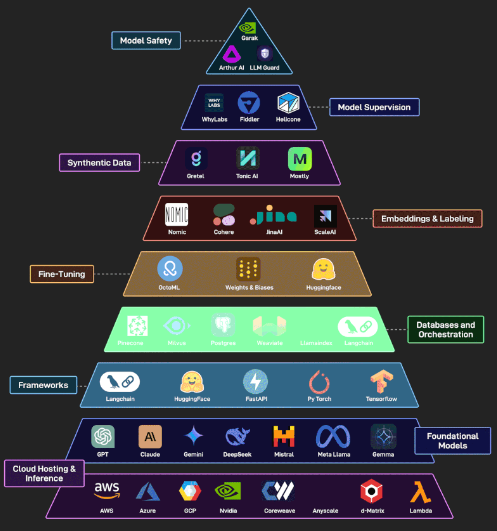
  • Generative AI Tech Stack – Layer by layer

    Generative AI Tech Stack – Layer by layer

    𝗧𝗵𝗶𝘀 𝗶𝘀 𝘁𝗵𝗲 𝗿𝗲𝗮𝗹 𝗚𝗲𝗻𝗲𝗿𝗮𝘁𝗶𝘃𝗲 𝗔𝗜 𝗧𝗲𝗰𝗵 𝗦𝘁𝗮𝗰𝗸 — 𝗹𝗮𝘆𝗲𝗿 𝗯𝘆 𝗹𝗮𝘆𝗲𝗿.

    Everyone wants AI magic. But creating real value takes more than just a flashy model — it requires thoughtful architectural decisions across a complex system.

    Because the future of AI won’t be shaped by models alone. It will be defined by the systems around them: infrastructure, orchestration, data, and governance. Behind every successful AI product is a series of deliberate, system-level choices — and this is where the real work begins.

    𝗨𝗻𝗱𝗲𝗿𝘀𝘁𝗮𝗻𝗱𝗶𝗻𝗴 𝘁𝗵𝗶𝘀 𝘀𝘁𝗮𝗰𝗸 𝗶𝘀 𝗲𝘀𝘀𝗲𝗻𝘁𝗶𝗮𝗹 𝘁𝗼 𝗯𝘂𝗶𝗹𝗱𝗶𝗻𝗴 𝗿𝗲𝗮𝗹-𝘄𝗼𝗿𝗹𝗱 𝗔𝗜 𝘀𝘆𝘀𝘁𝗲𝗺𝘀 — 𝗹𝗲𝘁’𝘀 𝗯𝗿𝗲𝗮𝗸 𝗶𝘁 𝗱𝗼𝘄𝗻:

    1. Cloud Hosting & Inference → AWS, Azure, GCP, NVIDIA
    – The foundation of every GenAI system — providing the scalable compute and infrastructure required to train and serve models at speed and scale.

    2. Foundation Models → GPT, Claude, Gemini, Mistral, DeepSeek
    – These are the pre-trained engines of intelligence — capable of reasoning, generating, and adapting across a wide range of tasks and domains.

    3. Frameworks → LangChain, HuggingFace, FastAPI
    – The orchestration layer that enables developers to build structured workflows, chains, and agent systems on top of large models.

    4. Vector DBs & Orchestration → Pinecone, Weaviate, Milvus, LlamaIndex
    – Responsible for memory, context retrieval, and connecting unstructured data to
    AI systems — critical for applications like RAG and agents.

    5. Fine-Tuning → Weights & Biases, HuggingFace, OctoML
    – The process and tooling that adapt general-purpose models to specific use cases, industries, or internal knowledge — enhancing relevance and accuracy.

    6. Embeddings & Labeling → Cohere, ScaleAI, JinaAI, Nomic
    – Transform raw data into structured, machine-understandable formats — powering similarity search, semantic indexing, and supervised learning.

    7. Synthetic Data → Gretel, Tonic AI, Mostly
    – Used when real-world data is limited or sensitive — generating high-quality, privacy-safe data for training, testing, or simulation.

    8. Model Supervision → WhyLabs, Fiddler, Helicone
    – Enables visibility into model behavior through monitoring, debugging, and performance tracing — essential for reliability and governance.

    9. Model Safety → LLM Guard, Arthur AI, Garak
    – Ensures responsible AI by enforcing output filtering, ethical constraints, and compliance — critical for enterprise adoption and trust.

    If you want to build AI that lasts, you don’t just need better models — you need better systems.

    Kudos to ByteByteGo for this brilliant visual.

  • Everyone’s talking about AI Agents and AI drag and drop builders right now

    Everyone’s talking about AI Agents and AI drag and drop builders right now


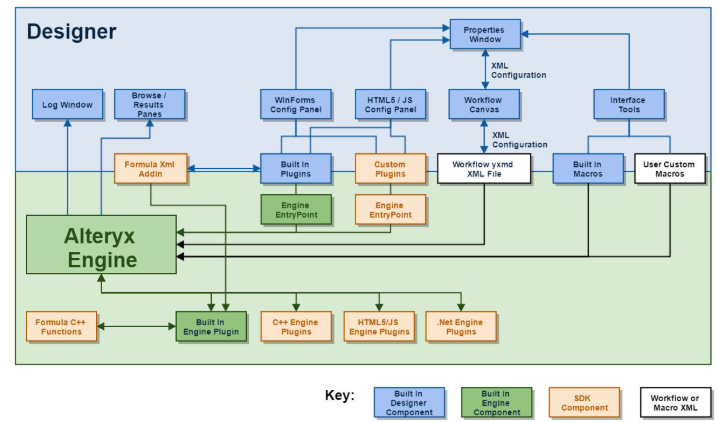
    But here’s what surprises me: There are platforms that have been doing this — quietly, efficiently — for years. I’ve been exploring Alteryx over the weekend, and it’s a great reminder that not everything new is better. Sometimes, the tools that have stood the test of time already solve the problems we’re trying to reinvent.

    𝗛𝗲𝗿𝗲’𝘀 𝘄𝗵𝘆 𝘁𝗵𝗶𝘀 𝗽𝗹𝗮𝘁𝗳𝗼𝗿𝗺 𝗱𝗲𝘀𝗲𝗿𝘃𝗲𝘀 𝗺𝗼𝗿𝗲 𝗮𝘁𝘁𝗲𝗻𝘁𝗶𝗼𝗻: ⬇️

    1. Visual Data Workflows
    → Pull data from Excel, SQL, Salesforce, APIs
    → Clean, merge, transform — all visually
    You see the logic. You can trace every step. No cryptic scripts. Just transparent building blocks.

    2. Smart AI Suggestions
    → Detect joins, filters, transformations your data likely needs
    → Recommend next steps based on patterns
    You don’t have to guess. The tool nudges you. Faster, more confident prep.

    3. Reusable Automation Flows
    → “Ingest → Clean → Export every Monday”
    → Build it once, schedule it forever
    Repetitive work disappears. Consistency becomes default.

    4.. Advanced Analytics — With or Without Code
    → Regression, clustering, predictions built in
    → Drop to Python/R when needed
    You don’t need to be a data scientist — but you’re free to go deep when you want.

    5. Unified Data + AI Platform
    → From prep to predictive to generative AI — all in one flow
    → Connect business logic with ML models and LLMs
    End-to-end intelligence, no tool-hopping.

    6. Governed Collaboration at Scale
    → Role-based access, version control, audit trails
    → Share workflows safely across teams
    You move fast — without losing control. Enterprise-grade governance made simple.

    And that’s the bigger point: it’s not always smartest to chase the newest or shiniest tool.

    Often, the established ones already offer deeper capability, market maturity, and proven reliability — built on years of iteration.

    The best innovation isn’t always invention. Sometimes, it’s rediscovery.

  • I Deployed 34+ AI Models for Fortune 500s. Here’s the ONE Thing That Actually Works

    I Deployed 34+ AI Models for Fortune 500s. Here’s the ONE Thing That Actually Works

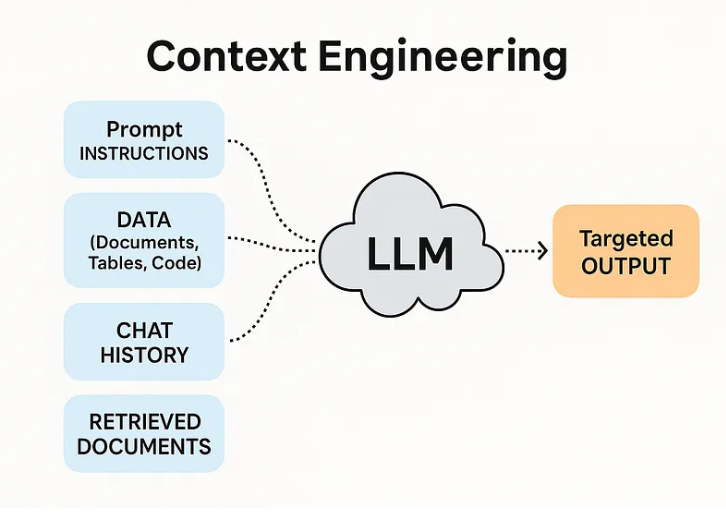
    The hottest discussion in AI right now isn’t about model size or compute power – it’s about Context Engineering: the strategic art of feeding AI systems the right data to drive intelligent business decisions.

    What is Context Engineering and Why It Matters

    Context engineering is the emerging discipline of designing, assembling, and optimizing the information you feed AI models. It’s the critical difference between AI demos that impress and AI systems that deliver measurable ROI.

    This comprehensive approach encompasses:

    • RAG optimization for precise information retrieval
    • Agentic AI workflows that adapt dynamically
    • Intelligent copilots that understand business context
    • Enterprise AI applications that scale reliably

    The Context Engineering Revolution: From Static RAG to Intelligent Agents

    While Retrieval-Augmented Generation (RAG) dominated 2023, agentic workflows are driving massive progress in 2024 Weaviate. The shift represents a fundamental evolution in how enterprises approach AI implementation.

    Traditional RAG Limitations:

    • Static retrieval patterns
    • One-size-fits-all responses
    • Limited adaptability to complex queries
    • High maintenance overhead

    Agentic Context Engineering Advantages:

    • Dynamic context assembly
    • Multi-step reasoning capabilities
    • Self-healing error correction
    • Scalable enterprise deployment

    Weaviate’s Context Engineering Guide: 7 Essential Areas for AI Success

    Weaviate’s comprehensive Context Engineering Guide Weaviate covers the critical domains every AI leader needs to master:

    1. Introduction to Context Engineering

    Understanding why context design trumps model selection for business outcomes

    2. AI Agents and Agentic Workflows

    Weaviate Agents that can interpret natural language instructions, automatically figure out underlying searches or transformations, and chain tasks together Weaviate

    3. Query Augmentation Strategies

    • Query rewriting techniques
    • Intent expansion methodologies
    • Request decomposition frameworks

    4. Advanced Retrieval Optimization

    • Intelligent chunking strategies
    • Pre and post-processing pipelines
    • Precision-focused retrieval systems

    5. Enterprise Prompting Techniques

    • Tool-aware prompting methods
    • Context-sensitive instruction design
    • Production-ready prompt engineering

    6. Memory Architecture for AI Agents

    • Persistent memory systems
    • Context window optimization
    • Multi-session continuity

    7. Tool Orchestration and Integration

    • Next-generation tool usage patterns
    • API integration strategies
    • Workflow automation capabilities

    Why Context Engineering Beats Model Size: Real-World Enterprise Insights

    From deploying 34+ AI models across Fortune 500 organizations, the evidence is clear: context quality consistently outperforms raw model capability.

    Key Performance Indicators:

    • Accuracy improvements: 40-60% with optimized context vs. larger models
    • Response relevance: 3x better with structured context engineering
    • Operational efficiency: 50% reduction in manual intervention
    • Cost optimization: 35% lower inference costs through smart context management

    The Future of Enterprise AI: Context-Native Applications

    Gartner predicts that by 2028, 33% of enterprise software applications will include agentic AI Weaviate, making context engineering a critical competitive differentiator.

    Industries Leading Context Engineering Adoption:

    • Manufacturing: Predictive maintenance with multi-sensor context
    • HR Technology: Employee lifecycle automation with contextual intelligence
    • Financial Services: Risk assessment with real-time market context
    • Healthcare: Clinical decision support with comprehensive patient context

  • TOON: The New Data Format That Cuts LLM Token Costs by 60%

    TOON: The New Data Format That Cuts LLM Token Costs by 60%

    Token-Oriented Object Notation is Revolutionizing AI Data Exchange

    A Better Way to Send Data to AI Models

    Still sending JSON to your AI models? You’re wasting tokens and money.

    There’s a new format taking over the AI world. TOON (Token-Oriented Object Notation) just launched. It fixes what’s broken with JSON for AI systems.

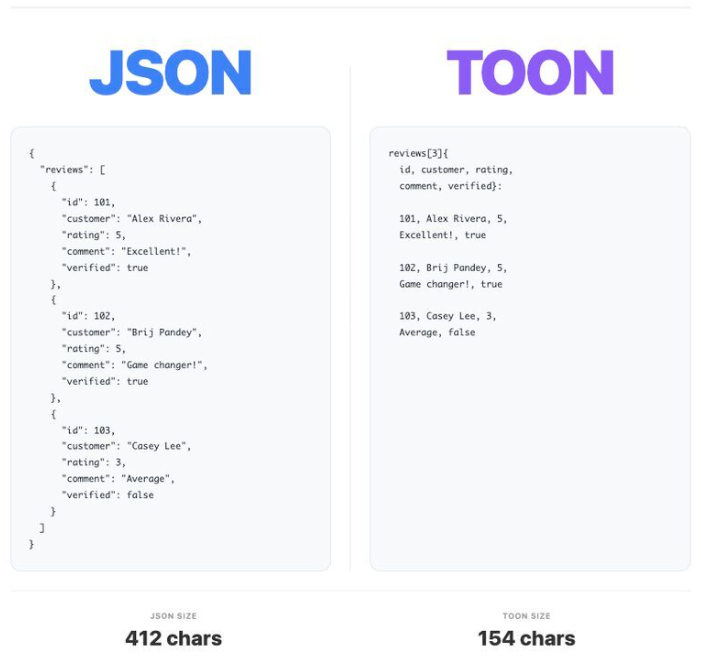
    Why does this matter? AI models charge you for every token. JSON wastes tokens with extra brackets and quotes. TOON cuts this waste by 60%.

    The Numbers Are Clear

    The same data needs 412 characters in JSON but only 154 characters in TOON. That’s 62% less.

    This means:

    • Lower costs
    • Faster speeds
    • Less waiting
    • Better budgets

    Why TOON Works Better

    What Makes TOON Special:

    Uses Fewer Tokens: 30-60% less than JSON for lists and tables Works Better: AI models read it more easily Clean Code: No extra brackets or quotes Easy Switch: Keep JSON in your app, use TOON for AI

    Best Uses for TOON:

    Data logs and tracking Product lists and catalogs User data and customers Reports and analytics Any repeated data structure

    Stick with JSON when: You have complex nested data

    Who Should Adopt TOON Right Now?

    If you’re building any of these, TOON should be your new default:

    • AI Agents and Copilots
    • Automation systems and workflows
    • RAG (Retrieval-Augmented Generation) pipelines
    • Conversational AI platforms
    • Multi-agent frameworks
    • LLM-powered analytics tools

    Implementation is Simple: Start Today

    TOON has active implementations across multiple programming languages:

    • TypeScript/JavaScript: Official reference implementation
    • Python: Full encoder/decoder with CLI tools
    • PHP: Complete integration with popular AI libraries
    • Java: Maven Central available
    • Go & Rust: Community implementations available

    Getting Started is Easy:

    1. Keep your existing JSON infrastructure
    2. Convert to TOON only when sending to LLMs
    3. Measure your token savings immediately
    4. Scale across your AI applications

    The Bigger Picture: AI Data Optimization

    We’ve spent years optimizing AI models for performance. Now it’s time to optimize the data we feed them.

    TOON represents a fundamental shift in how we think about AI data exchange – moving from human-readable formats to LLM-optimized formats that speak the language of modern AI systems.

    Real-World Impact:

    • Startup savings: Reduce LLM API costs by 30-60%
    • Enterprise scale: Massive savings across thousands of daily requests
    • Better performance: Faster inference with smaller payloads
    • Improved accuracy: LLMs parse structured data more reliably

    Ready to Cut Your LLM Costs?

    The early adopters are already seeing significant savings. TOON is gaining momentum fast in the AI community, with major frameworks beginning integration.

    Don’t wait until your competitors are saving 60% on tokens while you’re still using verbose JSON.

  • 3 step AI Adoption process under 200 seconds

    3 step AI Adoption process under 200 seconds

    How to ensure your AI Project doesn’t ends up in garbage bin

    The most successful companies are adopting the 3 step AI Adoption Strategy

    1. Address the 𝐄𝐦𝐩𝐥𝐨𝐲𝐞𝐞 𝐉𝐨𝐛 𝐒𝐞𝐜𝐮𝐫𝐢𝐭𝐲 𝐜𝐨𝐧𝐜𝐞𝐫𝐧𝐬

    2. 𝐒𝐢𝐦𝐩𝐥𝐢𝐟𝐲 𝐭𝐡𝐞 𝐀𝐈 Training process

    3. I𝐝𝐞𝐧𝐭𝐢𝐟𝐲 𝐚𝐧𝐝 𝐞𝐦𝐩𝐨𝐰𝐞𝐫 𝐩𝐫𝐨𝐣𝐞𝐜𝐭 𝐩𝐫𝐨𝐩𝐨𝐧𝐞𝐧𝐭𝐬 early on

    by One of Top 25 AI Leaders of 2025 Vimal Singh

    #AIAdoption #SuccessfulAIProjects #BusinessAIAdoption #AutomateReporting

  • Why AI Won’t Replace Enterprise Developers: A Reality Check from Fortune 500 IT

    Why AI Won’t Replace Enterprise Developers: A Reality Check from Fortune 500 IT

    The Disconnect Between AI Hype and Enterprise Development Reality

    Unpopular opinion: Most people claiming “AI will replace all developers” or promoting “vibe coding” have never worked in enterprise IT environments.

    They’ve never experienced the harsh realities of Fortune 500 software development.

    What AI Evangelists Don’t Understand About Enterprise IT

    The LinkedIn crowd pushing these narratives has never:

    • Sat on a Fortune 500 incident call at 2am debugging critical production failures
    • Watched a misconfigured RBAC policy take down multi-million dollar systems
    • Dealt with the cascading effects of enterprise system failures
    • Navigated the complexity of legacy enterprise architecture

    Why Enterprise Software Development Can’t Be “Vibed”

    In enterprise IT, complexity is the default — not the exception.

    The Reality of Enterprise System Architecture:

    • Scale: Fortune 500 companies run 1,000+ applications simultaneously
    • Geographic Distribution: Systems span countries, clouds, and compliance zones
    • Interconnectivity: Every system is entangled; one failure cascades across business units
    • Technical Debt: Decades of legacy code mixed with modern microservices and vendor APIs

    Enterprise Infrastructure Layers Include:

    • DevOps pipelines and automation
    • Identity and Access Management (IAM)
    • Role-Based Access Control (RBAC)
    • Rollback procedures and disaster recovery
    • Audit trails and compliance monitoring
    • CI/CD pipeline management
    • Regulatory compliance frameworks

    The Real Cost of Enterprise System Failures

    In enterprise environments, mistakes don’t just “break things.” They trigger:

    • Global incidents affecting multiple business units
    • SLA penalties costing millions in contractual violations
    • Executive escalations requiring C-suite involvement
    • Regulatory compliance issues with legal implications

    Why Technical Skills Matter More Than Ever in Enterprise Development

    Enterprise software development requires:

    • Systems thinking to understand complex interdependencies
    • Technical depth to navigate layered infrastructure
    • Risk assessment to prevent catastrophic failures
    • Compliance knowledge for regulatory requirements
    • Incident response skills for production emergencies

    The Bottom Line: AI Tools vs Enterprise Reality

    While AI can assist with code generation and simple tasks, enterprise development demands human expertise in:

    • Complex system architecture design
    • Cross-platform integration strategies
    • Risk mitigation and disaster recovery
    • Regulatory compliance implementation
    • Critical incident resolution

    Enterprise IT isn’t going anywhere. The complexity, compliance requirements, and high-stakes nature of Fortune 500 systems will continue to require skilled developers who understand the full scope of enterprise software development.


    Tags: #EnterpriseDevelopment #SoftwareEngineering #AIvsReality #Fortune500IT #TechnicalSkills #SystemsThinking #ProductionSupport #EnterpriseArchitecture

  • The Great Human Hunt: A 2025 Customer Service Story

    The Great Human Hunt: A 2025 Customer Service Story


    How many times have you shouted this at a chatbot?
    I’ve done it more times than I want to admit.

    In my work, I also get to switch sides and look at the teams providing these systems, or sit with the engineering team behind them.

    Usually, to them, everything looks fine. The AI performance metrics look good. The dashboards are clean. Everyone feels quietly confident that things are “good enough.”

    But the moment you look at actual outcomes –
    real customer satisfaction,
    real escalations,
    real decision quality,
    you realise something is clearly not working the way people assume it is.

    And honestly, after seeing this across so many companies, the pattern is impossible to ignore.

    The model is almost never the real problem.

    I keep running into the same three issues again and again:

    𝟏. 𝐃𝐚𝐭𝐚 𝐈𝐧𝐭𝐞𝐠𝐫𝐢𝐭𝐲
    Teams argue about definitions that should be obvious, and the model ends up learning from contradictory truths.

    𝟐. 𝐃𝐞𝐜𝐢𝐬𝐢𝐨𝐧 𝐂𝐥𝐚𝐫𝐢𝐭𝐲
    Ask three people how a decision is made today and you’ll get five answers.
    AI learns those contradictory, unwritten rules… inconsistently.

    𝟑. 𝐄𝐯𝐚𝐥𝐮𝐚𝐭𝐢𝐨𝐧 𝐀𝐫𝐜𝐡𝐢𝐭𝐞𝐜𝐭𝐮𝐫𝐞
    Everybody checks the model before launch. Nobody checks it after. So drift quietly creeps in until customers are the first to notice.

    𝐓𝐡𝐢𝐬 𝐢𝐬 𝐭𝐡𝐞 𝐡𝐢𝐝𝐝𝐞𝐧 𝐜𝐨𝐬𝐭 𝐨𝐟 “𝐠𝐨𝐨𝐝 𝐞𝐧𝐨𝐮𝐠𝐡” 𝐀𝐈.

    It behaves well in the metrics… and badly in the real world.

    I wrote about this in my latest Substack because these problems are fixable, but only if you stop looking at your dashboards and start examining your foundations.

    If you’ve ever felt like your AI is “mostly fine” but your customers are telling a different story… you’ll relate to it.

  • Every Minute You Don’t Know = Market Share Lost

    Every Minute You Don’t Know = Market Share Lost


    Here’s how AI-Powered Agents can Automate the entire Competitive Intelligence process, from collecting signals to delivering insights:

    𝟏. 𝐏𝐮𝐬𝐡 𝐔𝐩𝐝𝐚𝐭𝐞𝐬 𝐟𝐫𝐨𝐦 𝐒𝐨𝐮𝐫𝐜𝐞𝐬:
    Monitor diverse sources like news, press, competitors, and social media for real-time updates. These updates are sent to an event bus (SNS, SQS, Kafka) or a webhook queue.

    𝟐. 𝐏𝐫𝐨𝐜𝐞𝐬𝐬𝐢𝐧𝐠 𝐓𝐢𝐞𝐫𝐬:
    Classify updates based on priority focusing on high-priority sources like pricing, launches, and funding. Medium-priority updates include blogs and case studies, while low-priority updates focus on reviews and trends.

    𝟑. 𝐒𝐢𝐠𝐧𝐚𝐥 𝐂𝐨𝐥𝐥𝐞𝐜𝐭𝐨𝐫 𝐀𝐠𝐞𝐧𝐭:
    Aggregates, filters, deduplicates, and enriches signals by adding metadata, reducing noise by up to 90%.

    𝟒. 𝐈𝐧𝐭𝐞𝐥𝐥𝐢𝐠𝐞𝐧𝐜𝐞 𝐀𝐧𝐚𝐥𝐲𝐬𝐭 𝐀𝐠𝐞𝐧𝐭:
    Retrieves competitor history and contextualizes each signal, categorizing it by urgency, impact, and relevance. This agent looks for patterns in competitor behavior.

    𝟓. 𝐂𝐨𝐧𝐭𝐞𝐧𝐭 𝐒𝐭𝐫𝐚𝐭𝐞𝐠𝐢𝐬𝐭 𝐀𝐠𝐞𝐧𝐭:
    Generates draft updates, suggests objection handlers, and creates win/loss matrices. It pulls insights from CRM data and produces content for reports or battle cards.

    𝟔. 𝐎𝐩𝐩𝐨𝐫𝐭𝐮𝐧𝐢𝐭𝐲 𝐒𝐜𝐨𝐮𝐭 𝐀𝐠𝐞𝐧𝐭:
    Monitors competitor activities, identifies opportunities, and surfaces vulnerabilities. It matches competitor movements with your sales pipeline to suggest talking points for sales teams.

    𝟕. 𝐇𝐮𝐦𝐚𝐧-𝐢𝐧-𝐭𝐡𝐞-𝐋𝐨𝐨𝐩:
    Provides oversight, ensuring AI-driven insights are validated and approved before use.

    𝟖. 𝐌𝐨𝐝𝐞𝐥 𝐈𝐧𝐟𝐞𝐫𝐞𝐧𝐜𝐞 𝐋𝐚𝐲𝐞𝐫
    AI models (like Amazon Bedrock, GPT, and Claude) analyze and enhance the intelligence gathered by agents.

    𝟗. 𝐌𝐞𝐦𝐨𝐫𝐲 𝐚𝐧𝐝 𝐀𝐧𝐚𝐥𝐲𝐭𝐢𝐜𝐬:
    Store insights and historical data in systems like Redis, Upstash, and Amazon S3. Use analytics tools like Google Analytics and Mixpanel to measure usage and performance.

    This is Agnetic AI at its best automating data collection, signal filtering, analysis, and decision-making processes for more efficient competitive tracking.

    Is your organization ready to move from manual competitive analysis to intelligent automation?

  • Is Your Hiring Process Secretly Racist? This Simple Test Reveals All

    Is Your Hiring Process Secretly Racist? This Simple Test Reveals All

    Bias Assessment Tool

    The shocking truth about how biased job postings are costing you top talent

    43% of top candidates end up in the rejected folder due to bias

    The Hidden Bias Crisis

    Think your job postings are neutral? Think again. Your last job posting contained 14 bias indicators that are silently pushing away qualified candidates before they even apply.

    73%

    of diverse candidates skip biased job posts

    2.3x

    longer time-to-hire with biased language

    $15K

    average cost per mis-hire due to bias

    Your Job Posting’s Hidden Bias Indicators

    “Aggressive”Gender Biased

    “Recent Graduate”Age Biased

    “Culture-Fit”Diversity Eliminator

    “Top College”Socioeconomic Bias

    “Young & Dynamic”Age Discrimination

    “Native Speaker”Language/Origin Bias

    The Real Cost of Biased Hiring

    When your job descriptions contain unconscious bias, you’re not just missing out on talent—you’re actively creating barriers that prevent the best candidates from even applying. Studies show that:

    • Women are 32% less likely to apply to jobs with masculine-coded language
    • Older workers skip 67% of age-biased postings
    • Diverse candidates self-eliminate when they see “culture fit” requirements

    🎯 Check Your Conscious Bias with ResumeGPTPro

    Our AI-powered bias detection scans your job postings in real-time, identifying problematic language and suggesting inclusive alternatives.Scan Your Job Posting for FREE

    The Path to Bias-Free Hiring

    Equal hiring isn’t just about compliance—it’s about finding the best talent regardless of background. When you eliminate bias from your recruitment process, you:

    • Access 2.3x larger talent pools
    • Reduce time-to-hire by 40%
    • Improve team performance by 35%
    • Build stronger, more innovative teams

    Take Action Today

    Don’t let unconscious bias cost you another great hire. Start by auditing your current job postings and identifying language that might be turning away qualified candidates.

    Remember: True diversity starts with inclusive language. Every word matters when you’re trying to build the best team possible.

    #BiasFree #EqualHiring #Diversity #InclusiveRecruitment #ResumeGPTPro #TalentAcquisition