Welcome back.
In the previous post, we explored what AI agents are and why
Welcome back.
In the previous post, we explored what AI agents are and why they matter more than ever. Now, let’s open the black box and see how these agents think, plan, and act.
Spoiler: they don’t just follow instructions — they reason like humans. And sometimes better.
ReAct: Reason, Act, Reflect
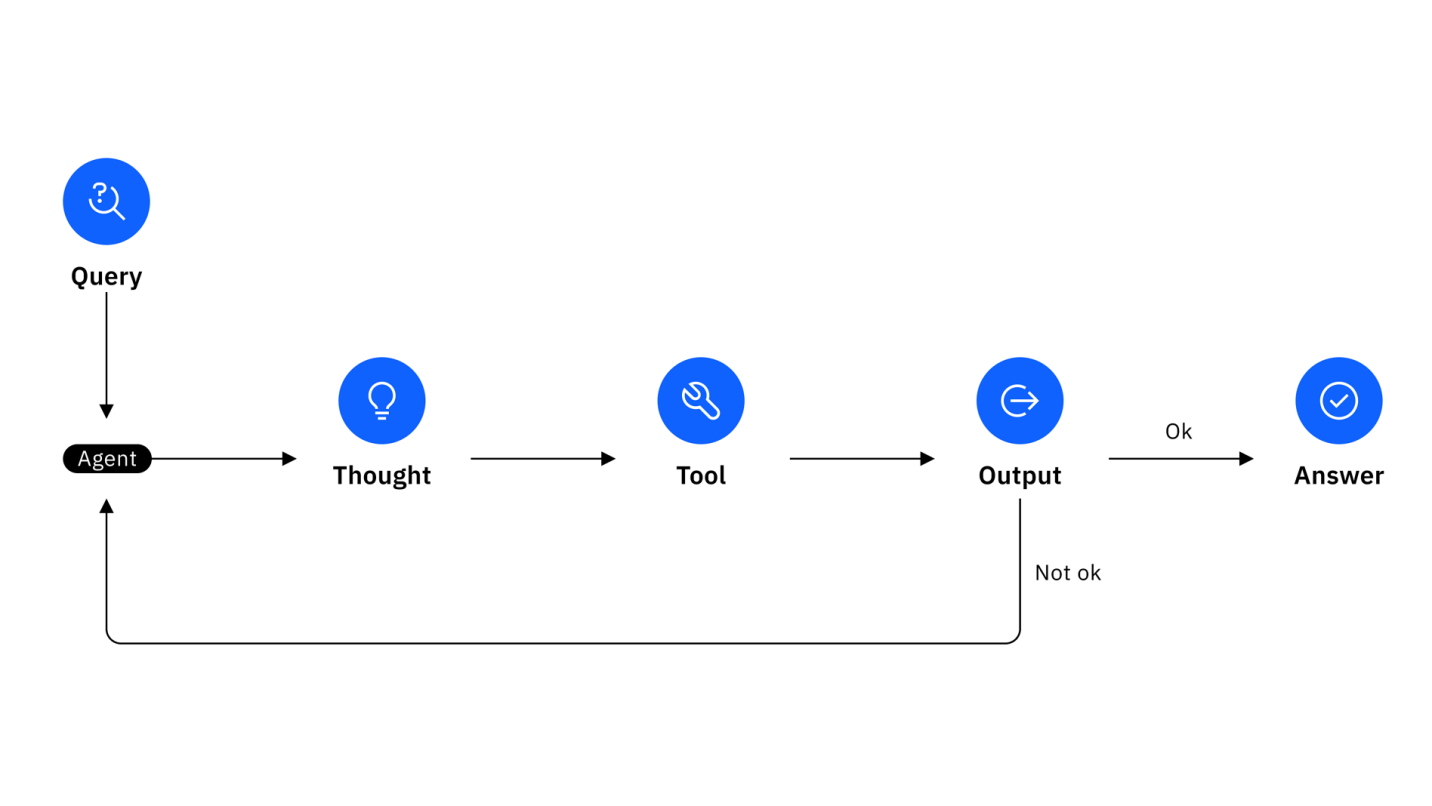
ReAct (Reasoning and Action) is a framework that lets AI agents think, act, and observe in a loop.
How it works:
The agent receives a user prompt.
It reasons step-by-step — articulating its thought process.
It takes an action (e.g., calling a tool).
It observes the result.
Based on the result, it reasons again and updates its plan.
This iterative loop is like a human solving a puzzle — experimenting, reflecting, and refining.
Why it matters:
- It supports complex, unpredictable tasks.
- It’s transparent — you see the agent’s reasoning in real time.
- It helps debug or retrain the agent more easily.
ReWOO: Plan Once, Act Smart
ReWOO (Reasoning Without Observation) takes a different approach.
Instead of reacting after every step, the agent plans everything upfront, executes in bulk, and evaluates at the end.
Workflow:
The agent anticipates what tools and data it will need.
It collects everything it needs at once.
It combines the results and delivers a final output.
Why it matters:
- Faster execution.
- Less computational cost.
- Reduces risk from tool failure or API rate limits.
- More aligned with enterprise-scale, multi-tool workflows.
Types of AI Agents: From Reflex to Learning
Not every agent is built the same. Here’s a hierarchy — from simplest to most advanced:
1. Simple Reflex Agents
Hard-coded rules. No learning or context memory.
2. Model-Based Reflex Agents
Can track some internal state for better decisions.
3. Goal-Based Agents
Plan actions based on goals, not just rules.
4. Utility-Based Agents
Optimize based on outcomes and tradeoffs.
5. Learning Agents
Improve continuously with feedback, experience, or user interaction.
Why This Matters for You
If you’re still deploying bots or assistants in your workflows, you’re solving today’s problems with yesterday’s tools.
AI agents are:
- Smarter than bots.
- More independent than assistants.
- More scalable than human teams.
Whether you’re automating HR processes, sales reports, IT tickets, or customer service — agents are the next layer of business performance.
Final Thought
When software starts thinking, planning, and executing on your behalf — your role changes from operator to orchestrator.
So ask yourself:
Are you building tools? Or are you assembling agents?
Because those who build agents now… …won’t be building slide decks later.
Related: Read Part 1: What Are AI Agents? And Why They’re Not Just Fancy Chatbots to understand the fundamentals of AI agents.
Leave a Reply