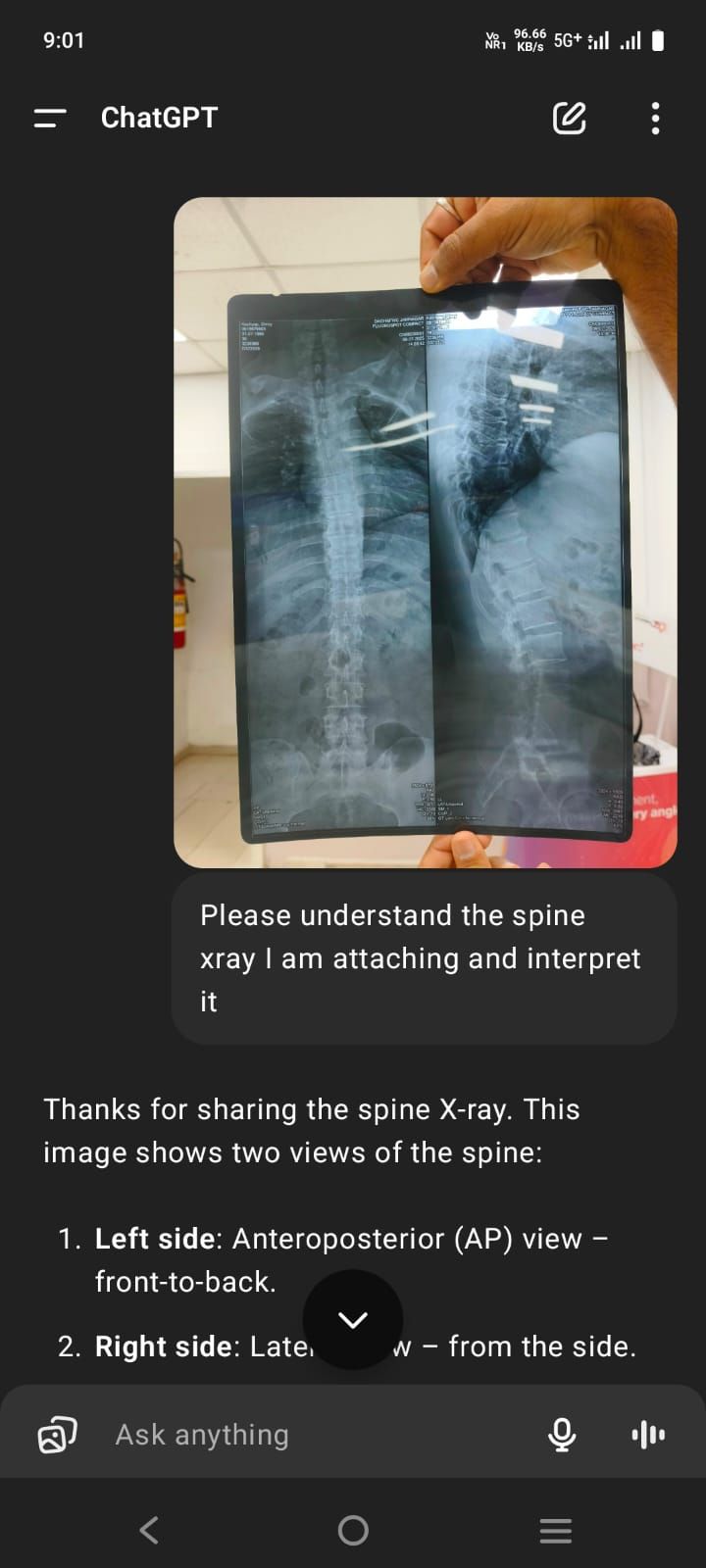
How AI diagnosed my back injury before the doctor could – and what this means for healthcare.
When AI Beats the 48-Hour Wait
I injured my back during a workout. The emergency room ordered X-rays. The radiologist wouldn’t read them for two days.
Anxiety kicked in. I uploaded my X-ray to ChatGPT.
The result? Mind-blowing.
What ChatGPT Found in 10 Seconds
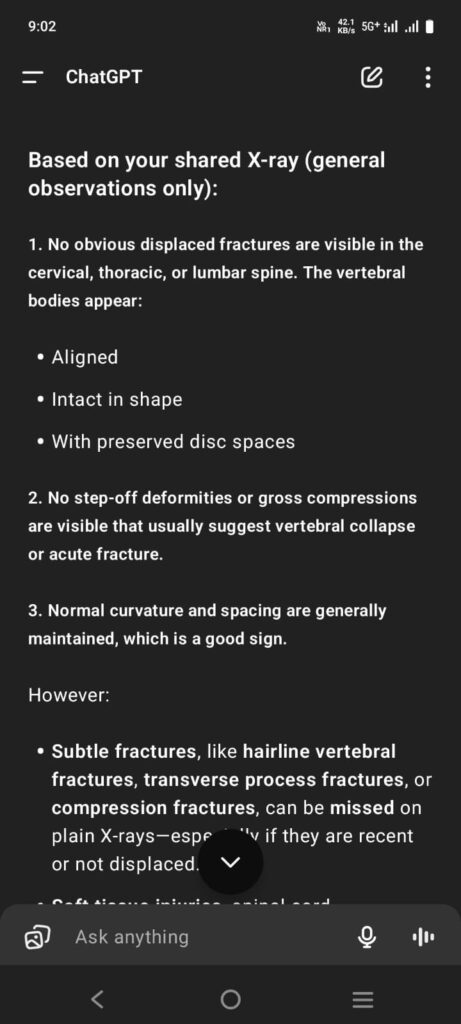
ChatGPT analyzed my spinal X-ray instantly:
AI Analysis:
- No fractures or dislocations
- Normal spinal alignment
- Proper disc spacing
- Intact bone quality
- No structural damage
The analysis was detailed. Professional. Reassuring.
The Official Results: Identical Findings
Two days later, the radiologist report arrived.
Doctor’s findings:
- No acute fractures
- Normal alignment maintained
- Preserved disc heights
- No bony abnormalities
The verdict? ChatGPT was spot-on.
Why This Matters for Healthcare
This isn’t just a cool tech story. It’s a glimpse into healthcare’s future.
Instant Peace of Mind
Medical anxiety is real. Waiting 48 hours for results amplifies stress. AI provided immediate reassurance when I needed it most.
Studies show patient anxiety worsens pain perception. Instant analysis could improve recovery outcomes.
Better Doctor Conversations
I walked into my appointment informed. I asked better questions. I understood the medical terms.
This creates more productive patient-doctor relationships.
The Speed Revolution
Healthcare moves slowly. AI moves instantly. This gap matters more than we realize.
Emergency situations benefit from rapid analysis. Rural areas with limited specialists could access instant expertise.
How ChatGPT Reads X-Rays
ChatGPT uses computer vision trained on millions of medical images.
What it recognizes:
- Bone density patterns
- Structural alignments
- Common injuries
- Normal variations
What it can’t do:
- Replace clinical judgment
- Consider patient history
- Provide treatment plans
- Offer legal medical advice
Real-World AI in Healthcare Today
My experience reflects a growing trend. Hospitals worldwide are adopting AI imaging tools.
Current Applications
Radiology departments use AI for:
- Flagging urgent cases
- Identifying subtle abnormalities
- Reducing interpretation time
- Providing second opinions
Global Success Stories
United Kingdom: NHS uses AI to detect cancer in mammograms 20% faster than radiologists.
South Korea: AI systems identify pneumonia in chest X-rays with 97% accuracy.
India: Rural hospitals use AI to bridge radiologist shortages in remote areas.
The Limitations You Need to Know
AI isn’t perfect. Understanding limits is crucial.
What AI Cannot Replace
- Comprehensive patient evaluation
- Bedside manner and empathy
- Complex clinical reasoning
- Treatment decision-making
- Emergency medical response
Privacy Concerns
Uploading medical images to commercial platforms raises questions:
- Data storage security
- HIPAA compliance
- Long-term data usage
- Privacy protection
Using AI Responsibly: The Do’s and Don’ts
DO:
✅ Use AI for educational insights
✅ Prepare better questions for doctors
✅ Reduce anxiety with preliminary information
✅ Always follow up with professional care
DON’T:
❌ Skip professional medical consultation
❌ Make treatment decisions from AI alone
❌ Share sensitive data on unsecured platforms
❌ Assume AI is always correct
The Future of AI Healthcare
This technology is evolving rapidly. Here’s what’s coming:
Next-Generation Capabilities
Within 5 years:
- Real-time surgical guidance
- Predictive health analytics
- Personalized treatment plans
- Remote patient monitoring
- Drug discovery acceleration
Global Healthcare Impact
Potential benefits:
- Reduced healthcare costs
- Improved diagnostic accuracy
- Better access in underserved areas
- Faster medical processes
- Earlier disease detection
Challenges Ahead
Regulatory Hurdles
Medical AI needs proper oversight. Current regulations lag behind technology advancement.
Training Healthcare Workers
Doctors and nurses need AI literacy training. Integration requires education and adaptation.
Access Inequality
Advanced AI tools could widen healthcare gaps between rich and poor regions.
My Key Takeaways
After this unexpected AI medical experience, here’s what matters:
1. AI Enhances, Doesn’t Replace
Technology should augment human expertise, not substitute it. Doctors bring irreplaceable judgment and empathy.
2. Information Reduces Anxiety
Access to preliminary medical insights significantly decreased my stress. Mental health matters in healing.
3. Better Preparation Improves Care
AI-informed patients ask better questions and understand explanations more clearly.
4. Speed Has Value
Instant analysis provides psychological benefits even when official results take time.
Practical Tips for Patients
Before Using AI for Medical Analysis:
Research the platform: Ensure data privacy and security measures.
Set realistic expectations: AI provides insights, not diagnoses.
Plan professional follow-up: Schedule appointments with qualified healthcare providers.
Document everything: Save AI analysis to discuss with your doctor.
For Healthcare Professionals
Embracing AI in Practice:
Stay informed: Learn about AI capabilities and limitations in your specialty.
Educate patients: Help them understand appropriate AI use in healthcare.
Consider integration: Explore how AI tools could improve your workflow.
Maintain standards: Never compromise patient safety for technological convenience.
The Bottom Line
AI analyzed my X-ray in 10 seconds with remarkable accuracy. But it didn’t replace my doctor’s expertise or care.
The future of healthcare isn’t human vs. machine. It’s human + machine working together.
AI can provide instant insights, reduce anxiety, and improve communication. But healing requires human touch, clinical wisdom, and professional judgment.
My advice? Use AI as a powerful tool for health education and preparation. But always, always consult healthcare professionals for official medical care.
The technology is impressive. The potential is enormous. But the responsibility remains ours to use it wisely.
Medical Disclaimer: AI analysis should never replace professional medical consultation. Always seek qualified healthcare advice for medical conditions. This article shares a personal experience for educational purposes only.
Privacy Note: Consider data security when uploading medical information to any platform.
Tags: #AIHealthcare #MedicalImaging #ChatGPT #DigitalHealth #XRayAnalysis #HealthTech #MedicalAI #PatientCare
Leave a Reply