Author: host

  • OpenAI Academy: Your Gateway to Free AI Education That Everyone’s Missing

    OpenAI Academy: Your Gateway to Free AI Education That Everyone’s Missing

    Discover how OpenAI’s hidden gem is democratizing artificial intelligence education for millions worldwide

    Introduction: The AI Learning Revolution You Haven’t Heard About

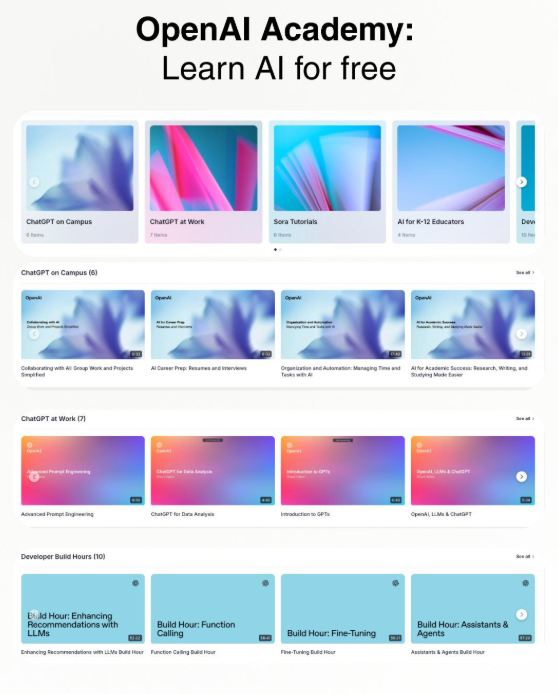
    While everyone talks about ChatGPT’s capabilities, OpenAI quietly launched something that could be even more transformative: OpenAI Academy. This comprehensive, completely free educational platform is flying under the radar, despite offering world-class AI education to anyone with an internet connection.

    In an era where AI literacy is becoming as essential as digital literacy was two decades ago, OpenAI Academy represents a crucial step toward ensuring that artificial intelligence knowledge isn’t limited to tech professionals and computer scientists.

    What Exactly Is OpenAI Academy?

    OpenAI Academy is a beginner-friendly, self-paced learning platform designed to teach artificial intelligence concepts and practical applications to people from all backgrounds. Whether you’re a student, teacher, parent, small business owner, or working professional with zero technical experience, the Academy provides structured pathways to understand and effectively use AI tools.

    The platform breaks down complex AI concepts into digestible, actionable lessons that focus on real-world applications rather than abstract theory.

    Core Features That Make OpenAI Academy Stand Out

    Simplified AI Fundamentals

    The Academy demystifies how ChatGPT and other AI systems work, using plain language explanations that anyone can understand. Complex technical concepts are broken down into visual, interactive lessons that make learning engaging and accessible.

    Real-World Application Focus

    Instead of theoretical knowledge, the platform emphasizes practical, daily-life examples that show how AI can solve actual problems in work, education, and personal projects.

    Comprehensive Learning Modules

    • Prompt Engineering: Master the art of communicating effectively with AI systems
    • AI Ethics and Responsible Use: Understanding the implications and best practices
    • Hands-on ChatGPT Tutorials: Direct, interactive learning within the ChatGPT interface
    • Professional Application Strategies: Industry-specific use cases and implementations

    Tailored Learning Tracks

    The Academy offers specialized pathways for:

    • Educators: Teaching strategies and classroom integration techniques
    • Small Business Owners: Practical AI applications for business growth
    • General Learners: Foundation-building for AI literacy
    • Professionals: Career-focused AI skill development

    Why OpenAI Academy Matters Now More Than Ever

    The AI Literacy Gap Is Growing

    Research shows that while AI tools are becoming ubiquitous, most people lack the skills to use them effectively. This creates a digital divide where those who understand AI gain significant advantages in their careers and personal productivity.

    Universal Skill Development

    AI proficiency is rapidly becoming a core competency across all professions—not just technology roles. From marketing and healthcare to education and finance, understanding how to leverage AI tools is becoming as important as basic computer skills.

    Democratizing AI Knowledge

    By offering high-quality AI education for free, OpenAI Academy helps ensure that AI’s benefits aren’t limited to those with expensive technical training or computer science degrees.

    Getting Started: Your First Steps

    Access and Navigation

    Visit academy.openai.com to begin your AI learning journey. The platform requires no prerequisites and allows you to:

    • Choose your learning track based on your role and interests
    • Progress at your own pace with no deadlines or pressure
    • Access materials from any device with internet connectivity

    Recommended Learning Path

    Start with AI Fundamentals: Understand basic concepts and terminology

    Explore Real-World Examples: See AI applications in your field of interest

    Practice Prompt Engineering: Develop skills to communicate effectively with AI

    Focus on Ethics and Responsibility: Learn best practices and potential pitfalls

    Apply Knowledge Practically: Use hands-on tutorials to reinforce learning

    The Broader Impact on Society

    Closing the Knowledge Gap

    OpenAI Academy represents a significant step toward ensuring that AI development and application are shaped by diverse perspectives rather than a small group of technical experts. This democratization of knowledge is crucial for creating AI systems that serve everyone’s needs.

    Preparing for the Future Workforce

    As AI integration accelerates across industries, workers who understand these tools will have significant advantages. The Academy helps prepare people for a future where AI collaboration is standard across most professions.

    Building Responsible AI Users

    By including ethics and responsible use as core components, the Academy helps create a generation of AI users who understand both the capabilities and limitations of these powerful tools.

    Key Takeaways

    OpenAI Academy offers an unprecedented opportunity to gain valuable AI skills without cost barriers. The platform’s focus on practical applications, ethical use, and accessibility makes it an essential resource for anyone looking to understand and leverage artificial intelligence in their work or personal life.

    The bottom line: In a world where AI literacy is becoming as fundamental as reading and writing, OpenAI Academy provides free, high-quality education that can transform how you work, learn, and solve problems. Don’t let this hidden opportunity pass you by.

    Ready to Advance Your HR Career with AI Skills?

    Visit OpenAI Academy today and take the first step toward mastering AI applications in human resources. Transform your HR department’s capabilities and advance your career in the evolving world of AI-enhanced human resources management

  • Google Just Ended Photoshop With a Banana

    Google Just Ended Photoshop With a Banana

    Google just dropped a game-changer with a funny name. Yesterday, they launched “Nano Banana.” It’s officially called Gemini 2.5 Flash Image. This is much more than just another AI image tool.

    This might be the first real Photoshop rival of the AI era.

    What Makes Nano Banana Different

    After weeks of rumors, Google finally released their answer to photo editing. Here’s why this matters for designers, marketers, and businesses.

    1. People and Brands Stay the Same

    The biggest improvement is consistency. People, pets, and company logos stay the same across different edits.

    Why this matters:

    • Personal photos look natural across multiple edits
    • Businesses can keep their brand looking consistent
    • Marketing teams can create campaigns without hiring designers

    2. Editing Gets Much Easier

    Traditional photo editing is hard. You need to learn layers, masks, and complex tools. Nano Banana changes this. It uses simple instructions instead.

    Old way: Learn Photoshop tools. Create layers. Use masks. New way: Just tell it what you want changed.

    3. Create and Edit in One Place

    This isn’t just about making new images. You can do much more:

    • Make precise edits to existing photos
    • Combine multiple styles into one image
    • Switch between creating and editing easily

    4. Fast and Private

    Early tests show Nano Banana runs quickly. It might work offline on your device. This opens up new possibilities:

    • No internet required for editing
    • Private editing for sensitive content
    • Companies can keep their work internal

    5. Built-in Trust Features

    Every image includes a SynthID watermark. This is subtle but important. It shows where the industry is heading. People need to know what’s real vs AI-generated.

    How It Compares to Other Tools

    Google is positioning Nano Banana against several established players.

    vs Adobe Photoshop

    • Photoshop: Complex but powerful. Requires training.
    • Nano Banana: Simple instructions. No technical skills needed.

    vs Other AI Tools

    Compared to Qwen-Image, OpenAI’s editor, or Adobe Firefly, Google focuses on:

    • Big infrastructure – handles lots of users
    • Strong safety features – responsible AI development
    • Easy to use – works for real business needs

    What It’s Not Perfect At

    Like all AI tools, Nano Banana has problems:

    • Small edits can sometimes mess up faces
    • Fine details might not always look perfect
    • Still learning complex editing requests

    But these issues are getting better with updates.

    Real Uses for Business

    For Companies

    • Marketing teams can edit product photos without designers
    • Online stores can quickly update product images
    • Social media managers can create consistent brand content
    • Small businesses get professional-looking images without big budgets

    For Regular People

    • Family photos can be improved easily
    • Social media content creation becomes simpler
    • Creative projects don’t require expensive software
    • Quick fixes for everyday photo needs

    Why This Matters

    Anyone Can Design Now

    Professional photo editing is becoming easy for everyone. This means:

    • More people can create professional-looking content
    • Traditional design jobs might change to more strategic work
    • Businesses can handle visual content themselves

    The Future of Creative Tools

    Nano Banana shows a shift. Complex software is becoming conversational editing:

    • Tools become easier to use
    • Learning takes less time
    • Creative work focuses more on ideas than technical skills

    How to Try It

    You can test Nano Banana right now:

    • AI Studio: http://ai.studio/banana
    • Gemini API: gemini-2.5-flash-image-preview

    What This Means for Different People

    For Designers

    Don’t panic. This tool helps rather than replaces creative skills. Focus on:

    • Strategic creative thinking
    • Art direction and concept development
    • Complex projects requiring human creativity
    • Client communication and project management

    For Marketers

    This changes content creation:

    • Faster campaign creation
    • More control over brand consistency
    • Less dependence on design teams for simple edits
    • Ability to test more creative ideas quickly

    For Small Businesses

    Compete with bigger companies:

    • Professional-looking marketing materials
    • Better product photos
    • Social media content creation
    • Brand development without big budgets

    The Bigger Picture

    Google’s “Nano Banana” is more than just a new editing tool. It’s part of a larger change:

    • AI makes professional tools easy for everyone
    • Complex software gets replaced by simple conversations
    • Creative work becomes more about ideas than technical skills
    • Trust features become standard

    What’s Next

    Nano Banana isn’t perfect yet. But it shows where photo editing is going:

    • Simpler interfaces that anyone can use
    • AI-powered consistency across projects
    • Built-in trust features for authentic content
    • Faster workflows for businesses and individuals

    The funny name shouldn’t fool you. This is a serious challenge to tools like Photoshop. Companies and people who use these new tools early will have big advantages.

    Key Takeaway

    Google’s Nano Banana has a silly name. But it represents a serious change in how we edit and create images. It makes professional editing easy through simple instructions. This democratizes design and challenges traditional software.

    For businesses: This tool can reduce costs and speed up content creation. For individuals: Professional editing becomes as easy as talking. For the industry: We’re seeing AI-native creative tools that might replace traditional software.

  • How to Successfully Use AI in Indian Healthcare: Easy 2025 Guide

    How to Successfully Use AI in Indian Healthcare: Easy 2025 Guide

    Indian healthcare is transforming with AI to help patients better, but many hospitals get stuck with just a few small AI projects. In fact, 76% of healthcare organizations worldwide don’t grow their AI use beyond 1-3 cases.

    This simple guide helps Indian hospitals, clinics, and healthcare companies use AI in Indian healthcare to save lives and improve patient care.

    What’s Happening with AI in Indian Healthcare

    AI Is Growing Fast in Healthcare

    India’s healthcare AI market will hit $1.6 billion in 2025 and grow to $4.2 billion by 2027. Big hospitals like AIIMS Delhi, Apollo, and Fortis are leading. Small clinics and diagnostic centers are also using AI in medical diagnosis India to compete.

    Challenges for Indian Healthcare

    Using AI in healthcare isn’t easy. Here are the main problems:

    Not Enough AI Medical Experts: It’s hard to find doctors and tech people who know AI.

    Money Issues: Small hospitals can’t afford big AI tools.

    Old Hospital Systems: Old computers make it tough to add AI. Patient Data Problems: Bad or scattered patient records mess up AI results.

    Medical Rules: Hospitals must follow India’s medical device rules and ICMR guidelines.

    Why Many Healthcare Organizations Fail at AI

    Globally, 95% of hospitals try AI, but 76% stay stuck with small projects. Indian healthcare faces the same issues because:

    Bad Patient Data: Medical records are spread across different systems, making AI weak. No Medical AI Plan: Hospitals buy AI tools without clear healthcare goals. No Training: Doctors and nurses don’t know how to use AI. Wrong Spending: Money goes to AI tools instead of fixing patient data systems. Breaking Medical Rules: Not following ICMR or medical device laws causes trouble.

    Step-by-Step Guide to Use AI in Indian Healthcare

    Here’s an easy plan to make AI work for your healthcare AI India strategy.

    Step 1: Check and Plan (Months 1-2)

    Check If Your Hospital Is Ready for AI

    Before starting, see what your healthcare facility has and needs.

    Look at Your Patient Data:

    • Check where patient records are (EMR systems, paper files, lab results)
    • Make sure medical data is correct and easy to access
    • Find patient data stuck in different departments (radiology, pharmacy, labs)

    Check Your Medical Tech:

    • See if hospital computers can handle AI
    • Test if systems work with medical cloud platforms
    • Make sure patient data is safe from hackers

    Check Your Medical Team:

    • Find doctors and staff who know AI
    • Plan to train medical workers or hire AI specialists
    • Think about working with medical AI experts

    Make a Clear Healthcare AI Plan

    • Pick medical problems AI can fix, like faster diagnosis or better patient monitoring
    • Set healthcare goals you can measure, like 30% faster diagnosis or 25% fewer medical errors
    • Choose simple AI projects using patient data you already have

    Step 2: Fix Your Patient Data (Months 2-4)

    Good patient data is key—bad medical data ruins 85% of healthcare AI projects.

    Set Medical Data Rules

    • Keep patient records clean with healthcare data tools
    • Pick doctors to manage patient data in each department
    • Follow DPDPA and medical privacy laws to keep patient data safe

    Build Better Healthcare Data Systems

    • Put all patient data in one secure medical database
    • Use healthcare cloud storage like AWS for Healthcare or Google Cloud Healthcare
    • Make patient records ready to use instantly for diagnosis

    Follow Indian Healthcare Laws

    DPDPA Rules: Protect patient personal data and ask permission to use it Medical Device Rules: Follow CDSCO guidelines for AI medical devices ICMR Guidelines: Use ethical AI practices for medical research Hospital Standards: Meet NABH standards for quality healthcare

    Step 3: Set Up Medical Tech and Safety (Months 3-5)

    Make your hospital tech strong and safe for AI in medical diagnosis India.

    Build Strong Healthcare Tech

    • Use medical cloud services like AWS Healthcare or Microsoft Healthcare
    • Make hospital systems grow automatically
    • Plan backups so patient data is never lost

    Keep Medical AI Safe

    • Protect patient AI systems from cyber attacks
    • Use medical security tools to watch for problems
    • Check AI medical results to avoid diagnosis mistakes

    Pick Good Healthcare AI Partners

    • Work with Indian healthcare tech companies like HealthTech or global ones like Philips India
    • Choose partners with experience in Indian hospitals

    Step 4: Start Small Healthcare Projects (Months 4-6)

    Try small medical AI projects to see what works.

    Ideas for Small Healthcare Projects

    Healthcare AreaAI IdeasPatient BenefitsRadiologyX-ray analysis, CT scan reading40% faster diagnosisPathologyBlood test analysis, cancer detection90% accurate resultsEmergencyPatient triage, critical alerts50% faster treatmentPharmacyDrug interaction checks, dosing60% fewer medication errors

    Check If Medical AI Works

    • Make sure AI diagnosis is accurate (95% or better for critical cases)
    • See if doctors and nurses like it (aim for 80% satisfaction)
    • Track patient outcomes like faster treatment times

    Step 5: Grow AI Across the Hospital (Months 6-12)

    Take small medical wins and make them hospital-wide.

    Grow Medical AI Smart

    • Use AI in more hospital departments, like moving radiology AI to pathology
    • Connect AI to daily medical work with hospital automation
    • Create a medical AI team with doctors and tech experts

    Help Medical Staff Use AI

    • Train all healthcare workers with medical AI courses
    • Ask doctors and nurses what they think every few months
    • Share medical success stories to get everyone excited about AI

    AI Ideas for Different Healthcare Areas

    Radiology: Faster Image Analysis

    AI Applications:

    • X-ray analysis for fractures and lung diseases
    • CT scan reading for cancer detection
    • MRI analysis for brain and heart conditions

    Implementation Tips:

    • Start with chest X-rays (most common)
    • Train radiologists on AI tools
    • Follow AERB guidelines for medical imaging

    Pathology: Better Lab Results

    AI Applications:

    • Blood test analysis and abnormal result alerts
    • Cancer cell detection in tissue samples
    • Genetic testing and rare disease identification

    Benefits for Patients:

    • 24/7 lab result monitoring
    • Fewer human errors in critical tests
    • Faster diagnosis for urgent cases

    Emergency Medicine: Save More Lives

    AI Applications:

    • Patient triage based on symptoms and vital signs
    • Heart attack and stroke prediction
    • ICU patient monitoring and alerts

    Critical Success Factors:

    • Must work 24/7 without failure
    • Integrate with existing emergency protocols
    • Train emergency staff extensively

    General Practice: Better Primary Care

    AI Applications:

    • Symptom analysis and diagnosis assistance
    • Prescription drug interaction checking
    • Chronic disease management and monitoring

    Implementation Strategy:

    • Start with common conditions like diabetes
    • Provide mobile AI tools for rural doctors
    • Create patient education AI chatbots in local languages

    Finding and Training Healthcare AI Experts in India

    India has growing healthcare AI talent, but competition is high.

    Hiring Medical AI Professionals

    Where to Find Talent:

    • Medical colleges with AI programs (AIIMS, CMC Vellore)
    • Healthcare tech companies and startups
    • International healthcare AI professionals returning to India

    Key Skills to Look For:

    • Medical knowledge combined with AI expertise
    • Experience with healthcare data and regulations
    • Understanding of Indian healthcare challenges

    Training Healthcare Staff

    For Doctors and Nurses:

    • Basic AI literacy for medical professionals
    • Hands-on training with AI diagnostic tools
    • Continuous education on new AI medical technologies

    For Hospital IT Teams:

    • Healthcare data management and security
    • Medical AI system integration
    • Compliance with healthcare regulations

    Affordable AI for Small Hospitals and Clinics

    Small healthcare providers can use AI without spending too much.

    Budget-Friendly Healthcare AI

    Free and Low-Cost Tools:

    • Open-source medical AI models
    • Government healthcare AI initiatives
    • Pay-per-use cloud-based medical AI services

    Step-by-Step Approach:

    • Start with one AI application (like X-ray analysis)
    • Add new AI features every 3-4 months based on results
    • Focus on high-impact, low-cost solutions first

    Government Healthcare Support

    Available Programs:

    • National Digital Health Mission (NDHM) AI initiatives
    • IndiaAI Mission healthcare projects
    • State government healthcare digitization grants
    • Medical device development funding

    How to Know Healthcare AI Is Working

    Track these to see if AI helps patients and hospitals:

    Measurement TypeWhat to TrackTarget GoalMedical AccuracyAI diagnosis accuracy, false positive rate95% accuracy, <5% false positivesPatient OutcomesTreatment time, recovery rates30% faster treatment, 20% better outcomesHospital EfficiencyStaff productivity, cost savings25% more efficient, 15% cost reductionStaff SatisfactionDoctor/nurse AI adoption, training completion85% adoption, 90% trained

    Continuous Medical AI Improvement

    • Review AI performance with medical experts monthly
    • Update AI models based on new medical research
    • Monitor patient safety and AI decision quality
    • Stay updated with medical AI regulations

    Avoid Common Healthcare AI Mistakes

    Patient Data Problems

    Problem: Incomplete or inaccurate patient records leading to wrong AI diagnosis Solution: Implement strict medical data quality checks and staff training

    Technology Integration Issues

    Problem: AI systems that don’t work with existing hospital equipment Solution: Plan integration with current medical systems from the start

    Medical Staff Resistance

    Problem: Doctors and nurses afraid AI will replace them Solution: Show how AI helps them provide better patient care, not replace them

    Regulatory Compliance Failures

    Problem: Using AI without proper medical device approvals Solution: Work with regulatory experts from day one

    What’s Next for AI in Indian Healthcare

    Emerging Healthcare AI Trends

    Telemedicine AI: AI-powered remote patient consultation and monitoring Personalized Medicine: AI for customized treatment based on genetic data Drug Discovery: AI accelerating development of new medicines in India Rural Healthcare: AI bringing specialist care to remote areas

    Preparing for the Future

    Innovation Strategy:

    • Build healthcare AI research partnerships with medical colleges
    • Create AI-powered medical device manufacturing capabilities
    • Develop AI solutions for uniquely Indian health challenges
    • Export Indian healthcare AI solutions globally

    Key Tips for Indian Healthcare Organizations

    Success Factors

    Fix Patient Data First: Clean, complete medical records are essential

    Focus on Patient Outcomes: Choose AI that directly improves patient care

    Train Medical Staff: Help doctors and nurses embrace AI tools

    Follow Medical Laws: Stick to ICMR, CDSCO, and healthcare regulations

    Start with High-Impact Cases: Begin with AI that saves lives or reduces errors

    Measure Patient Safety: Always prioritize patient safety over efficiency

    Action Plan for Healthcare Leaders

    Next 30 Days:

    • Check patient data quality and pick 3 medical AI ideas
    • Meet with medical department heads about AI possibilities
    • Research healthcare AI regulations and compliance requirements

    Next 3 Months:

    • Make a healthcare AI plan and start one pilot project
    • Begin training medical staff on AI tools
    • Set up secure patient data systems for AI

    Next 12 Months:

    • Use AI in 3-5 medical departments
    • Achieve 25% improvement in diagnosis speed or accuracy
    • Train 80% of medical staff on AI tools

    Conclusion

    Using AI in Indian healthcare takes careful planning and focus on patient safety. By fixing patient data, training medical staff, and following healthcare laws, Indian hospitals can avoid the 76% failure trap and lead in healthcare digital transformation India.

    Remember: AI in healthcare isn’t about replacing doctors—it’s about helping them save more lives and provide better patient care.

    Start with a patient data check and a simple diagnostic AI project. Your healthcare AI India success story starts with helping just one patient better.

  • How to achieve Successful AI Implementation in Indian Companies: Ultimate 2025 Guide

    How to achieve Successful AI Implementation in Indian Companies: Ultimate 2025 Guide

    India’s AI revolution is transforming businesses, but 76% of global organizations struggle to scale beyond 1-3 use cases. Indian enterprises face unique challenges like talent shortages, legacy systems, and compliance hurdles. This comprehensive AI implementation guide for Indian companies provides a proven roadmap to unlock the full potential of enterprise AI in India, driving digital transformation in India with measurable ROI.

    Current State of AI Adoption in India

    Explosive AI Market Growth

    India’s AI market is skyrocketing, projected to reach $7.8 billion in 2025 and $17 billion by 2027. Sectors like IT services, banking, healthcare, and manufacturing lead the charge, with giants like TCS, Infosys, and HDFC setting the pace. SMEs are also jumping in, leveraging artificial intelligence business in India for competitive advantage.

    Unique Challenges for Indian Businesses

    • Limited AI Talent: High demand for skilled professionals outstrips supply.
    • Budget Constraints: SMEs face high upfront costs for AI infrastructure.
    • Legacy Systems: Outdated tech complicates integration.
    • Data Quality Issues: Fragmented, siloed data undermines AI accuracy.
    • Regulatory Compliance: Navigating the Digital Personal Data Protection Act (DPDPA) and sector-specific rules.

    Why Most Indian Companies Fail at Scaling AI

    Globally, 95% of companies use AI, but 76% stagnate at basic pilots, and 95% of generative AI projects fail to deliver ROI. Indian firms face the same pitfalls due to:

    Weak Data Foundations: Siloed data in ERP/CRM systems leads to unreliable outputs.

    No Clear Strategy: Adopting tools without aligning to business goals wastes resources.

    Skill Gaps: Employees lack AI literacy, slowing adoption.

    Misallocated Budgets: Overspending on tools, neglecting infrastructure.

    Compliance Gaps: Ignoring DPDPA or RBI/ICMR regulations risks penalties.

    Step-by-Step AI Implementation Roadmap for Indian Companies

    Follow this phased Indian companies AI strategy to scale successfully.

    Phase 1: Assessment and Planning (Months 1-2)

    Conduct an AI Readiness AuditLay the groundwork for your AI adoption guide with a thorough assessment.

    • Data Audit:

      Map all data sources (e.g., SAP, Salesforce).

      Evaluate quality: accuracy, completeness, accessibility.

      Identify silos across departments.

    • Map all data sources (e.g., SAP, Salesforce).
    • Evaluate quality: accuracy, completeness, accessibility.
    • Identify silos across departments.
    • Technology Review:

      Assess IT stack for cloud readiness and scalability.

      Test network security and API compatibility.

      Plan for integration with legacy systems.

    • Assess IT stack for cloud readiness and scalability.
    • Test network security and API compatibility.
    • Plan for integration with legacy systems.
    • Talent Gap Analysis:

      Survey AI skills via tools like LinkedIn Assessments.

      Plan hiring from IITs/NITs or upskilling programs.

      Explore partnerships with Indian AI vendors like Fractal Analytics.

    • Survey AI skills via tools like LinkedIn Assessments.
    • Plan hiring from IITs/NITs or upskilling programs.
    • Explore partnerships with Indian AI vendors like Fractal Analytics.

    Develop a Goal-Aligned AI Strategy

    • Define pain points: e.g., reduce customer churn by 20%.
    • Set SMART KPIs: ROI, timelines, adoption rates.
    • Prioritize use cases with high ROI and existing data.

    Phase 2: Building a Robust Data Foundation (Months 2-4)

    Data is the backbone of AI—80% of failures stem from poor data quality.

    Establish Data Governance

    • Set standards: Use tools like Talend for automated cleaning.
    • Assign data owners: Department heads ensure accountability.
    • Ensure DPDPA compliance: Secure PII, implement consent systems.

    Modernize Data Infrastructure

    • Unify silos with ETL pipelines (e.g., Apache Airflow).
    • Adopt data lakes: AWS S3 or Snowflake for cost-effective storage.
    • Enable real-time analytics with Kafka.

    Navigate Indian Regulations

    • DPDPA Compliance: Anonymize data, build breach response plans.
    • Industry-Specific Rules:

      Banking: RBI’s AI ethics for unbiased lending.

      Healthcare: ICMR guidelines for diagnostics.

      Manufacturing: BIS standards for quality control.

      IT Services: MeitY rules for cross-border data.

    • Banking: RBI’s AI ethics for unbiased lending.
    • Healthcare: ICMR guidelines for diagnostics.
    • Manufacturing: BIS standards for quality control.
    • IT Services: MeitY rules for cross-border data.

    Phase 3: Infrastructure and Security Setup (Months 3-5)

    Build a scalable, secure foundation to support your artificial intelligence business in India.

    Scalable AI Infrastructure

    • Cloud Providers: AWS India, Azure, or JioCloud for data sovereignty.
    • Enable auto-scaling with Kubernetes; ensure 99.9% uptime.
    • Plan disaster recovery across multi-zone setups.

    Robust Security Framework

    • Protect against AI-specific threats like prompt injection.
    • Implement MFA, zero-trust models, and SIEM tools (e.g., Splunk).
    • Monitor outputs for bias and errors.

    Choose Strategic AI Partners

    • Evaluate Indian firms like HCL or global players with local presence (e.g., IBM India).
    • Assess expertise, SLAs, and sector-specific case studies.

    Phase 4: Pilot Projects for Quick Wins (Months 4-6)

    Start small with high-impact, low-risk pilots to build momentum.

    Industry-Specific Pilot Ideas

    Measure Pilot Success

    • Track: Model accuracy (>85%), user NPS (>70), cost savings.
    • Visualize ROI with dashboards (e.g., Tableau).

    Phase 5: Scaling for Enterprise-Wide Impact (Months 6-12)

    Turn pilots into enterprise-wide wins.

    Scale Strategically

    • Expand use cases across departments: e.g., fraud AI to operations.
    • Integrate with workflows via RPA + AI.
    • Build AI Centers of Excellence (CoEs) for governance.

    Champion Change Management

    • Train via gamified platforms like Coursera.
    • Collect feedback through quarterly surveys.
    • Celebrate wins to drive adoption.

    Industry-Tailored AI Strategies for Indian Enterprises

    IT Services: Automate to Innovate

    • Focus: DevOps AI, client analytics.
    • Approach: Pilot internally, then develop client-facing AI services.

    Manufacturing: Drive Efficiency

    • Focus: AI-IoT for smart factories, quality control.
    • Tips: Integrate with PLCs, train workers via AR.

    Banking: Secure, Compliant Growth

    • Focus: Explainable AI for audits, fraud detection.
    • Must-Do: RBI-compliant bias checks, audit trails.

    Healthcare: Ethical Innovation

    • Focus: Privacy-preserving AI (federated learning).
    • Essentials: ICMR validation, human oversight.

    Building AI Talent in India

    India’s 1.5M AI professionals are a goldmine—secure and upskill them.

    Talent Acquisition

    • Hire from IITs/NITs; seek domain-AI hybrids.
    • Leverage Global Capability Centres for global talent.

    Upskilling Programs

    • All Employees: NASSCOM’s AI 101 courses.
    • Tech Teams: Google Cloud bootcamps.
    • Leaders: AI strategy certifications.

    Cost-Effective AI for Indian SMEs

    Maximize ROI on a budget.

    • Affordable Tools: Hugging Face, GCP free tiers, TensorFlow.
    • Phased Rollout: Automate one process per quarter.
    • Government Support: Tap IndiaAI Mission (₹10K Cr) or Startup India grants.

    Measuring AI Success: KPIs to Track

    Continuous Improvement: Bi-monthly model retraining, trend monitoring via Gartner.

    Avoiding Common AI Pitfalls

    • Data Issues: Automate validation, unify silos with APIs.
    • Tech Traps: Start with MVPs, co-design integrations.
    • Change Resistance: Involve teams early, set realistic goals.

    The Future of AI in Indian Companies

    Emerging Trends

    • Industry 4.0: AI-IoT for smart factories.
    • Vernacular AI: NLP for Indian languages.
    • Edge AI: 5G-powered real-time analytics.

    Preparing for Tomorrow

    • Build AI labs in Bengaluru/Hyderabad.
    • Partner with global leaders like NVIDIA.
    • Develop India-specific solutions for global markets.

    Key Takeaways for Indian Companies

    Data First: Audit ruthlessly to avoid garbage-in, garbage-out.

    Problem-Driven: Solve business pain points, not tech trends.

    Upskill Relentlessly: Empower people, don’t replace them.

    Compliance Is Non-Negotiable: Align with DPDPA, RBI, ICMR.

    Pilot Smart: Quick wins build trust.

    Measure Everything: Data drives decisions.

    Action Plan

    • Next 30 Days: Audit data, identify 3 high-impact use cases.
    • Next 3 Months: Finalize AI strategy, launch pilot.
    • Next 12 Months: Scale 5+ use cases, achieve 20% efficiency gains.

    Conclusion

    Successful AI implementation in India demands strategy, not speed. By building strong data foundations, aligning with business goals, and ensuring compliance, Indian companies can break the 76% barrier and lead the digital transformation in India. Start with a data audit and a high-ROI pilot—your enterprise AI India journey begins now.

    Ready to transform your business? Contact us at automatereporting.com/contact to kickstart your AI strategy today!

  • 95% Use AI, 76% Fail: MIT Reveals Why

    MIT Technology Review surveyed 205 executives across the US, Europe, and Asia and found the shocking truth: Most companies don’t have an AI problem. They have a data problem.

    AI Adoption Challenges in 2025

    95% of companies worldwide are using artificial intelligence — but 76% are stuck at just 1-3 AI use cases. The gap between AI adoption and AI scaling is huge across all industries and regions.

    Here’s why: AI pilots are easy. Scaling AI across your business is hard.

    5 Key AI Strategy Findings That Change Everything

    1. Global AI Adoption vs AI Implementation Gap

    Most companies in North America, Europe, and Asia have one AI chatbot and think they’re done. Real AI transformation comes from artificial intelligence working across multiple departments and business processes.

    The AI strategy problem: Having one AI tool doesn’t make you an AI-powered company.

    2. Data Quality Kills AI Projects Worldwide

    Without clean, accessible data infrastructure, no AI strategy works — no matter how advanced your machine learning models are.

    Common data management problems globally:

    • Data silos in systems that don’t integrate
    • Poor data quality with errors and missing information
    • No clear data governance frameworks
    • Business data that’s hard to access when needed

    3. AI Security and Compliance Beat Speed

    98% of executives globally say they’d rather prioritize AI safety than be first to market. Companies worldwide are taking time to implement AI responsibly, and this approach delivers better long-term ROI.

    Why this matters for businesses: Customer trust and regulatory compliance beat speed to market.

    4. Industry-Specific AI Delivers Real Business Value

    Generic AI applications like chatbots are table stakes in 2025. Real competitive advantage comes from custom, industry-specific AI solutions.

    Examples of specialized AI by industry:

    • Manufacturing AI: Predictive maintenance systems for equipment
    • Healthcare AI: Diagnostic assistance and patient care tools
    • Financial AI: Fraud detection and risk management
    • Retail AI: Personalized recommendation engines and inventory optimization

    5. Legacy Systems Block AI Transformation

    Companies worldwide with outdated IT infrastructure find that retrofitting AI often costs more than building modern data foundations.

    Legacy infrastructure challenges:

    • Outdated databases that can’t support AI workloads
    • Disconnected enterprise systems
    • Insufficient cybersecurity for AI applications
    • Slow data processing capabilities

    What Companies Get Wrong About AI Strategy

    They Focus on AI Models, Not Data Infrastructure

    Companies get excited about new AI technology but ignore the enterprise foundations:

    • Data pipeline architecture
    • Cloud infrastructure scalability
    • AI governance frameworks
    • Employee training and change management

    They Think Too Small About AI Transformation

    One AI pilot project won’t transform your business operations. Real digital transformation requires:

    • Multiple integrated AI systems
    • Enterprise-wide data strategy
    • Cross-functional collaboration
    • Long-term technology investment

    How to Build Successful AI Strategy in 2025

    Step 1: Establish Data Foundation First

    Before investing in AI solutions:

    • Conduct comprehensive data quality audits
    • Implement data governance policies
    • Invest in data cleaning and organization
    • Create accessible data architecture

    Step 2: Build Scalable AI Infrastructure

    Create the technology foundation AI requires:

    • Cloud computing resources that scale
    • Modern data storage and management systems
    • High-speed network connectivity
    • Enterprise-grade security frameworks

    Step 3: Select Strategic AI Use Cases

    Choose artificial intelligence applications that:

    • Address specific business challenges
    • Demonstrate clear return on investment
    • Leverage existing business data
    • Can scale across business units

    Step 4: Implement AI Governance Early

    Establish processes for:

    • Data privacy and regulatory compliance
    • AI model testing and validation
    • Risk management and security
    • Change management and workforce training

    Step 5: Plan for Enterprise AI Scale

    Design beyond pilot projects:

    • Build systems that support growth
    • Train teams across all departments
    • Create workflows for multiple AI initiatives
    • Develop strategic partnerships with AI vendors

    Common AI Implementation Mistakes Worldwide

    Mistake 1: Pilot Project Purgatory

    Running endless AI pilots without ever scaling successful implementations.

    Solution: Establish clear criteria for moving from pilot to production deployment.

    Mistake 2: Technology-First AI Strategy

    Purchasing AI tools before understanding specific business requirements.

    Solution: Start with business process analysis, then identify appropriate AI solutions.

    Mistake 3: Poor Data Readiness Assessment

    Assuming existing business data is ready for AI applications.

    Solution: Invest in data quality improvement before implementing AI models.

    Mistake 4: Isolated AI Development

    Attempting to build everything internally without external expertise.

    Solution: Partner with experienced AI consultants and technology providers.

    What Successful AI Companies Do Differently

    Organizations achieving AI success globally share these characteristics:

    • Robust data infrastructure with clean, accessible business information
    • Clear AI governance balancing innovation with compliance
    • Business-focused approach solving real operational challenges
    • Scalable technology architecture growing with AI requirements
    • Comprehensive training programs helping employees adapt to AI tools

    The Future of Enterprise AI in 2025

    Building AI-ready organizations isn’t about adopting the latest AI models. It’s about solving fundamental challenges — data management, infrastructure scalability, governance frameworks, and measurable ROI — starting today.

    AI leaders will be companies that:

    • Prioritize data infrastructure before AI implementation
    • Develop governance frameworks enabling safe innovation
    • Focus on business value over technology features
    • Maintain long-term AI transformation vision

    Key Takeaway for Business Leaders

    Your AI strategy success depends entirely on your data strategy foundation. Before scaling AI across your enterprise, establish the fundamentals: clean data architecture, modern infrastructure, strong governance, and clear business objectives.

    The competitive advantage goes to organizations implementing AI most effectively, not fastest. Build solid foundations first, then scale systematically and safely.

  • Stanford Proves It: AI Just Killed 20% of Entry-Level Jobs

    Stanford Proves It: AI Just Killed 20% of Entry-Level Jobs

    Stanford University just dropped hard evidence: AI is wiping out entry-level jobs. For years, people argued about this with no proof. Now we have real data.

    What Stanford Found

    Stanford analyzed millions of payroll records. The results are clear:

    Since late 2022:

    • Employment for 22-25 year olds in AI-exposed jobs dropped 13-20%
    • AI-exposed jobs include software development and customer service
    • Older workers in the same roles stayed stable
    • In non-AI jobs like home health aides, young workers are gaining jobs fastest

    Why This Matters

    This isn’t “AI taking all jobs.” It’s more specific: AI compresses the entry level when it automates. It grows the pie when it augments.

    The pattern is clear: Entry-level positions are disappearing in certain sectors while staying strong in others.

    Impact on Different Industries

    Jobs Being Eliminated

    • Software development entry-level roles
    • Customer service representatives
    • Call center operations
    • Help desk positions

    Jobs Still Growing

    • Home health aides
    • Skilled trades
    • Personal services
    • Healthcare support roles

    What HR Leaders Should Do

    Immediate Actions

    Review which entry-level positions are at risk

    Update recruitment strategies

    Assess current training programs

    Plan for reskilling needs

    Skills That Matter Now

    Focus on developing:

    • Critical thinking
    • Problem-solving
    • Emotional intelligence
    • Creative skills that work with AI

    The Real Cause

    Higher interest rates and the tech pullback also play a big role here. We shouldn’t blame everything on AI alone. But the market shows: junior hiring is drying up. Landing that first job is harder than ever.

    What This Means for Workers

    For New Graduates

    • Entry-level jobs are more competitive
    • Focus on skills that complement AI
    • Networking becomes more important
    • Continuous learning is essential

    For Mid-Career Workers

    Don’t assume you’re safe. Once the ladder breaks at the bottom, pressure moves up. Start building AI collaboration skills now.

    Key Takeaway

    Stanford’s study shows AI is reshaping how people start their careers. Entry-level is squeezed first, but this creates pressure that moves up the career ladder.

    For companies: Rethink how you hire and develop talent in an AI world.

    For workers: Adapt by learning skills that work alongside AI, not against it.

    The future of work isn’t about AI replacing humans completely. It’s about finding new ways for humans and AI to work together.

  • OpenAI’s secret sauce to thrive in the AI Age

    OpenAI’s secret sauce to thrive in the AI Age

    OpenAI just released their leadership playbook on how to stay ahead in the age of AI — and the message is clear:

    “The companies that will thrive are the ones that treat AI not just as a tool, but as a new way of working.”

    The Reality of AI Adoption

    AI adoption is moving faster than most leaders expected. Staying ahead isn’t about having the best technology. It’s about helping your people and teams adapt with confidence.

    The report shares lessons from leaders at Moderna, Notion, BBVA and other top companies. These lessons are turned into simple steps that any company can use right now.

    The 5 Essential Steps OpenAI Recommends

    1. Align: Start with Clear Purpose

    Show your teams why AI matters. Set company goals and use AI yourself at every level.

    Key actions:

    • Set clear AI goals that help your business
    • Explain why AI initiatives matter
    • Leaders must use and support AI tools
    • Connect daily work to your AI plan

    Why this works: When teams understand the purpose, they trust AI and see it as helpful, not scary.

    2. Activate: Make Training Real and Practical

    Training works better than just talking. Make learning hands-on and useful.

    What to do:

    • Create structured AI training programs
    • Choose AI champions in each department
    • Let people try AI tools safely
    • Focus on real uses, not just theory

    Why this works: When employees see AI helping their growth and success, they want to use it.

    3. Amplify: Share Success Stories

    Don’t keep wins secret. Share success stories widely and create spaces where everyone can learn from what works.

    Best practices:

    • Document and share AI success stories across your company
    • Build internal knowledge-sharing sites
    • Create groups focused on AI use cases
    • Celebrate wins publicly to encourage more trying

    Why this works: Success spreads faster when people see their coworkers succeeding.

    4. Accelerate: Remove Barriers

    Make it easy for teams to access tools, share ideas, and move projects from testing to full use.

    Focus on:

    • Make AI tools easy to access
    • Create simple ways to submit AI project ideas
    • Let teams make decisions without too many approvals
    • Reward teams who push new ideas forward
    • Build clear paths from testing to full use

    Why this works: Removing barriers lets innovation move as fast as business needs.

    5. Govern: Balance Speed with Safety

    Clear, simple guidelines help progress without slowing things down.

    What you need:

    • Create practical AI guidelines that can change
    • Focus on helping rather than stopping
    • Build review processes that support speed
    • Ensure rules are followed without killing new ideas
    • Update policies regularly as AI gets better

    Why this works: When rules are practical and flexible, they protect the business while keeping innovation alive.

    Why This Playbook Matters

    These recommendations work because they solve the real problems of AI adoption: not the technology, but people, processes, and rules.

    The key point: Most AI projects fail not because of technology problems, but because companies don’t create the right environment for adoption.

    Lessons from Top Companies

    The playbook uses real examples from companies like:

    • Moderna – Using AI to discover new medicines faster
    • Notion – Adding AI to productivity tools
    • BBVA – Changing financial services with AI

    These companies succeeded because they focused on the human and organizational side of AI change.

    Action Steps for Leaders

    Start This Week:

    Check your current AI alignment – Do your teams understand why AI matters?

    Look at your training programs – Are they practical and hands-on?

    Find success stories – What AI wins can you share?

    Review problem areas – Where do AI projects get stuck?

    Check your rules – Are your guidelines helping or stopping progress?

    Build for the Future:

    • Train AI champions in every department
    • Create internal groups for sharing knowledge
    • Set up feedback systems for continuous improvement
    • Invest in ongoing learning and development
    • Build rules that change with technology

    Key Takeaway

    AI transformation isn’t about the technology — it’s about the people and processes. Companies that treat AI as a new way of working, not just a new tool, will be the ones that succeed.

    The playbook works well because it focuses on practical steps rather than complex theories. At just 15 pages, it’s full of useful ideas that any leadership team can use right away.

    Your choice is simple: Create the right conditions for AI success now, or watch competitors who do this pull ahead in an AI-driven future.

  • Google’s Shocking AI Survey: 2025 Secrets Revealed!

    Google’s Shocking AI Survey: 2025 Secrets Revealed!

    Google AI Survey: 8 Key Insights Every Business Leader Needs in 2025

    Google surveyed 3,466 executives about AI adoption and found game-changing results. AI has moved from testing to real business impact.

    What Google Found

    The survey shows leaders aren’t asking if they should use AI anymore. They’re asking how to scale AI systems that actually work.

    8 Key Insights

    1. AI Agents Are Live Right Now

    52% of companies already have AI agents running in production. This isn’t future planning – it’s happening today.

    What this means:

    • AI moved from testing to core business operations
    • Early adopters have big advantages
    • The technology is ready for business use

    2. Early Adopters Are Winning

    88% of early adopters see positive ROI on AI projects. Companies that started early are seeing real money returns.

    3. Most Companies See Returns

    74% of executives report ROI on at least one AI project. AI isn’t just working for tech companies – it works across all industries.

    4. ROI Happens Everywhere

    AI delivers results across different business areas:

    • 39% see productivity gains
    • 37% improve customer experience
    • 33% boost sales and marketing

    5. CEO Support Makes the Difference

    78% of companies with C-level backing report ROI. Executive support isn’t nice to have – it’s essential for AI success.

    Why leadership matters:

    • Gets proper funding
    • Breaks down barriers between departments
    • Speeds up decisions
    • Drives company-wide adoption

    6. Security Is Still a Problem

    Despite success, data privacy and security remain the #1 concern for executives implementing AI.

    Common challenges:

    • Protecting customer data
    • Following data regulations
    • Securing AI systems
    • Safe data sharing

    7. Agentic AI Shows Promise

    AI systems that work independently are the next big thing. Companies building these systems report better results and higher satisfaction.

    8. Competition Is Heating Up

    With 52% already using AI agents, companies without AI strategies risk falling behind competitors who use AI for efficiency and customer service.

    What to Do Now

    If You’re Starting with AI:

    Get CEO/executive support first

    Focus on projects with clear ROI

    Make security a priority from day one

    Start with proven applications, not experiments

    If You’re Scaling AI:

    Expand successful projects to other departments

    Invest in autonomous AI systems

    Strengthen security measures

    Track and share ROI results

    Planning Ahead

    AI adoption will keep accelerating. Organizations need to:

    • Build AI governance rules
    • Train employees on AI tools
    • Create scalable AI infrastructure
    • Set up success metrics

    The Bottom Line

    AI isn’t experimental anymore – it’s essential. With 52% using AI agents and 74% seeing ROI, the question isn’t whether AI will change business – it’s how fast you can adapt.

    Winners will be companies that:

    • Act quickly on AI implementation
    • Get strong executive support
    • Handle security challenges well
    • Focus on measurable results

    Final Thoughts

    Google’s survey proves AI delivers real business value when done right. 88% of early adopters see ROI – but late adopters risk falling permanently behind.

    The choice is clear: Join the companies seeing AI success, or watch competitors pull ahead in an AI-driven market

  • MIT Reveals Why 95% of Companies Fail at AI

    MIT Reveals Why 95% of Companies Fail at AI

    The Ultimate Organizational Playbook for 2025

    MIT Technology Review just delivered a reality check that every business leader needs to hear: Most companies do not face an AI problem. They face challenges in data quality, infrastructure, and risk management.

    Based on insights from 205 C-level executives and data leaders, the research reveals a sobering truth: 95% of companies are using AI—but 76% are stuck at just 1-3 use cases. Meanwhile, only 13% of companies globally are ready to leverage AI to its full potential.

    The gap between AI ambition and execution is massive, and it’s about to define competitive advantage over the next 24 months. Here’s your complete organizational playbook to bridge that gap.

    The Hard Truth About AI Implementation

    The Current State of Enterprise AI

    Adoption vs. Execution Reality:

    • 95% of companies are experimenting with AI technologies
    • 76% remain stuck at 1-3 pilot use cases
    • Only 5.4% of US businesses use AI to produce products or services
    • 98% of executives prefer being safe over being first

    The Infrastructure Crisis:

    • 50% cite data quality as the most limiting factor for AI deployment
    • 45% identify governance, security, and privacy as the biggest brake on AI speed
    • Companies with revenues over $10 billion struggle most with data quality and infrastructure
    • Legacy systems create more costly retrofitting than building new foundations

    Investment Reality:

    • 85% believe they have less than 18 months to deploy AI or face negative business effects
    • 46% plan budget increases exceeding 25% for data infrastructure and AI
    • 39% prioritize investing in talent as their top data strategy improvement

    The 5 Critical Pillars of Successful AI Organizations

    1. Data Infrastructure Excellence

    The Foundation Challenge: Without curated, accessible, and trusted data, no AI strategy can succeed—regardless of model power.

    Critical Components:

    Data Quality Management:

    • Implement comprehensive data cleaning and validation processes
    • Establish data lineage tracking and audit trails
    • Create automated data quality monitoring systems
    • Develop standardized data formats across the organization

    Data Accessibility and Liquidity:

    • Build unified data lakes or lakehouses for centralized access
    • Implement real-time data streaming capabilities
    • Create self-service data access for business users
    • Establish APIs for seamless data integration

    Infrastructure Scalability:

    • Deploy cloud-native architectures that can scale with AI workloads
    • Implement adequate compute power for complex AI model processing
    • Optimize network performance across data centers
    • Build redundancy and disaster recovery capabilities

    Success Metrics:

    • Data quality scores above 95% accuracy
    • Data access time reduced to under 5 minutes for standard queries
    • 99.9% infrastructure uptime for AI workloads
    • Automated data pipeline success rates above 98%

    2. Governance and Risk Management

    The Security Imperative: 98% of executives prioritize safety over speed—and this is the right approach for sustainable AI success.

    Essential Governance Framework:

    AI Ethics and Compliance:

    • Establish AI ethics committees with cross-functional representation
    • Create clear guidelines for responsible AI use and deployment
    • Implement bias detection and mitigation protocols
    • Develop transparency requirements for AI decision-making

    Security and Privacy Protection:

    • Deploy advanced cybersecurity measures for AI systems
    • Implement data encryption at rest and in transit
    • Create access controls and user authentication systems
    • Establish incident response procedures for AI security breaches

    Regulatory Compliance:

    • Stay current with evolving AI regulations and standards
    • Implement audit trails for all AI model decisions
    • Create documentation for regulatory reporting requirements
    • Establish legal review processes for AI implementations

    Risk Assessment Protocols:

    • Conduct thorough risk assessments before AI deployment
    • Create contingency plans for AI system failures
    • Implement human oversight mechanisms for critical decisions
    • Establish rollback procedures for problematic AI implementations

    3. Specialized Business Applications

    The Differentiation Strategy: Generic generative AI is table stakes. True competitive advantage comes from custom, domain-specific applications.

    High-Value Use Case Categories:

    Customer Experience Enhancement:

    • Personalized recommendation engines using customer behavior data
    • Intelligent chatbots with domain-specific knowledge bases
    • Predictive customer service to address issues before they arise
    • Dynamic pricing optimization based on market conditions and customer segments

    Operational Efficiency:

    • Predictive maintenance for equipment and infrastructure
    • Supply chain optimization and demand forecasting
    • Automated quality control and defect detection
    • Resource allocation optimization across business units

    Strategic Decision Support:

    • Market analysis and competitive intelligence
    • Financial forecasting and risk assessment
    • Strategic planning scenario modeling
    • Merger and acquisition target analysis

    Innovation Acceleration:

    • R&D project prioritization and resource allocation
    • Patent landscape analysis and IP strategy
    • Product development timeline optimization
    • Technology trend identification and assessment

    4. Legacy System Modernization

    The Infrastructure Reality: Organizations with fragmented, outdated infrastructure find retrofitting AI more costly than building new foundations.

    Modernization Strategy:

    Assessment and Planning:

    • Conduct comprehensive legacy system audits
    • Identify integration points and data dependencies
    • Develop phased modernization roadmaps
    • Calculate total cost of ownership for different approaches

    Integration Approaches:

    • Build API layers to connect legacy systems with AI platforms
    • Implement middleware solutions for data translation
    • Create data virtualization layers for unified access
    • Develop microservices architectures for gradual modernization

    Migration Strategies:

    • Start with least critical systems for pilot modernization
    • Implement parallel systems during transition periods
    • Create data migration and validation procedures
    • Establish rollback capabilities for each migration phase

    Technology Stack Optimization:

    • Adopt cloud-first architectures for scalability
    • Implement containerization for application portability
    • Deploy orchestration tools for system management
    • Create monitoring and observability capabilities

    5. Organizational Culture and Talent

    The Human Factor: 39% of leaders identify talent investment as their top priority for data strategy improvement.

    Culture Transformation:

    Leadership Alignment:

    • Establish AI strategy at board and C-suite level
    • Create AI centers of excellence within the organization
    • Develop AI literacy programs for all employees
    • Implement change management processes for AI adoption

    Skills Development:

    • Identify skill gaps in current workforce
    • Create comprehensive AI training programs
    • Establish partnerships with educational institutions
    • Implement mentorship programs for AI skill development

    Organizational Structure:

    • Create cross-functional AI teams combining technical and business expertise
    • Establish clear roles and responsibilities for AI initiatives
    • Implement project management methodologies for AI development
    • Create communication channels for AI knowledge sharing

    Performance Measurement:

    • Develop KPIs that measure AI adoption and impact
    • Create feedback mechanisms for continuous improvement
    • Implement recognition programs for AI innovation
    • Establish career paths for AI-related roles

    Implementation Roadmap: From Pilot to Production

    Phase 1: Foundation Building (Months 1-6)

    Infrastructure Assessment:

    • Conduct comprehensive data quality audits
    • Evaluate current technology stack capabilities
    • Identify security and compliance gaps
    • Assess talent and skills inventory

    Quick Wins:

    • Implement basic data cleaning and validation processes
    • Deploy fundamental security measures for data protection
    • Launch AI literacy training programs for key personnel
    • Establish governance committees and decision-making processes

    Success Metrics:

    • Complete data inventory and quality assessment
    • Achieve basic security compliance for AI initiatives
    • Train 80% of leadership team on AI fundamentals
    • Establish governance framework and approval processes

    Phase 2: Pilot Development (Months 4-12)

    Strategic Pilot Selection:

    • Choose 2-3 high-impact, low-risk use cases
    • Focus on areas with clean, accessible data
    • Select pilots with clear ROI measurement capabilities
    • Ensure pilots align with business strategic objectives

    Technical Implementation:

    • Deploy pilot-specific AI infrastructure
    • Implement monitoring and measurement systems
    • Create user training and support processes
    • Establish feedback collection and analysis mechanisms

    Risk Management:

    • Implement comprehensive testing procedures
    • Create fallback systems for pilot failures
    • Establish user acceptance criteria
    • Develop incident response procedures

    Success Metrics:

    • Achieve 90% user satisfaction with pilot implementations
    • Demonstrate measurable ROI within 6 months
    • Successfully complete pilots without security incidents
    • Generate 10+ new use case ideas from pilot learnings

    Phase 3: Scaling and Production (Months 9-24)

    Horizontal Scaling:

    • Expand successful pilots to additional departments
    • Develop standardized implementation processes
    • Create reusable AI components and templates
    • Implement enterprise-wide monitoring and governance

    Advanced Capabilities:

    • Deploy complex AI models for strategic applications
    • Implement real-time AI decision-making systems
    • Create AI-powered automation for business processes
    • Develop predictive analytics for strategic planning

    Organizational Integration:

    • Embed AI capabilities into core business processes
    • Create AI-native workflows and procedures
    • Develop AI-enhanced products and services
    • Establish AI innovation labs for continuous development

    Success Metrics:

    • Achieve 25% efficiency gains in AI-enhanced processes
    • Deploy AI in 80% of eligible business processes
    • Generate measurable revenue from AI-enhanced products/services
    • Establish industry leadership in AI adoption within your sector

    Overcoming Common Implementation Challenges

    Technical Obstacles

    Data Integration Complexity:

    • Challenge: Disparate data sources with inconsistent formats
    • Solution: Implement unified data platforms with automated ingestion and transformation
    • Tools: Data virtualization, ETL/ELT pipelines, API gateways

    Model Performance Issues:

    • Challenge: AI models underperforming in production environments
    • Solution: Comprehensive model testing, validation, and continuous monitoring
    • Tools: MLOps platforms, A/B testing frameworks, performance monitoring

    Scalability Limitations:

    • Challenge: Pilot solutions failing to scale to enterprise volumes
    • Solution: Design for scale from the beginning with cloud-native architectures
    • Tools: Kubernetes, serverless computing, auto-scaling infrastructure

    Organizational Resistance

    Change Management:

    • Challenge: Employee resistance to AI-driven process changes
    • Solution: Comprehensive change management with clear communication and training
    • Approach: Involve employees in AI development, showcase benefits, provide support

    Skills Gaps:

    • Challenge: Insufficient AI expertise within the organization
    • Solution: Combination of hiring, training, and strategic partnerships
    • Strategy: Build internal capabilities while leveraging external expertise

    Cultural Barriers:

    • Challenge: Risk-averse culture inhibiting AI experimentation
    • Solution: Create safe spaces for experimentation with clear guardrails
    • Method: Start with low-risk pilots, celebrate learning from failures, reward innovation

    Governance and Compliance

    Regulatory Uncertainty:

    • Challenge: Evolving AI regulations creating compliance concerns
    • Solution: Proactive engagement with regulatory developments and flexible frameworks
    • Approach: Join industry groups, work with legal experts, implement adaptable policies

    Ethical Considerations:

    • Challenge: Ensuring AI systems operate fairly and transparently
    • Solution: Implement comprehensive AI ethics frameworks with regular auditing
    • Tools: Bias detection systems, explainable AI, human oversight mechanisms

    Measuring AI Success: KPIs and Metrics

    Business Impact Metrics

    Revenue and Growth:

    • Revenue generated from AI-enhanced products/services
    • Customer acquisition and retention improvements
    • Market share gains in AI-enabled segments
    • New business opportunities created through AI capabilities

    Operational Efficiency:

    • Process automation percentage and time savings
    • Cost reductions from AI-driven optimization
    • Error reduction rates in AI-assisted processes
    • Resource utilization improvements

    Innovation Metrics:

    • Number of AI use cases in production
    • Time from pilot to production deployment
    • Patent applications and intellectual property development
    • Competitive advantages gained through AI capabilities

    Technical Performance Indicators

    Data Quality and Accessibility:

    • Data quality scores and accuracy rates
    • Data availability and access time metrics
    • Data governance compliance rates
    • Integration success rates between systems

    AI Model Performance:

    • Model accuracy, precision, and recall metrics
    • Response time and throughput measurements
    • Model reliability and uptime statistics
    • Continuous learning and improvement rates

    Infrastructure Efficiency:

    • System performance and scalability metrics
    • Security incident rates and response times
    • Infrastructure cost optimization measurements
    • Energy efficiency and sustainability metrics

    Organizational Development

    Talent and Skills:

    • AI literacy rates across the organization
    • Employee satisfaction with AI tools and processes
    • Training completion and certification rates
    • Internal AI expertise development and retention

    Change Management:

    • AI adoption rates across business units
    • User engagement with AI systems
    • Change resistance measurement and mitigation
    • Cultural transformation indicators

    Future-Proofing Your AI Strategy

    Emerging Technology Integration

    Advanced AI Capabilities:

    • Large language models and multimodal AI systems
    • Autonomous agents and decision-making systems
    • Edge AI for real-time processing and decision-making
    • Quantum computing integration for complex optimization

    Convergent Technologies:

    • Internet of Things (IoT) integration for comprehensive data collection
    • Blockchain for secure and transparent AI governance
    • Augmented and virtual reality for immersive AI interfaces
    • 5G and advanced networking for real-time AI applications

    Strategic Partnerships and Ecosystem Development

    Technology Partnerships:

    • Strategic alliances with AI platform providers
    • Research collaborations with academic institutions
    • Joint ventures with industry partners for AI development
    • Vendor relationships for specialized AI capabilities

    Industry Collaboration:

    • Participation in industry AI standards development
    • Contribution to open-source AI projects and communities
    • Engagement with regulatory bodies and policy makers
    • Knowledge sharing through industry forums and conferences

    Conclusion: Building Your AI-Enabled Future

    The MIT Technology Review research makes one thing clear: building a future-ready AI enterprise isn’t about chasing the next model release. It’s about solving the hard problems—data, infrastructure, governance, and ROI—today.

    Key Success Factors

    1. Foundation First: Solid data infrastructure and governance are prerequisites for AI success, not afterthoughts.

    2. Specialized Focus: Generic AI applications are table stakes. Competitive advantage comes from domain-specific, business-critical implementations.

    3. Culture and Talent: Technology alone doesn’t create AI success. Organizational culture and human capabilities are equally important.

    4. Safety Over Speed: 98% of executives prioritize safety over being first. This approach builds sustainable competitive advantage.

    5. Long-term Vision: Think beyond pilots. Design systems and processes that can scale to enterprise-wide AI deployment.

    Your Next Steps

    Immediate Actions (Next 30 Days):

    • Conduct comprehensive data quality assessment
    • Evaluate current AI governance and security posture
    • Identify 2-3 high-impact pilot opportunities
    • Begin leadership AI literacy training

    Medium-term Strategy (3-12 Months):

    • Implement foundational data infrastructure improvements
    • Launch carefully selected pilot programs
    • Develop comprehensive AI governance frameworks
    • Build internal AI expertise through training and hiring

    Long-term Vision (1-3 Years):

    • Scale successful pilots to enterprise-wide deployment
    • Develop proprietary AI capabilities for competitive advantage
    • Establish industry leadership in AI-driven innovation
    • Create AI-native business models and revenue streams

    The companies that will dominate the next decade are making their AI infrastructure decisions today. The question isn’t whether AI will transform your industry—it’s whether your organization will build the foundation necessary to lead that transformation.

    Start building your AI-ready organization now. The window for competitive advantage is closing rapidly.

  • OpenAI’s 5-Step Formula That’s Crushing Competitors in AI

    OpenAI’s 5-Step Formula That’s Crushing Competitors in AI

    OpenAI just released their most comprehensive leadership guide yet, and the message is crystal clear: “The companies that will thrive are the ones that treat AI not just as a tool, but as a new way of working.”
    Their 15-page “Staying Ahead in the Age of AI: A Leadership Guide” distills lessons from partnerships with industry giants like Moderna, Notion, BBVA, and Estée Lauder into five actionable principles that any organization can implement immediately.
    The urgency couldn’t be more real. With early adopters already reporting 1.5x revenue growth over their peers and AI adoption happening 4x faster than desktop internet adoption, the window for competitive advantage is rapidly closing.
    The AI Revolution by the Numbers
    Before diving into OpenAI’s framework, let’s understand the scale of transformation happening right now:
    Speed of Change

    Frontier AI model releases grew 5.6x between 2022 and 2025
    GPT-3.5-class model costs dropped 280x in just 18 months
    AI adoption is occurring 4x faster than desktop internet

    Business Impact

    Early adopters achieve 1.5x revenue growth compared to peers
    Companies report significant improvements in deal velocity and customer service costs
    Organizations see measurable returns in R&D acceleration

    Market Reality

    AI is no longer confined to innovation labs—it’s transforming core business operations
    Companies that delay adoption risk falling behind competitors embracing these technologies
    The shift from experimentation to business impact is happening now

    OpenAI’s 5-Step AI Leadership Framework
    1. Align: Building Purpose-Driven AI Strategy
    The Foundation: Start with clarity of purpose and company-wide alignment on AI adoption goals.
    Key Actions:

    Articulate the “Why”: Clearly communicate why AI matters to your organization’s survival and growth
    Set Measurable Goals: Establish company-wide adoption metrics tied to specific KPIs
    Leadership Role-Modeling: Executives must publicly demonstrate AI usage in their daily work

    Real-World Example: Moderna’s CEO required employees to use ChatGPT approximately 20 times daily, sending a clear signal that AI was core to how work gets done across the organization.
    Implementation Strategy:

    Hold all-hands meetings to communicate AI strategy
    Share specific use cases relevant to different departments
    Create feedback mechanisms for employee input and concerns
    Connect AI adoption to broader business objectives

    2. Activate: Moving from Talk to Training
    The Focus: Make learning practical and structured, moving beyond theoretical discussions to hands-on experience.
    Core Components:

    Structured Training Programs: Invest in comprehensive AI literacy initiatives
    AI Champions Network: Develop internal advocates who mentor peers and share success stories
    Experimentation Space: Create dedicated time and resources for employees to explore AI applications

    Success Factors:

    Training should be role-specific and immediately applicable
    Champions serve as distributed R&D, surfacing workflow improvements
    Regular “AI Fridays” or monthly hackathons encourage practical innovation

    Business Impact: When employees see AI as part of their growth and success rather than a threat, adoption becomes natural and accelerated.
    3. Amplify: Scaling Success Through Knowledge Sharing
    The Strategy: Prevent successful AI implementations from remaining isolated and ensure learnings spread throughout the organization.
    Key Tactics:

    Success Story Documentation: Systematically capture and share AI wins across departments
    Knowledge Repositories: Build centralized hubs where teams can access best practices and use cases
    Active Communities: Create internal networks where employees can learn from peers’ experiences

    Amplification Methods:

    Regular lunch-and-learn sessions featuring AI success stories
    Internal newsletters highlighting innovative AI applications
    Cross-functional workshops to share learnings between departments
    Recognition programs for teams achieving significant AI-driven improvements

    Organizational Benefit: Momentum spreads fastest when people see peers succeeding, creating viral adoption patterns within the company.
    4. Accelerate: Removing Friction and Enabling Speed
    The Objective: Eliminate barriers that slow AI adoption and create systems that support rapid experimentation and scaling.
    Critical Areas:

    Tool Accessibility: Make AI tools easy to access and use across the organization
    Streamlined Processes: Create lightweight approval mechanisms for AI projects
    Empowered Decision-Making: Give teams authority to move projects from pilot to production
    Resource Allocation: Ensure adequate budget and support for AI initiatives

    Acceleration Examples:

    Estée Lauder’s centralized GPT Lab gathered over 1,000 employee ideas and scaled the most successful
    BBVA empowered employees to build custom GPT applications, resulting in 2,900 custom solutions in five months
    Organizations with fast approval processes beat competitors to market with AI innovations

    Operational Excellence: In 2025’s AI arms race, agility isn’t just cultural—it’s operationally essential for competitive advantage.
    5. Govern: Balancing Speed with Responsibility
    The Balance: Implement clear, lightweight guidelines that ensure progress without creating unnecessary bottlenecks.
    Governance Framework:

    Responsible AI Playbook: Spell out what’s “safe to try” versus what requires escalation
    Regular Reviews: Conduct quarterly audits of AI systems and processes
    Practical Guidelines: Create frameworks that enable speed rather than create barriers
    Evolving Standards: Ensure governance adapts as tools and regulations develop

    Implementation Approach:

    Start with simple, clear guidelines rather than complex policies
    Focus on enabling innovation while managing risk
    Regular updates based on learnings and regulatory changes
    Cross-functional AI councils to avoid duplication and conflicts

    Strategic Outcome: When governance is practical and evolving, it protects the business while keeping innovation alive and competitive.
    Industry Success Stories: Lessons from the Front Lines
    Moderna: Leadership-Driven Adoption
    Challenge: Integrating AI across pharmaceutical operations and research
    Solution: CEO-mandated daily AI usage (20 interactions per day)
    Result: Company-wide cultural shift making AI central to operations
    Key Learning: Executive role-modeling accelerates organization-wide adoption
    BBVA: Democratized AI Development
    Challenge: Scaling AI across banking operations efficiently
    Solution: Empowered employees to build custom GPT applications
    Result: 2,900 custom AI solutions created in five months
    Key Learning: Distributed development approach reduces time-to-value
    Estée Lauder: Centralized Innovation Hub
    Challenge: Managing and scaling employee AI ideas
    Solution: Created centralized GPT Lab for idea collection and development
    Result: Over 1,000 employee ideas gathered and best solutions scaled
    Key Learning: Structured innovation processes maximize idea conversion
    Notion: Workflow Integration
    Challenge: Adding AI without disrupting existing user workflows
    Solution: Embedded AI features directly into existing product functionality
    Result: Instant distribution to millions of daily users
    Key Learning: AI adoption is fastest when integrated into established workflows
    Overcoming Common AI Adoption Challenges
    Technical Implementation Hurdles
    Legacy System Integration:

    Develop phased integration strategies
    Invest in API and middleware solutions
    Plan for temporary dual-system operations

    Skills Gap Management:

    Create comprehensive training programs
    Establish mentorship networks
    Provide ongoing learning resources

    Resource Allocation:

    Start with high-impact, low-risk pilot projects
    Establish clear ROI measurement frameworks
    Scale successful initiatives strategically

    Organizational Resistance Factors
    Employee Skepticism:

    Demonstrate concrete benefits through pilot programs
    Share success stories from similar organizations
    Provide transparent communication about AI capabilities and limitations

    Change Management:

    Invest in change management support
    Create employee feedback mechanisms
    Recognize and reward early adopters

    Cultural Barriers:

    Leadership must model AI usage consistently
    Create psychological safety for experimentation
    Celebrate learning from both successes and failures

    Measuring AI Adoption Success
    Key Performance Indicators
    Adoption Metrics:

    Percentage of employees actively using AI tools
    Number of AI-driven process improvements
    Time reduction in key business processes

    Business Impact Measures:

    Revenue growth compared to industry peers
    Cost savings from automated processes
    Customer satisfaction improvements

    Innovation Indicators:

    Number of employee-generated AI ideas
    Speed of moving from pilot to production
    Cross-functional collaboration increases

    ROI Calculation Framework
    Direct Benefits:

    Process efficiency gains
    Cost reduction through automation
    Revenue increases from enhanced capabilities

    Indirect Benefits:

    Employee satisfaction and retention
    Competitive advantage maintenance
    Future-proofing organizational capabilities

    Building Your AI-Ready Organization
    Immediate Actions (Next 30 Days)
    Leadership Alignment:

    Define your organization’s AI “why”
    Set specific, measurable adoption goals
    Begin executive AI usage role-modeling

    Team Preparation:

    Identify potential AI champions
    Assess current AI literacy levels
    Map high-impact use cases for pilot programs

    Medium-Term Strategy (3-6 Months)
    Infrastructure Development:

    Implement structured training programs
    Create AI experimentation spaces
    Establish governance frameworks

    Culture Building:

    Launch AI champion networks
    Begin regular success story sharing
    Create feedback and improvement systems

    Long-Term Vision (6-18 Months)
    Scaling Excellence:

    Expand successful pilots across departments
    Build comprehensive knowledge repositories
    Develop advanced AI capabilities

    Competitive Advantage:

    Establish industry leadership in AI adoption
    Create proprietary AI-driven processes
    Build sustainable competitive moats

    The Cost of Inaction: Why Waiting Is Risky
    Market Reality Check
    Competitive Landscape:

    Early adopters are already capturing market share
    AI capabilities are becoming table stakes in many industries
    First-mover advantages compound over time

    Talent Implications:

    Top talent increasingly expects AI-enabled workplaces
    Organizations without AI strategies struggle to attract key personnel
    Skills gaps widen for companies that delay adoption

    Economic Factors:

    AI implementation costs are decreasing rapidly
    Delayed adoption means higher catch-up costs later
    Revenue opportunities are being captured by AI-forward competitors

    Risk Mitigation Strategies
    Balanced Approach:

    Start with low-risk, high-impact pilot programs
    Build AI literacy before major investments
    Learn from early adopters’ successes and failures

    Strategic Planning:

    Develop flexible AI roadmaps that can adapt to technological changes
    Create partnerships with AI technology providers
    Invest in change management capabilities

    Future-Proofing Your AI Strategy
    Emerging Trends to Watch
    Technology Evolution:

    Continued improvements in AI model capabilities
    Reduced costs for AI implementation and operation
    Integration of AI with other emerging technologies

    Regulatory Landscape:

    Evolving AI governance and compliance requirements
    Industry-specific AI standards development
    International AI policy coordination

    Workplace Transformation:

    Hybrid human-AI work models becoming standard
    New job categories emerging around AI collaboration
    Continuous learning becoming essential for career success

    Strategic Recommendations
    Adaptability Focus:

    Build flexible AI infrastructures that can evolve
    Maintain learning-oriented organizational cultures
    Create systems for rapid AI technology adoption

    Partnership Strategy:

    Develop relationships with AI technology providers
    Participate in industry AI initiatives and standards development
    Learn from cross-industry AI implementation experiences

    Conclusion: Your AI Leadership Journey Starts Now
    OpenAI’s leadership playbook reveals a fundamental truth: AI adoption is not about technology—it’s about leadership, culture, and systematic change management.
    The five-step framework—Align, Activate, Amplify, Accelerate, and Govern—provides a proven roadmap that organizations across industries have used to achieve measurable AI success.
    Key Takeaways for Leaders
    1. Urgency is Real: With AI adoption happening 4x faster than internet adoption, the window for competitive advantage is rapidly closing.
    2. Leadership Matters: Executive role-modeling and clear purpose communication are essential for organization-wide AI adoption.
    3. Culture Beats Technology: Organizations with strong AI cultures and change management capabilities outperform those focusing solely on technical implementation.
    4. Start Small, Scale Fast: Successful AI adoption begins with pilot programs and expands based on demonstrated success and learning.
    5. Governance Enables Speed: Practical, evolving governance frameworks protect organizations while enabling rapid innovation.
    Your Next Steps

    Download OpenAI’s complete 15-page leadership guide
    Assess your organization’s current AI readiness
    Identify potential AI champions and pilot opportunities
    Begin executive AI usage role-modeling immediately
    Create your organization’s AI adoption roadmap using the five-step framework

    The companies that will dominate the next decade are making their AI leadership decisions today. The question isn’t whether AI will transform your industry—it’s whether your organization will lead that transformation or struggle to catch up.
    Start implementing OpenAI’s proven framework now. Your competitive future depends on the AI leadership decisions you make today.