Author: host

  • UNESCO Report: AI Reshaping Your Child’s Education Now

    UNESCO Report: AI Reshaping Your Child’s Education Now

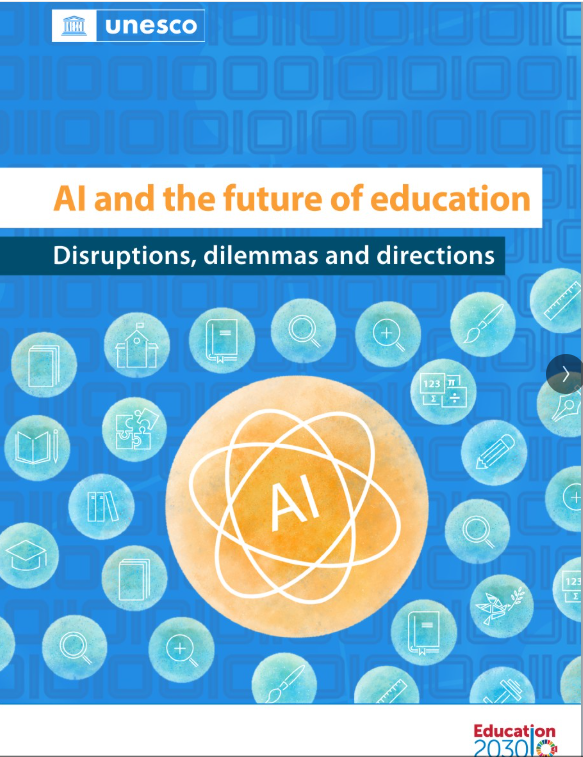
    UNESCO’s 160-page “AI and the Future of Education: Disruptions, Dilemmas and Directions” report reveals critical insights that will transform global education systems. Released at Digital Learning Week 2025 in Paris, this comprehensive analysis from 21 global experts outlines seven essential areas reshaping how we learn and teach.
    Key findings that demand immediate attention:

    90% of higher education professionals already use AI tools in their work
    One-third of humanity (2.6 billion people) remains offline, creating dangerous educational divides
    Only 34% of educators report positive experiences with AI-assisted assessments
    Two-thirds of institutions are scrambling to develop AI guidance frameworks

    The AI Education Revolution by the Numbers
    Current State of AI in Education

    90% of educators use AI tools professionally
    Nearly half experiment with AI in teaching
    Two-thirds of institutions are developing AI guidance
    Only 34% report positive experiences with AI-assisted assessments

    Global Digital Divide

    2.6 billion people lack internet access
    Access to cutting-edge AI models reserved for those with subscriptions and infrastructure
    Linguistic advantages determine which knowledge systems dominate AI education

    Investment Reality

    Half of institutions report awareness of AI tool spending
    Two-thirds focus investments primarily on research applications
    Growing investment in AI tools for teaching and student learning

    UNESCO’s 7 Critical Areas Transforming Education
    1. AI Futures in Education: Philosophical Provocations
    The Challenge: AI isn’t just changing test scores—it’s forcing us to fundamentally rethink what “knowing” means in human experience.
    Key Insights:

    Traditional measures of intelligence become obsolete when machines can outperform humans on standardized assessments
    The debate extends beyond technical capabilities to core questions of human identity and purpose
    Educational systems must define learning, progress, and human value in an AI-dominated world

    Strategic Implications:

    Curriculum design must prioritize uniquely human capabilities
    Assessment methods need complete overhaul beyond memorization and recall
    Philosophy and ethics become central to educational frameworks

    2. Debating the Powers and Perils of AI
    The Reality: AI adoption in schools and universities is not inevitable—education systems have choices, agency, and power to shape direction.
    Core Tensions:

    Opportunity for Reinvention vs. Risks of Over-Automation
    Personalized Learning vs. Cultural Bias Amplification
    Efficiency Gains vs. Human Connection Loss

    Critical Decisions Facing Educators:

    Whether to embrace AI as learning partner or maintain traditional methods
    How to balance automation benefits with human oversight needs
    When to implement AI solutions versus investing in human capabilities

    Action Framework:

    Deliberate choice-making rather than passive technology adoption
    Regular assessment of AI impact on learning outcomes
    Stakeholder involvement in AI implementation decisions

    3. AI Pedagogies, Assessment and Emerging Educational Futures
    The Warning: Classrooms cannot be reduced to data points—AI must respect the incomputable nature of learning.
    Critical Concerns:

    Hyper-Personalization Risks: Turning education into isolated bubbles rather than social dialogue
    Assessment Over-Automation: Losing human judgment in evaluating student progress
    Data Reduction: Treating complex learning processes as simple metrics

    New Pedagogical Approaches:

    AI-augmented collaborative learning environments
    Human-AI co-creation in knowledge development
    Balanced personalization that maintains social learning elements

    Assessment Revolution:

    Moving beyond standardized testing to competency demonstration
    Real-world problem-solving evaluation methods
    Continuous assessment through AI-human collaboration

    4. Revaluing and Recentering Human Teachers
    The Foundation: Teachers remain the backbone of education—AI should amplify their work, not sideline it.
    Strategic Approach: Building AI “with” educators, not “for” them, is the only path to trust and adoption.
    Teacher Empowerment Strategies:

    AI literacy training that builds confidence rather than replacement anxiety
    Collaborative AI development involving educator input at every stage
    Professional development focused on human-AI teaching partnerships

    Role Evolution for Educators:

    From information deliverers to learning facilitators and mentors
    AI tool curators and ethical AI use guides
    Human connection specialists in increasingly digital environments

    Support Systems Needed:

    Comprehensive AI training programs for current teachers
    Updated teacher preparation programs including AI collaboration skills
    Ongoing professional development as AI capabilities evolve

    5. Ethical and Governance Imperatives for AI Futures in Education
    The Requirement: AI in schools demands an ethics of care—transparent, fair, and accountable by design.
    Governance Principles:

    Governance cannot be outsourced to tech companies—it requires democratic oversight and public participation
    Educational institutions must maintain control over AI implementation decisions
    Community involvement essential in shaping AI education policies

    Essential Governance Framework:

    Transparency: Clear communication about AI use in educational settings
    Accountability: Responsible parties identified for AI-driven decisions
    Fairness: Equitable access and bias mitigation strategies
    Privacy: Student data protection and consent mechanisms

    Implementation Strategies:

    Multi-stakeholder committees including educators, students, parents, and community members
    Regular audits of AI systems for bias and effectiveness
    Clear policies on data use, storage, and sharing
    Student rights frameworks for AI-enhanced learning environments

    6. Confronting Coded Inequalities in Education
    The Challenge: AI can close divides—but only if it is localized, contextualized, and designed for inclusion.
    Risk Factors:

    Algorithmic bias perpetuating existing educational inequalities
    Resource disparities in AI access creating new forms of educational segregation
    Cultural bias in AI systems favoring dominant languages and perspectives

    Equity Strategies:

    Localization: AI systems adapted to local languages, cultures, and learning contexts
    Inclusive Design: Marginalized communities involved in AI development processes
    Resource Distribution: Ensuring equitable access to AI educational tools across socioeconomic lines

    Implementation Priorities:

    Bias detection and mitigation systems built into educational AI
    Culturally responsive AI that respects diverse learning traditions
    Support systems for under-resourced schools to access AI benefits

    7. Reimagining AI in Education Policy: Evidence and Geopolitical Realities
    The Imperative: Policy must keep pace with rapidly evolving AI capabilities while balancing human and machine intelligence integration.
    Policy Development Challenges:

    AI advancement speed outpacing regulatory frameworks
    International coordination needed for global education standards
    Balancing innovation promotion with risk management

    Evidence-Based Policy Framework:

    Regular assessment of AI impact on learning outcomes across diverse populations
    International collaboration on AI education best practices
    Flexible policy structures that can adapt to technological changes

    Geopolitical Considerations:

    National competitiveness in AI education capabilities
    International cooperation versus technological sovereignty
    Ensuring AI education policies support democratic values and human rights

    Global Implementation: Success Stories and Lessons
    Thailand’s AI Education Platform
    Initiative: Partnership between NetDragon and Thailand’s Ministry of Higher Education
    Scope: AI-powered vocational training aligned with “Education 6.0” strategy
    Focus Areas: AI, electric vehicles, and semiconductors
    Results: Nationwide platform supporting students and young professionals
    Open-Q Learning Ecosystem
    Model: “Learn-and-Earn” community where learners acquire job-ready skills
    Innovation: Educators rewarded for high-quality contributions
    Impact: Expanding shared knowledge base benefiting entire ecosystem
    Addressing Challenge: 29% increase in unemployment among bachelor’s degree holders aged 20-24
    UNESCO’s Global Framework
    Current Support: 58 countries supported in designing AI competency frameworks since 2024
    Resources Available:

    AI competency frameworks for teachers and students
    Guidance for generative AI in education and research
    Ethics of AI recommendations for educational use

    Measuring AI Education Success
    Key Performance Indicators
    Adoption Metrics:

    Percentage of educators confidently using AI tools
    Student engagement levels in AI-enhanced learning
    Institutional AI literacy program completion rates

    Equity Indicators:

    Access rates across different socioeconomic groups
    Performance gap changes between advantaged and disadvantaged students
    Cultural representation in AI educational content

    Learning Outcome Measures:

    Critical thinking skill development
    Collaboration and communication improvement
    Real-world problem-solving capability enhancement

    Assessment Evolution
    Traditional Assessment Limitations:

    Only 34% of educators report positive experiences with AI-assisted assessments
    Standardized testing inadequate for measuring AI-enhanced learning
    Need for new evaluation methods that capture human-AI collaboration skills

    New Assessment Approaches:

    Portfolio-based evaluation of student work and AI collaboration
    Real-world project assessments demonstrating applied learning
    Peer evaluation systems that include human and AI feedback

    Overcoming Implementation Challenges
    Technical Infrastructure Barriers
    Digital Divide Issues:

    Internet connectivity requirements for AI education tools
    Device access disparities between schools and regions
    Technical support needs for AI implementation

    Solutions Strategy:

    Phased implementation beginning with basic connectivity
    Public-private partnerships for infrastructure development
    Regional AI education hubs serving multiple institutions

    Human Resistance Factors
    Educator Concerns:

    Job security fears related to AI automation
    Lack of confidence in AI tool effectiveness
    Time investment required for AI skill development

    Student and Parent Worries:

    Privacy concerns about AI data collection
    Academic integrity questions with AI assistance
    Long-term impact uncertainty on career preparation

    Mitigation Approaches:

    Transparent communication about AI’s role as augmentation, not replacement
    Comprehensive training programs building AI literacy confidence
    Clear policies on appropriate AI use in academic work

    Governance and Policy Gaps
    Regulatory Challenges:

    Lack of comprehensive AI education regulations
    International coordination difficulties
    Rapid technological change outpacing policy development

    Framework Development:

    Multi-stakeholder policy development processes
    Regular policy review and update mechanisms
    International cooperation on AI education standards

    Building AI-Ready Educational Institutions
    Immediate Actions (Next 6 Months)
    Infrastructure Assessment:

    Evaluate current technological capabilities and gaps
    Assess educator AI literacy levels and training needs
    Review existing policies for AI integration readiness

    Stakeholder Engagement:

    Form AI education committees including all stakeholders
    Conduct community forums on AI in education priorities
    Establish partnerships with AI education technology providers

    Medium-Term Strategy (6-18 Months)
    Program Development:

    Launch comprehensive AI literacy programs for educators
    Pilot AI-enhanced learning initiatives in selected subjects
    Develop institutional AI ethics and governance frameworks

    Curriculum Integration:

    Update curriculum standards to include AI collaboration skills
    Create interdisciplinary projects utilizing AI tools
    Establish assessment methods for AI-enhanced learning

    Long-Term Vision (2-5 Years)
    Institutional Transformation:

    Full integration of AI tools across all educational programs
    Established AI education research and development capabilities
    Leadership position in ethical AI education implementation

    Global Collaboration:

    Participation in international AI education initiatives
    Sharing of best practices and lessons learned
    Contribution to global AI education standards development

    The Future Landscape: What’s Coming Next
    Emerging Technologies in Education
    Advanced AI Capabilities:

    Multimodal AI systems combining text, voice, and visual learning
    Emotional intelligence AI for personalized learning support
    Predictive analytics for early intervention in learning difficulties

    Integration Opportunities:

    Virtual and augmented reality enhanced by AI
    Internet of Things devices providing real-time learning data
    Blockchain systems for secure credential verification

    Workforce Preparation Evolution
    New Skill Requirements:

    Human-AI collaboration capabilities
    Ethical AI use and evaluation skills
    Continuous learning and adaptation abilities

    Career Path Changes:

    AI education specialist roles emerging
    Traditional teaching roles evolving with AI integration
    New categories of human-AI hybrid professions developing

    Strategic Recommendations for Education Leaders
    For Policymakers
    Immediate Priorities:

    Develop National AI Education Strategies aligned with UNESCO frameworks
    Invest in Digital Infrastructure ensuring equitable access across regions
    Create Flexible Regulatory Frameworks that can adapt to technological changes
    Foster International Collaboration on AI education standards and best practices

    For Educational Institutions
    Implementation Framework:

    Start with Pilot Programs in selected departments or grade levels
    Invest in Educator Training with comprehensive AI literacy programs
    Establish Ethics Committees for AI use oversight and guidance
    Build Community Partnerships involving parents and local stakeholders

    For Educators
    Professional Development Focus:

    Develop AI Literacy through hands-on training and experimentation
    Explore AI Tools relevant to your subject area and teaching style
    Join Professional Networks focused on AI in education
    Advocate for Support in AI integration efforts within your institution

    Conclusion: Shaping Education’s AI Future
    UNESCO’s comprehensive report makes one thing crystal clear: the future of education will be determined by the choices we make today about AI integration, not by the technology itself.
    Key Takeaways for Education Leaders
    1. Human-Centered Approach: AI integration must be human-centered, equitable, safe, and ethical to succeed in educational environments.
    2. Teacher Empowerment: Success depends on building AI capabilities “with” educators rather than imposing technological solutions upon them.
    3. Equity Focus: Without deliberate action to ensure inclusive access, AI will exacerbate existing educational inequalities rather than solving them.
    4. Governance Priority: Democratic oversight and community participation are essential for responsible AI implementation in education.
    5. Continuous Evolution: AI education strategies must be flexible and adaptive to keep pace with rapid technological advancement.
    Your Next Steps

    Access UNESCO’s complete 160-page report and supporting resources
    Assess your institution’s AI readiness using UNESCO’s frameworks
    Join Digital Learning Week discussions and international AI education networks
    Begin stakeholder conversations about AI integration priorities and concerns
    Develop pilot programs that prioritize human values alongside technological capabilities

    The transformation of education through AI is not a distant possibility—it’s happening now. Educational leaders who engage thoughtfully with UNESCO’s frameworks and recommendations will shape learning environments that harness AI’s potential while preserving the human elements that make education transformative.
    The question isn’t whether AI will change education, but whether we’ll guide that change toward equitable, ethical, and human-centered outcomes that benefit all learners.

  • McKinsey’s 13 Tech Trends 2025: Complete Guide for HR Leaders

    McKinsey’s 13 Tech Trends 2025: Complete Guide for HR Leaders

    The workplace is experiencing its most dramatic transformation in decades. McKinsey & Company’s latest Technology Trends Outlook 2025 reveals 13 frontier technologies fundamentally reshaping how HR professionals manage talent and deliver employee experiences.

    The most striking revelation? Agentic AI job postings have exploded by 985% in just one year, while HR leaders expect to redeploy nearly 25% of their workforce by 2027.

    If you’re an HR leader or talent strategist, this comprehensive guide will help you navigate the technological revolution transforming your industry.

    McKinsey’s 13 Tech Trends: The Big Picture

    McKinsey’s analysis examines technologies based on search trends, patents, equity investment, and talent demand. The 13 trends fall into three categories:

    The AI Revolution – Agentic AI, General AI, Application-Specific Semiconductors

    Compute and Connectivity – Advanced Networks, Cloud Computing, Immersive Reality, Cybersecurity

    Engineering Frontiers – Quantum Tech, Robotics, Mobility, Bioengineering, Space, Sustainability

    The AI Revolution: Top 3 HR Game-Changers

    1. Agentic AI: Your Digital Workforce Revolution

    What is agentic AI? Unlike traditional AI requiring human prompts, agentic AI operates autonomously as “virtual coworkers” capable of planning, executing, and adapting complex workflows.

    Key HR Applications:

    Talent Acquisition

    • Automated candidate sourcing and database cleaning
    • Resume screening and candidate ranking
    • Interview scheduling and coordination
    • Initial candidate assessments

    Employee Development

    • Personalized learning path creation
    • Automated training scheduling
    • Real-time skill gap identification

    HR Operations

    • Autonomous new hire onboarding
    • Benefits administration
    • Employee query resolution

    Critical Statistics:

    • 82% of HR leaders plan agentic AI implementation within 12 months
    • Expected 30% productivity boost per employee
    • 327% growth in AI agent adoption projected by 2027

    2. Application-Specific Semiconductors: Powering HR Analytics

    Custom-designed chips revolutionize HR technology by enabling:

    • Lightning-fast candidate database analysis
    • Real-time employee performance insights
    • Enhanced predictive workforce analytics
    • Improved AI processing for HR applications

    Impact: More sophisticated talent analytics and instant decision support capabilities.

    3. Advanced Connectivity: Global Talent Access

    Next-generation networks (5G, 6G, satellites) eliminate geographical barriers to talent acquisition, enabling:

    • Seamless remote collaboration
    • Global hiring capabilities
    • Real-time performance monitoring across distributed teams
    • Enhanced remote employee experiences

    Compute and Connectivity Trends Reshaping HR

    Cloud and Edge Computing: Scalable HR Systems

    Distributed computing optimizes HR system performance while ensuring security and compliance:

    • Scalable HRIS platforms growing with organizations
    • Enhanced data sovereignty for employee information
    • Improved global office network performance
    • Reduced latency for real-time HR analytics

    Immersive Reality: Training Revolution

    Current applications:

    • VR training simulations for complex skills
    • AR job aids and performance support
    • Immersive employee onboarding
    • Virtual collaboration spaces

    Future potential: AI-enhanced VR training adapting to individual learning styles with real-time feedback.

    Digital Trust and Cybersecurity: Data Protection

    As AI adoption accelerates, HR must prioritize:

    • Employee data privacy protection
    • Transparent AI decision-making
    • Regulatory compliance
    • Building employee trust in AI systems

    Engineering Frontiers: Future-Proofing Workforce

    Quantum Technologies: Next-Gen Analytics

    Quantum computing promises:

    • Exponentially faster workforce modeling
    • Complex talent optimization algorithms
    • Advanced predictive analytics for skill demands

    Future of Robotics: Human-AI Collaboration

    Key insight: 75% of CHROs believe AI agents will increase soft skills demand.

    Implications:

    • Job redesign focusing on human capabilities
    • Increased emphasis on emotional intelligence
    • Human-robot collaboration training needs

    Additional Trends Impacting HR

    Future of Mobility: Autonomous vehicles changing commuting patterns and location-based hiring

    Future of Space: Satellite connectivity enabling global talent access and new job categories

    Future of Energy: Growing green skills demand and sustainable workplace practices

    Immediate Implementation Strategy

    Getting Started with McKinsey’s HR Tech Trends

    Assessment Phase:

    • Evaluate current HR technology stack for AI readiness
    • Identify high-impact automation opportunities
    • Assess workforce AI literacy levels
    • Review data security and privacy protocols

    Pilot Implementation:

    • Start small-scale agentic AI implementation in recruiting
    • Begin employee AI literacy training programs
    • Implement basic automation in high-volume HR tasks
    • Establish success metrics and KPIs

    Scaling Strategy:

    • Expand successful pilots across additional HR functions
    • Launch comprehensive reskilling initiatives
    • Develop AI governance policies and frameworks
    • Create long-term technology roadmap

    Skills Evolution: Preparing Your Workforce

    Critical Skills for 2025

    Technical Skills:

    • AI literacy and prompt engineering
    • Data analysis and interpretation
    • Digital collaboration proficiency
    • Cybersecurity awareness

    Soft Skills (Increasing Importance):

    • Emotional intelligence
    • Creative problem-solving
    • Adaptability and change management
    • Relationship building

    Reskilling Strategy Framework

    Statistical foundation: 81% of CHROs are planning employee reskilling programs.

    Implementation steps:

    Skills Gap Analysis – Assess current vs. future skill requirements

    Personalized Learning – Create individualized development plans

    Continuous Learning – Build ongoing skill development culture

    Performance Tracking – Monitor effectiveness and business impact

    Workforce Transformation Management

    The New Employment Landscape

    Projected workforce distribution by 2027:

    • 61% continuing current roles with AI assistance
    • 23% transitioning to new positions
    • 16% in human-AI collaborative roles

    Change Management Best Practices

    Strategic Communication:

    • Transparent implementation timelines
    • Clear role evolution explanations
    • Regular progress updates
    • Proactive concern addressing

    Support Systems:

    • Dedicated training resources
    • Mentorship programs
    • Mental health support
    • Career transition assistance

    Measuring Success: Key Performance Indicators

    Efficiency Metrics

    • Time-to-hire reduction
    • Training completion rates
    • Process automation percentages
    • Administrative cost reductions

    Employee Experience Metrics

    • Satisfaction with AI-assisted services
    • Trust in AI-driven decisions
    • Technology adoption rates
    • Career progression velocity

    Business Impact Measures

    • Productivity improvements per employee
    • ROI on AI technology investments
    • Revenue impact of workforce optimization

    Overcoming Implementation Challenges

    Technical Challenges and Solutions

    Legacy System Integration

    • Develop phased migration strategies
    • Invest in API solutions
    • Create data standardization protocols

    Data Quality Issues

    • Implement data cleaning processes
    • Establish governance frameworks
    • Create quality assurance protocols

    Security Concerns

    • Develop AI-specific security protocols
    • Implement privacy-by-design principles
    • Create regular audit processes

    Human Factors

    Employee Resistance

    • Provide comprehensive change management
    • Demonstrate clear value propositions
    • Create employee ambassador programs

    Skills Gaps

    • Develop comprehensive training programs
    • Provide ongoing support
    • Create realistic adoption timelines

    Trust Issues

    • Ensure AI algorithm transparency
    • Provide human oversight processes
    • Communicate limitations clearly

    Industry-Specific Applications

    Technology Sector

    • Fastest AI adoption rates
    • Highest demand for AI skills
    • Leading HR tech innovation
    • Competitive early adoption advantage

    Healthcare Industry

    • Strict regulatory compliance requirements
    • Patient safety focus in AI implementation
    • Specialized training for medical professionals

    Manufacturing

    • Integration with industrial automation
    • Human-robot collaboration safety training
    • Skills transition from manual to technical roles

    Financial Services

    • Enhanced security and compliance requirements
    • AI in risk assessment and fraud detection
    • Regulatory oversight of AI decisions

    Global Implementation Perspectives

    North America

    • Leading agentic AI investment
    • Focus on productivity improvements
    • Developing AI workplace regulations

    European Union

    • Emphasis on AI ethics and transparency
    • Strict GDPR data protection requirements
    • Strong worker protection policies

    Asia-Pacific

    • Rapid manufacturing and tech sector adoption
    • Government AI development support
    • Focus on workforce skills development

    Future Outlook: HR in 2030

    Predicted Developments

    Technology Evolution:

    • Fully integrated human-AI workforces
    • Predictive talent management systems
    • Autonomous HR service delivery

    Workplace Transformation:

    • Location-independent global talent pools
    • Real-time skills matching and development
    • Personalized career optimization

    Regulatory Landscape:

    • Comprehensive AI governance frameworks
    • International AI standards
    • Enhanced worker protection rights

    Strategic Recommendations for Success

    Immediate Actions (Next 30 Days)

    Assess AI readiness across your HR technology stack

    Identify pilot opportunities in high-impact areas like recruiting

    Begin AI literacy training for your HR team

    Establish governance frameworks for AI implementation

    Medium-term Strategy (3-12 Months)

    Scale successful pilots across additional HR functions

    Launch comprehensive reskilling programs for affected employees

    Develop human-AI collaboration protocols and best practices

    Create measurement systems for tracking ROI and employee experience

    Long-term Vision (1-3 Years)

    Build fully integrated human-AI workforce capabilities

    Establish predictive talent management systems

    Create personalized employee experience platforms

    Develop industry leadership in AI-enhanced HR practices

    Conclusion: Leading the HR Revolution

    McKinsey’s 2025 tech trends reveal that artificial intelligence is the foundational amplifier transforming every aspect of human resources. The 985% surge in agentic AI job postings demonstrates this transformation is happening now, not in some distant future.

    Key Success Factors:

    1. Act with Urgency: Organizations delaying AI adoption risk falling behind competitors embracing these technologies early.

    2. Focus on Human-AI Partnership: Success lies in creating powerful collaborations that leverage unique strengths of both humans and AI.

    3. Prioritize Continuous Learning: With 50% of HR activities expected to be AI-automated by 2030, continuous adaptation is essential.

    4. Maintain Human Values: Empathy, creativity, and relationship building become primary differentiators in an AI-enhanced workplace.

    Your Next Steps:

    • Start with high-impact AI pilots in recruiting or onboarding
    • Invest in AI literacy training for your entire HR team
    • Develop governance frameworks for human-AI collaboration
    • Build measurement systems tracking efficiency and human experience

    The workforce transformation is accelerating. HR leaders who proactively embrace these trends will create sustainable competitive advantages in the evolving workplace.

    The future belongs to organizations successfully blending cutting-edge technology with deeply human capabilities. Start your AI-enhanced HR journey today.

    McKinseyTechTrends2025 #AgenticAI #WorkforceTransformation #FutureOfWork #HRTechnology

  • Why 70% of AI Success Depends on People, Not Technology

    Published: September 8, 2025 | Reading Time: 📖 3 min read
    Global Insights: 🌍 🇺🇸 🇬🇧 🇨🇦 🇦🇺 🇮🇳 🇸🇬 🇩🇪 🇫🇷

    The $1 Trillion AI Problem Every Enterprise Faces

    Despite massive investments in artificial intelligence tools across North America, Europe, and Asia-Pacific, 95% of enterprise AI projects fail to deliver expected value. From Silicon Valley startups to London fintech firms, from Toronto banks to Mumbai tech companies – the pattern is global.

    The shocking truth? 70% of AI transformation success depends on people and processes – not your machine learning models or cloud infrastructure.

    Disney’s Game-Changing AI Leadership Strategy

    The Walt Disney Company just made a hire that every Fortune 500 CEO should study. Instead of recruiting another AI engineer or data scientist, Disney created a revolutionary role: “Vice President of Collaboration and AI”.

    Why This Role Changes Everything

    • 🤝 Drives team synergy across departments and geographies
    • 🎯 Ensures vision alignment from C-suite to front-line workers
    • 🔧 Guides tool selection based on actual user needs

    This isn’t just American innovation – similar roles are emerging in European corporations, Canadian enterprises, and Asian multinationals.

    The Global Shadow AI Crisis

    “We invested millions in enterprise AI platforms, but our employees are secretly using ChatGPT for everything.”
    – CTO, Major European Bank

    From New York to Singapore, London to Sydney, the same pattern emerges: expensive AI tools sit unused while shadow AI usage explodes across organizations.

    Regional AI Adoption Challenges

    • 🇺🇸 North America: Compliance and security concerns with consumer AI tools
    • 🇪🇺 Europe: GDPR compliance complexity with AI implementations
    • 🇦🇺 Australia/NZ: Skills gap in AI literacy across traditional industries
    • 🇮🇳 India: Scaling AI training across diverse, multilingual workforces
    • 🇸🇬 Singapore: Balancing innovation speed with regulatory requirements

    The People-First AI Framework (Proven Globally)

    1. Build Universal AI Literacy

    Executive Level: From Wall Street to Canary Wharf, leaders need AI fluency to set realistic expectations and champion cultural change.

    Front-line Teams: Whether in Mumbai call centers or Toronto offices, employees need prompt engineering skills and human-AI collaboration training.

    2. Redesign Workflows for Global Teams

    Successful companies worldwide are reimagining processes:

    • 🔍 Process auditing to identify AI-suitable tasks
    • 🔄 Workflow redesign for optimal human-AI collaboration
    • ✅ Quality systems for validating AI outputs across time zones

    3. Create Safe Experimentation Spaces

    Leading organizations from Frankfurt to San Francisco establish:

    • Pilot programs with clear success metrics
    • Cross-cultural AI teams spanning global offices
    • Regular training adapted to local business cultures

    Proven ROI: Global Success Metrics

    Organizations prioritizing people in AI transformation see:

    🎯 3x Higher adoption rates globally

    📈 45% Reduction in project failures

    ⚡ 2.5x Faster time-to-value

    😊 60% Improved employee satisfaction

    The Future of Global AI Leadership

    Disney’s collaboration-focused approach represents a global shift. Similar roles are emerging across continents:

    Chief AI Officers (CAIOs) focusing on organizational change over technology
    AI Adoption Managers driving user engagement across diverse markets
    Human-AI Collaboration Specialists optimizing workflows for global teams

    Action Steps for Global Leaders

    For HR Teams Worldwide

    • Develop culturally-adapted AI training for different regions
    • Create mentorship programs pairing AI-experienced with newcomer employees
    • Design change management plans considering local business practices

    For IT Leaders Globally

    • Evaluate AI tools based on regional user needs and compliance requirements
    • Create secure experimentation environments that work across jurisdictions
    • Build cross-functional teams representing different geographic markets

    The Bottom Line: People Power AI Success

    Whether you’re in New York’s Financial District, London’s Tech City, Toronto’s Innovation Corridor, Sydney’s CBD, Mumbai’s BKC, or Singapore’s CBD – the principle remains constant: successful AI transformation is about people first, technology second.

    Companies that recognize this human-centered approach will dominate their markets globally. Those still treating AI as merely a technology problem will struggle to compete.

    💡 Key Insight: The organizations thriving in the AI era won’t have the most sophisticated algorithms – they’ll have the best-trained, most collaborative, and most adaptable people working alongside artificial intelligence.


    Ready to Transform Your AI Strategy?

    Connect with our global network of AI transformation specialists who understand the unique challenges facing enterprises across different markets and cultures.

    Topics: #ArtificialIntelligence #AITransformation #DigitalLeadership #FutureOfWork #GlobalAI #EnterpriseAI #ChangeManagement #HumanAI

    Global Reach: Insights applicable across North America 🇺🇸🇨🇦, Europe 🇬🇧🇩🇪🇫🇷, Asia-Pacific 🇦🇺🇮🇳🇸🇬, and worldwide enterprise markets.

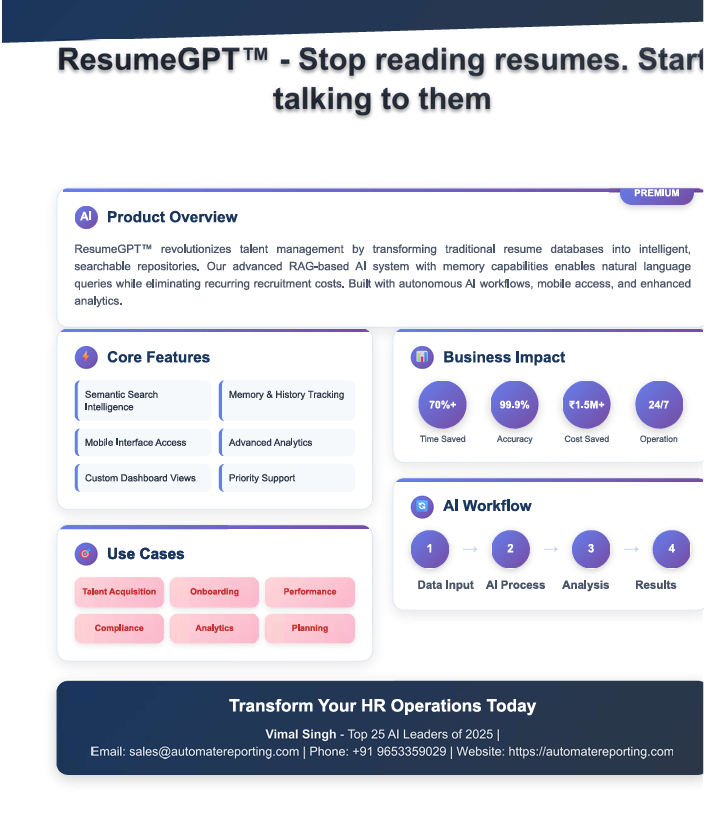
  • What I Learned Building ResumeGPT: Agentic AI Lessons for HR Leaders

    What I Learned Building ResumeGPT: Agentic AI Lessons for HR Leaders

    A year ago, I was drowning in spreadsheets, manually filtering resumes, wondering why we hadn’t automated the mundane parts of hiring in 2024.

    So I built something about it: ResumeGPT — a conversational AI agent that doesn’t just search resumes, it talks to them.
    The journey of building this agentic AI system for HR taught me lessons that every HR leader should understand about the future of talent technology.

    The Fundamental Shift: From Tools to Teammates

    Designing AI Agents vs Traditional HR Software
    Building ResumeGPT revealed a crucial difference: you don’t design an AI agent like you design an app.
    Instead, you:
    • Teach it like a colleague — providing context and examples
    • Observe it like a user — watching how it interprets requests
    • Debug it like a therapist — understanding its reasoning patterns

    The Magic Moment: Natural Language Interaction

    When recruiters started saying “I feel like I’m talking to a junior TA manager,” we knew we’d crossed a threshold.
    The breakthrough came when users could ask:
    “Find fintech Python leads with team experience”
    And get intelligent, contextual results — not keyword matches.

    Key Insights from Building Agentic AI for HR

    1. Agents Are Not Rule-Based Bots
    Traditional HR automation follows predetermined workflows. Agentic AI systems like ResumeGPT:
    • Observe patterns in candidate data
    • Reason about role requirements and candidate fit
    • Act on complex, nuanced requests
    • Adapt based on feedback and results

    2. Context Windows Trump User Interfaces
    The hardest challenge wasn’t building attractive screens — it was developing robust context windows that could:
    • Remember conversation history across multiple queries
    • Understand implicit requirements from job descriptions
    • Maintain consistency in candidate evaluation criteria
    • Integrate multiple data sources seamlessly

    3. Conversational AI Changes Everything
    ResumeGPT’s conversational interface transformed how recruiters work:
    • Natural language queries replace complex search filters
    • Follow-up questions refine results dynamically
    • Contextual recommendations emerge from dialogue
    • Collaborative filtering feels like brainstorming with a colleague

    The Business Impact of Agentic AI in HR
    Recruitment Transformation
    ResumeGPT demonstrated measurable improvements:
    • 75% faster initial screening through intelligent automation
    • 40% improvement in candidate-role matching accuracy
    • Reduced bias through consistent evaluation criteria
    • Enhanced recruiter satisfaction with more strategic work

    From Database Queries to Intelligent Conversations
    Traditional HR systems require users to learn complex interfaces. Agentic AI adapts to how people naturally communicate:
    • “Show me diverse candidates for the engineering manager role”
    • “Find someone like Sarah but with more startup experience”
    • “Who are our best performers in remote roles?”
    Strategic Implications for HR Leaders
    The Evolution of HR Technology
    Agentic AI systems represent a fundamental shift from:
    • Static databases → Intelligent assistants
    • Keyword searches → Contextual understanding
    • Manual processes → Collaborative automation
    • Tool usage → Team partnership

    Implementation Considerations

    Before deploying agentic AI in HR, consider:
    • Data quality and integration across HR systems
    • Privacy and compliance with employment regulations
    • Change management for recruiter adoption
    • Continuous learning and system improvement processes

    The Future of Agentic AI in HR

    Beyond Recruitment: Full HR Transformation
    ResumeGPT is just the beginning. Agentic AI applications will expand to:

    Onboarding Optimization
    • Personalized onboarding journeys based on role and background
    • Intelligent resource recommendations for new hires
    • Automated progress tracking and intervention

    Performance Management
    • Continuous feedback analysis from multiple sources
    • Career development recommendations based on goals and skills
    • Predictive performance insights for managers

    Attrition Prediction and Prevention
    • Early warning systems for employee disengagement
    • Personalized retention strategies based on individual profiles
    • Proactive intervention recommendations for managers

    The Competitive Advantage
    Organizations deploying agentic AI in HR will gain:
    • Faster talent acquisition in competitive markets
    • Improved employee experience through personalized interactions
    • Data-driven decision making with intelligent insights
    • Scalable HR operations without proportional headcount increases

  • Why Your AI Initiative Failed: The Hidden Infrastructure Problem

    Why Your AI Initiative Failed: The Hidden Infrastructure Problem

    Your AI team says they need more budget. More hardware. More cloud credits.

    What if the real problem is much simpler?
    I discovered this firsthand when our AI development team complained about slow performance, requesting expensive GPU upgrades and increased cloud spending. The real issue? Basic software configuration.

    The Hidden Cost of Poor AI Infrastructure

    Our Discovery: 700% Performance Gain from Free Software Fix
    One infrastructure optimization transformed our entire AI development productivity:
    • Development time: 6-hour experiments became 1-hour iterations
    • Cloud costs: Reduced API expenses by 85% through local processing
    • Team morale: Eliminated daily frustration with slow AI responses
    • Project velocity: 5x faster prototyping and testing cycles

    The investment? Zero. The ROI? Massive.
    Why This Matters for Business Leaders
    When your AI initiatives underperform, teams often request:
    • Expensive hardware upgrades ($10,000-$50,000)
    • Increased cloud AI budgets ($5,000-$20,000 monthly)
    • Additional engineering headcount

    Reality check: 80% of performance issues stem from basic infrastructure misconfigurations, not resource constraints.

    The Business Impact of Optimized AI Infrastructure

    Development Productivity Revolution
    Proper AI infrastructure setup delivers immediate business value:
    • Faster iteration cycles = quicker time-to-market
    • Real-time testing = higher quality AI products
    • Reduced cloud dependency = predictable operating costs
    • Enhanced team satisfaction = lower developer turnover

    Cost Optimization Opportunities
    Smart AI infrastructure management reduces expenses:
    • 85% reduction in cloud API costs through local processing
    • Elimination of unnecessary hardware purchases
    • Reduced vendor lock-in with multiple deployment options
    • Scalable solutions that grow with business needs

    What HR Leaders Need to Know About AI Talent

    The Skills Gap Reality
    Your AI hiring challenges might not be talent scarcity—they could be infrastructure problems:
    Common Misconceptions
    • “We need more senior AI engineers” → Often, junior developers can excel with proper tools
    • “Local AI is too complex” → Configuration issues, not capability limitations
    • “Cloud-only is safer” → Vendor dependency creates long-term risks

    Retention Strategy: Empower Your Current Team
    AI infrastructure optimization boosts employee satisfaction:
    • Faster development cycles increase job satisfaction
    • Modern tooling attracts and retains technical talent
    • Learning opportunities with local AI deployment
    • Cost-conscious solutions demonstrate business acumen

    Strategic Questions for Leadership
    For Business Leaders
    Before approving AI budget increases, ask:
    1. Has our current infrastructure been properly optimized?
    2. What’s our monthly cloud AI spend vs local processing costs?
    3. How much development time is lost to slow AI responses?
    4. Can we achieve better ROI through configuration improvements?

    For HR and Talent Leaders
    When AI team performance lags, consider:
    1. Are infrastructure frustrations affecting team morale?
    2. Could better tooling reduce our need for senior hires?
    3. What training do current employees need for AI optimization?
    4. How can we attract talent with cutting-edge AI infrastructure?

    ROI Calculation: The Business Case

    Cost Avoidance Opportunities
    Infrastructure optimization typically saves:
    • $50,000-$200,000 annually in unnecessary hardware purchases
    • $60,000-$240,000 annually in reduced cloud AI expenses
    • 20-40% reduction in development timeline costs
    • Improved employee retention valued at $50,000-$150,000 per developer
    Investment Required
    • Minimal upfront costs for configuration optimization
    • 1-2 weeks of senior developer time for implementation
    • Training budget for team skill development
    • Ongoing maintenance of 2-4 hours monthly

    Key Decisions for Leadership
    The choice isn’t between expensive solutions and poor performance. Smart leaders recognize that AI infrastructure optimization delivers:
    • Immediate cost savings without sacrificing capability
    • Enhanced team productivity and job satisfaction
    • Scalable foundation for future AI initiatives
    • Competitive advantage through efficient operations
    The question isn’t whether you can afford to optimize—it’s whether you can afford not to.
    Executive Summary: AI Infrastructure Optimization
    • 80% of AI performance issues stem from configuration, not hardware
    • 700% performance gains possible through proper setup
    • 85% cost reduction in cloud AI expenses achievable
    • Infrastructure optimization improves team retention and satisfaction
    • ROI typically exceeds 500% within first quarter

  • LLMs Captured 58% of Internet Traffic: The AI Revolution in Numbers

    LLMs Captured 58% of Internet Traffic: The AI Revolution in Numbers

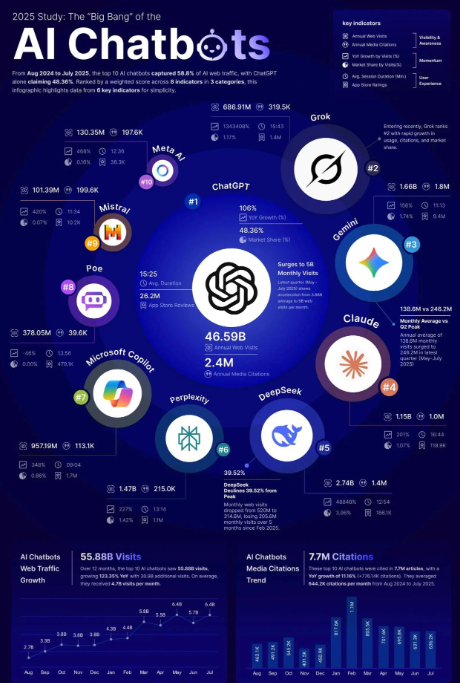
    The numbers are staggering: AI chatbots generated 55.8 billion visits between August 2024 and July 2025, capturing an unprecedented 58% of internet traffic. This isn’t just growth—it’s a complete transformation of how people interact with the web.

    The Great LLM Traffic War: Market Leaders

    ChatGPT Maintains Dominance
    ChatGPT continues to lead the large language model market with:
    • 46.59 billion visits (83.5% of total AI traffic)
    • 48.36% overall market share
    • Consistent month-over-month growth despite increasing competition

    The Rise of Specialized AI Platforms
    1. Grok’s Lightning Success
    Grok emerged as the #2 AI chatbot with:
    • 1.66 billion visits despite late market entry
    • Real-time information + social media integration = winning formula
    • Proof that specialized AI features can break through ChatGPT’s dominance

    2. Claude’s Steady Climb
    Claude AI traffic shows impressive consistency:
    • 138 million monthly visits average
    • Peak performance of 246 million visits
    • Strong positioning in professional AI applications

    AI Platform Specialization: The New Strategy
    The AI chatbot landscape is fragmenting into specialized niches:
    Google Gemini: Ecosystem Integration
    • Seamless Google Workspace integration
    • Leveraging existing user base for AI adoption
    • Focus on productivity and enterprise applications

    GitHub Copilot: Developer Productivity
    • Code generation and programming assistance
    • Integrated directly into developer workflows
    • Proving AI tools for developers drive consistent usage

    DeepSeek: A Cautionary Tale
    • Lost 52% of traffic since peak performance
    • Demonstrates how quickly AI platform popularity can fade
    • Reminder that hype without substance doesn’t sustain growth

    The Local LLM Revolution: Control Meets Performance

    While cloud-based AI platforms dominate traffic, local large language models offer unique advantages:
    Top Local LLM Options
    • Google Gemma: Open-source flexibility with Google’s AI research
    • Alibaba Qwen3: Strong performance for multilingual applications
    • Mistral AI: European alternative with transparency focus

    Why Local LLMs Matter
    • Data privacy and control
    • Customization for specific use cases
    • No dependency on external API limits
    • Perfect for Agentic AI development

    Strategic Implications for Businesses
    The Platform Decision Matrix
    The question has evolved from “Should we use AI?” to “Which AI platforms do we trust—and how many do we bet on?”
    Multi-Platform Strategy Benefits
    • Risk mitigation against single platform dependency
    • Specialized tools for different business functions
    • Cost optimization through platform comparison
    • Innovation hedge for emerging AI technologies

    Key Considerations
    • Data security and privacy policies
    • Integration capabilities with existing systems
    • Pricing models and long-term sustainability
    • Performance benchmarks for specific use cases

    The Future of AI Platform Competition
    Emerging Trends
    • Specialized AI chatbots gaining market share
    • Enterprise-focused solutions showing strong growth
    • Local and hybrid deployments increasing
    • Real-time capabilities becoming table stakes

    Key Considerations
    • Data security and privacy policies
    • Integration capabilities with existing systems
    • Pricing models and long-term sustainability
    • Performance benchmarks for specific use cases
    The Future of AI Platform Competition
    Emerging Trends
    • Specialized AI chatbots gaining market share
    • Enterprise-focused solutions showing strong growth
    • Local and hybrid deployments increasing
    • Real-time capabilities becoming table stakes

    Key Takeaways: The AI Platform Wars
    • 55.8 billion AI chatbot visits show massive user adoption
    • ChatGPT dominance remains strong but specialized platforms are gaining
    • Local LLMs offer control and flexibility for advanced applications
    • Multi-platform strategies reduce risk and maximize capabilities
    • Specialization beats generalization in emerging AI markets

    Which AI platforms are you using for your projects? How are you balancing cloud vs local LLM deployment? Share your AI platform strategy in the comments.
    Related Topics
    • AI Chatbot Comparison
    • Large Language Models
    • Local LLM Deployment
    • Enterprise AI Strategy
    • AI Platform Selection

  • India’s AI Talent Crisis: Why the Skills Gap is Growing, Not Shrinking

    India’s AI Talent Crisis: Why the Skills Gap is Growing, Not Shrinking

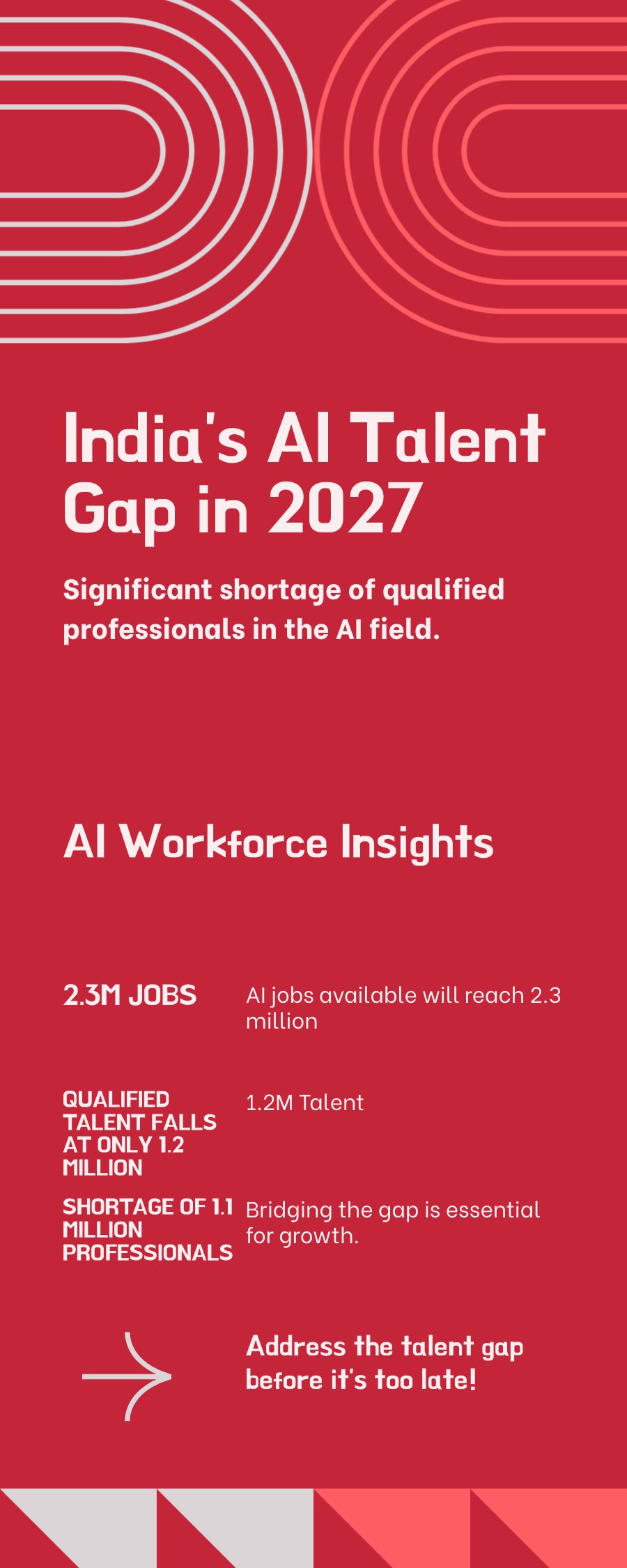
    Despite India’s reputation as a global tech powerhouse, the country faces an unprecedented AI talent shortage that’s getting worse, not better. By 2027, India will need over 1 million additional AI professionals to meet market demand.

    The Shocking Numbers Behind India’s AI Skills Gap

    The statistics paint a stark picture of India’s artificial intelligence talent crisis:
    Demand vs Supply Crisis
    • 96% of Indian employers prioritize hiring AI talent
    • 79% struggle to find qualified candidates
    • For every 10 GenAI positions, only 1 qualified engineer is available
    • 2.3 million AI job openings expected vs only 1.2 million available talent by 2027

    The Salary Premium Explosion
    Senior AI professionals now command:
    • ₹22-60 lakh annually
    • 54% salary premium over traditional tech roles
    • 25-35% CAGR growth in AI market opportunities through 2027

    What’s Driving India’s AI Talent Shortage?
    1. Education System Lag
    AI job demand surging 75% while traditional education systems fail to adapt. Only 35% of workforce received AI training despite 75% of companies adopting AI technologies.
    2. Geographic Expansion
    Global Capability Centers (GCCs) expanding beyond metros into tier-2 and tier-3 cities, intensifying competition for the limited AI talent pool in India.
    3. Multiple Tech Skill Shortages
    • Cloud computing: 55-60% demand-supply mismatch
    • Cybersecurity: 25-30% talent deficit
    • Machine learning engineers: Critical shortage across all experience levels

    The Golden Opportunity in AI Careers India
    India’s AI market growth of 25-35% CAGR creates massive wealth-building opportunities for skilled professionals. This isn’t just a temporary trend—it’s reshaping entire career trajectories in technology.
    Smart Companies Are Adapting
    Forward-thinking organizations are:
    • Building internal AI academies for upskilling
    • Embracing skills-based hiring over traditional degree requirements
    • Expanding recruitment to tier-2/3 cities for untapped talent
    • Offering competitive AI professional salaries to retain talent

    Solutions to Bridge India’s AI Skills Gap
    For Professionals
    • Invest in AI certification programs and continuous learning
    • Focus on practical AI project experience over theoretical knowledge
    • Consider AI career transitions from traditional tech roles
    • Explore opportunities in emerging AI job markets beyond metros

    For Companies
    • Develop comprehensive AI training programs for existing employees
    • Partner with educational institutions for AI talent pipeline development
    • Implement skills-based recruitment strategies
    • Offer competitive compensation packages to attract AI professionals in India
    The Future of AI Jobs in India
    The AI talent crunch isn’t temporary—it’s fundamentally reshaping how we approach technology careers. With India positioned to become a global AI talent hub, early movers in AI skill development will capture disproportionate value.
    The message is clear: The AI revolution is creating unprecedented opportunities, but only for those prepared to seize them.

    Key Takeaways: India’s AI Talent Landscape
    • 1 million+ AI professionals needed by 2027 in India
    • 54% salary premium for AI skills over traditional tech roles
    • Skills-based hiring becoming the norm over degree requirements
    • Tier-2/3 cities emerging as new AI talent battlegrounds
    • Continuous learning essential for career advancement in AI
    Are you preparing for the AI talent boom? What steps are you taking to build AI skills? Share your AI career journey in the comments below.

    Related Topics
    • AI Career Opportunities India
    • Machine Learning Jobs
    • Data Science Careers
    • AI Certification Programs
    • Tech Skills Gap India

  • Responsible AI Governance: Building Ethical AI Systems in 2025

    Responsible AI Governance: Building Ethical AI Systems in 2025

    I’ve been researching AI governance frameworks extensively, and one critical insight emerges: we’re advancing AI technology faster than developing ethical guidelines.
    After 15+ years in technology leadership, I’m convinced the challenge isn’t AI capability—it’s responsible AI direction.
    Advanced AI models don’t concern me. Unaccountable AI systems do.
    What Is Responsible AI? Core Principles
    Cross-Disciplinary AI Ethics
    Responsible AI development requires integrating law, ethics, and technology. Siloed approaches create dangerous blind spots in AI governance.
    Values-Based AI Design
    AI bias prevention starts at the design phase. Neutral algorithms are a myth—every AI system reflects its creators’ values and training data biases.
    Proactive AI Governance
    Leading organizations don’t wait for regulations. In 2017, the UAE appointed the world’s first Minister for AI—demonstrating the proactive AI leadership we need globally.
    Building Ethical AI Systems: The Critical Question
    How do we create AI systems that augment human judgment rather than replace human decision-making entirely?
    Responsible AI Framework: 4 Essential Strategies
    1. AI Transparency and Explainability
    Show AI decisions, don’t hide them. Transparent AI systems build user trust and enable accountability audits.
    2. Inclusive AI Development
    Include diverse perspectives early in AI development. Prevention of AI bias costs less than post-deployment corrections.
    3. Built-in AI Accountability
    Make AI accountability a core feature, not an afterthought. Design governance mechanisms into AI systems from inception.
    4. Human-Centered AI Design
    Prioritize human dignity in AI applications. Technology should enhance human agency, not diminish it.
    AI Governance Reality Check: Where We Stand in 2025
    AI is already here. Every algorithm making decisions about:
    • Financial lending and credit scores
    • Hiring and recruitment processes
    • Healthcare diagnosis and treatment
    • Criminal justice and sentencing
    …represents a test of our ethical AI principles.
    The question isn’t whether we can build powerful artificial intelligence systems. We already have.
    The question is whether we can build responsible AI governance frameworks fast enough.
    The Future of Ethical AI Development
    AI governance frameworks must evolve rapidly. Every day without proper AI ethics guidelines means more decisions made by unaccountable systems.
    Responsible AI isn’t optional—it’s essential for sustainable technological progress.

    Key Takeaways: Implementing Responsible AI
    • AI ethics must be integrated from design phase, not added later
    • Transparent AI systems build trust and enable accountability
    • AI bias prevention requires diverse teams and inclusive development
    • AI governance frameworks need proactive leadership, not reactive regulation

    What’s your experience with AI governance in your organization? Are we moving fast enough on responsible AI development? Share your insights in the comments below.
    Related Topics
    • AI Ethics Guidelines
    • Machine Learning Bias Prevention
    • AI Transparency Standards
    • Ethical AI Development
    • AI Governance Frameworks

  • Understanding the 6 Levels of AI Agent Autonomy: A Complete Guide

    Understanding the 6 Levels of AI Agent Autonomy: A Complete Guide


    The 6 Levels of AI That Will Replace Your Job


    The 6 Levels of AI That Will Replace Your Job (And How to Stay Ahead)

    From Basic Automation to Fully Autonomous Systems – Which Level Is Coming for Your Industry Next?

    Artificial Intelligence is rapidly transforming how businesses operate. But not all AI systems are created equal.

    Understanding the different levels of AI autonomy can help you make informed decisions. It’s about choosing which AI solutions best fit your organization’s needs.

    This comprehensive framework breaks down AI agent autonomy into six distinct levels. From basic automation to fully autonomous systems.

    Let’s explore each level. Discover how they can impact your business operations.

    What is AI Agent Autonomy?

    AI agent autonomy refers to the degree of independence an artificial intelligence system has. It’s about making decisions and executing tasks without human intervention.

    The higher the autonomy level, the more independently the AI can operate.

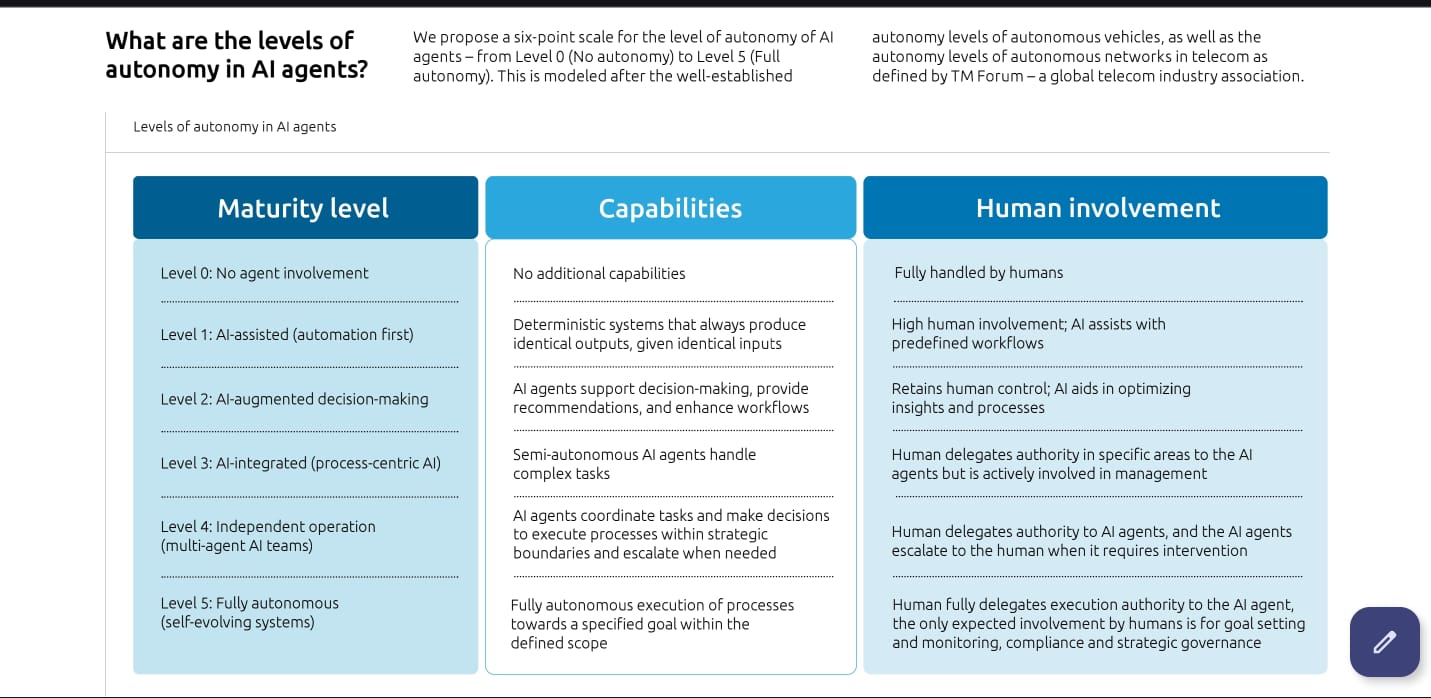
    This six-point scale draws inspiration from established frameworks. Think autonomous vehicles and telecom networks.

    It provides a clear roadmap for understanding AI capabilities across different industries.

    Level 0: No Agent Involvement – The Foundation

    Maturity Level

    At Level 0, there’s no AI agent involvement whatsoever.

    This represents traditional, manual processes. They rely entirely on human decision-making and execution.

    Key Capabilities

    • No additional AI capabilities beyond standard software
    • Deterministic systems producing identical outputs from identical inputs
    • Complete reliance on pre-programmed logic

    Human Involvement

    Tasks are fully handled by humans with no AI assistance.

    This level serves as the baseline for measuring AI integration progress.

    Best for: Organizations just beginning their AI journey. Also processes requiring 100% human oversight.

    Level 1: AI-Assisted (Automation First) – The Helper

    Maturity Level

    Level 1 introduces AI as a supportive tool. It focuses on automation-first approaches that enhance human productivity.

    Key Capabilities

    • Deterministic systems with consistent, predictable outcomes
    • Basic automation of repetitive tasks
    • Simple pattern recognition and data processing

    Human Involvement

    High human involvement where AI assists with predefined workflows.

    Humans maintain complete control. AI handles routine tasks.

    Examples:

    • Email filtering and sorting
    • Basic data entry automation
    • Simple chatbot responses
    Best for: Teams looking to reduce manual workload. Without changing existing processes.

    Level 2: AI-Augmented Decision-Making – The Advisor

    Maturity Level

    At Level 2, AI systems begin supporting decision-making processes. They provide recommendations and insights.

    Key Capabilities

    • AI agents support decision-making with data-driven recommendations
    • Enhanced workflow optimization
    • Predictive analytics and trend identification

    Human Involvement

    Humans retain control while AI aids in optimizing insights and processes.

    The final decision always rests with human operators.

    Examples:

    • Sales forecasting tools
    • Content recommendation engines
    • Risk assessment platforms
    Best for: Organizations wanting data-driven insights. While maintaining human oversight of critical decisions.

    Level 3: AI-Integrated (Process-Centric AI) – The Collaborator

    Maturity Level

    Level 3 represents process-centric AI. Artificial intelligence becomes an integral part of business workflows.

    Key Capabilities

    • Semi-autonomous AI agents handle complex, multi-step tasks
    • Integration with existing business processes
    • Advanced problem-solving within defined parameters

    Human Involvement

    Humans delegate authority in specific areas to AI agents.

    They remain actively involved in management and oversight.

    Examples:

    • Automated customer service resolution
    • Supply chain optimization
    • Dynamic pricing adjustments
    Best for: Established organizations ready to integrate AI deeply. Into core business processes.

    Level 4: Independent Operation (Multi-Agent AI Teams) – The Team Player

    Maturity Level

    Level 4 introduces independent operation through multi-agent AI systems. These can coordinate and collaborate.

    Key Capabilities

    • AI agents coordinate tasks and make decisions within strategic boundaries
    • Multi-agent systems working in harmony
    • Autonomous escalation when human intervention is needed

    Human Involvement

    Humans delegate authority to AI agents.

    AI systems escalate to humans only when intervention is required.

    Examples:

    • Automated trading systems with risk limits
    • Smart manufacturing coordination
    • Multi-channel marketing campaigns
    Best for: Advanced organizations with mature AI infrastructure. Seeking operational efficiency gains.

    Level 5: Fully Autonomous (Self-Evolving Systems) – The Independent Operator

    Maturity Level

    The highest level represents fully autonomous, self-evolving AI systems. Capable of independent operation.

    Key Capabilities

    • Fully autonomous execution of processes toward specified goals
    • Self-learning and adaptation capabilities
    • Continuous improvement without human programming

    Human Involvement

    Humans fully delegate execution authority to AI agents.

    Human involvement is limited to goal setting, monitoring, compliance oversight, and strategic governance.

    Examples:

    • Autonomous vehicle fleets
    • Self-managing data centers
    • Advanced algorithmic trading systems
    Best for: Organizations with sophisticated AI maturity. Seeking maximum automation and efficiency.

    Choosing the Right Autonomy Level for Your Business

    Assessment Questions

    Before implementing AI agents, consider these key questions:

    Operational Readiness

    • What’s your current level of digital maturity?
    • How comfortable is your team with AI-driven processes?
    • What’s your risk tolerance for automated decision-making?

    Business Requirements

    • Which processes consume the most human resources?
    • Where do errors have the highest business impact?
    • What’s your timeline for AI implementation?

    Technical Infrastructure

    • Do you have the data quality needed for AI training?
    • Is your current technology stack AI-ready?
    • What’s your budget for AI implementation and maintenance?

    Implementation Best Practices

    Start Small, Scale Smart

    Begin with Level 1 or 2 implementations in non-critical areas.

    This approach allows your team to build confidence and expertise. Before tackling more complex autonomy levels.

    Focus on Data Quality

    Higher autonomy levels require high-quality, consistent data.

    Invest in data governance and cleaning processes early. In your AI journey.

    Maintain Human Oversight

    Even at higher autonomy levels, maintain clear escalation paths.

    Regular human review processes ensure accountability. And continuous improvement.

    Plan for Change Management

    Each autonomy level requires different skills and mindsets from your team.

    Invest in training and change management. To ensure successful adoption.

    The Future of AI Agent Autonomy

    As AI technology continues advancing, we’ll see more organizations moving toward higher autonomy levels.

    However, success depends on careful planning. Proper implementation matters.

    The key is finding the autonomy level that maximizes efficiency. While maintaining the control and oversight your business requires.

    ⚠️ WARNING: Companies that don’t adapt to AI automation risk being left behind by competitors who embrace these technologies strategically.

    Conclusion

    Understanding AI agent autonomy levels helps you make informed decisions. About AI implementation in your organization.

    Whether you’re starting with basic automation or exploring fully autonomous systems. This framework provides a clear roadmap for your AI journey.

    Remember: The “best” autonomy level isn’t always the highest one. Choose the level that aligns with your business needs, risk tolerance, and operational maturity.

    Ready to implement AI agents in your organization? Start by assessing your current processes. Identify areas where AI assistance could provide immediate value.

    Then, gradually progress through the autonomy levels. As your team builds experience and confidence.


    This article provides a comprehensive overview of AI agent autonomy levels based on established industry frameworks. For personalized AI implementation guidance, consider consulting with AI strategy experts who can assess your specific business needs.


  • Spelling mistakes in CV can get your hired

    Spelling mistakes in CV can get your hired

    AI is fundamentally altering graduate employment. New graduates face both unprecedented challenges and remarkable opportunities as the job market transforms.

    The Numbers Tell a Compelling Story

    Entry-level positions have dropped by 30% in some sectors, with graduate vacancies plummeting from 400 to just 75 at major recruitment firms. However, this isn’t simply about AI replacing humans—it’s creating new opportunities.

    Key Statistics:

    • 50% of graduates now use AI for job applications (up from 38% last year)
    • Employers now see spelling mistakes as signs of authenticity
    • 60% of UK workforce works in SMEs that desperately need AI skills

    New Career Opportunities Are Emerging

    The AI revolution is creating entirely new career paths:

    • AI Ethics Specialists: Ensuring responsible AI implementation
    • Prompt Engineers: Optimizing AI interactions for maximum efficiency
    • AI Implementation Consultants: Helping businesses integrate AI solutions

    These roles didn’t exist five years ago, yet they’re now among the fastest-growing opportunities.

    The Hidden Opportunity: Small-to-Medium Enterprises

    While graduates compete for corporate positions, SMEs offer massive untapped opportunities. These companies face unique challenges:

    • Limited resources for AI implementation
    • Lack of in-house technical expertise
    • Uncertainty about AI’s practical applications
    • Need for cost-effective solutions

    Graduates with practical AI knowledge become invaluable assets with less competition.

    The Skills Gap Crisis

    Universities can’t keep pace with AI literacy training. Self-educated graduates gain substantial competitive advantages.

    Essential AI Skills:

    Technical:

    • Machine learning fundamentals
    • AI tools (ChatGPT, Claude, industry software)
    • Data analysis and automation platforms

    Soft Skills:

    • Critical thinking about AI limitations
    • Ethical reasoning for AI applications
    • Communication skills for non-technical stakeholders

    Strategic Career Advice

    1. Master AI Application

    • Build personal projects showcasing AI problem-solving
    • Create freelance work helping small businesses
    • Develop a portfolio of AI-enhanced work examples

    2. Target Underserved Markets

    • SMEs in traditional industries ready for transformation
    • Startups needing AI expertise
    • Non-profit organizations seeking efficiency improvements

    3. Become an AI Translator

    Bridge the gap between AI capabilities and business applications:

    • Explain AI benefits in business terms
    • Identify specific use cases within organizations
    • Train colleagues on AI tools and best practices

    Future Job Market Predictions

    • Hybrid roles combining traditional skills with AI proficiency will become standard
    • AI literacy will be as essential as computer literacy was in the 1990s
    • Human-AI collaboration skills will differentiate top candidates

    Taking Action: Your Next Steps

    Current Graduates:

    Identify relevant AI tools for your field
    Complete practical AI projects
    Build an AI-enhanced portfolio
    Network with SME leaders
    Specialize in AI ethics or implementation

    Students:

    Supplement coursework with AI learning
    Seek AI-focused internships
    Join AI student organizations
    Develop AI-incorporated capstone projects

    Conclusion: Embrace the AI Advantage

    The graduate job market is transforming, not disappearing. Those who recognize AI as an opportunity multiplier will thrive. The most successful graduates will master AI application and help others navigate this technological revolution.

    The future belongs to graduates who can apply AI to solve real business problems. The question isn’t whether you’ll be affected—it’s whether you’ll be leading the change.

    What changes are you seeing in your industry? Share your experiences with AI’s impact on graduate opportunities in the comments below.

    50% of graduates now use AI for job applications (up from 38% last year)
    Employers now see spelling mistakes as signs of authenticity
    60% of UK workforce works in SMEs that desperately need AI skills