Category: Blog

Your blog category

  • TOON: The New Data Format That Cuts LLM Token Costs by 60%

    TOON: The New Data Format That Cuts LLM Token Costs by 60%

    Token-Oriented Object Notation is Revolutionizing AI Data Exchange
    A Better Way to Send Data to AI Models

    Still sending JSON to your AI models? You’re wasting tokens and money.

    There’s a new format taking over the AI world. TOON (Token-Oriented Object Notation) just launched. It fixes what’s broken with JSON for AI systems.

    Why does this matter? AI models charge you for every token. JSON wastes tokens with extra brackets and quotes. TOON cuts this waste by 60%.

    The Numbers Are Clear

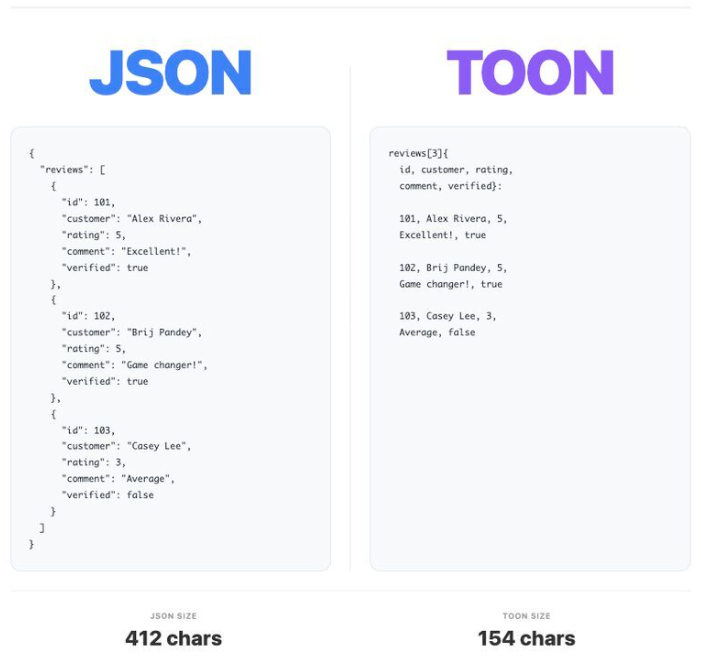
    The same data needs 412 characters in JSON but only 154 characters in TOON. That’s 62% less.

    This means:

    • Lower costs
    • Faster speeds
    • Less waiting
    • Better budgets

    Why TOON Works Better

    What Makes TOON Special:

    Uses Fewer Tokens: 30-60% less than JSON for lists and tables Works Better: AI models read it more easily Clean Code: No extra brackets or quotes Easy Switch: Keep JSON in your app, use TOON for AI

    Best Uses for TOON:

    Data logs and tracking Product lists and catalogs User data and customers Reports and analytics Any repeated data structure

    Stick with JSON when: You have complex nested data

    Who Should Adopt TOON Right Now?

    If you’re building any of these, TOON should be your new default:

    • AI Agents and Copilots
    • Automation systems and workflows
    • RAG (Retrieval-Augmented Generation) pipelines
    • Conversational AI platforms
    • Multi-agent frameworks
    • LLM-powered analytics tools

    Implementation is Simple: Start Today

    TOON has active implementations across multiple programming languages:

    • TypeScript/JavaScript: Official reference implementation
    • Python: Full encoder/decoder with CLI tools
    • PHP: Complete integration with popular AI libraries
    • Java: Maven Central available
    • Go & Rust: Community implementations available

    Getting Started is Easy:

    1. Keep your existing JSON infrastructure
    2. Convert to TOON only when sending to LLMs
    3. Measure your token savings immediately
    4. Scale across your AI applications

    The Bigger Picture: AI Data Optimization

    We’ve spent years optimizing AI models for performance. Now it’s time to optimize the data we feed them.

    TOON represents a fundamental shift in how we think about AI data exchange – moving from human-readable formats to LLM-optimized formats that speak the language of modern AI systems.

    Real-World Impact:

    • Startup savings: Reduce LLM API costs by 30-60%
    • Enterprise scale: Massive savings across thousands of daily requests
    • Better performance: Faster inference with smaller payloads
    • Improved accuracy: LLMs parse structured data more reliably

    Ready to Cut Your LLM Costs?

    The early adopters are already seeing significant savings. TOON is gaining momentum fast in the AI community, with major frameworks beginning integration.

    Don’t wait until your competitors are saving 60% on tokens while you’re still using verbose JSON.

  • 3 step AI Adoption process under 200 seconds

    3 step AI Adoption process under 200 seconds

    How to ensure your AI Project doesn’t ends up in garbage bin

    The most successful companies are adopting the 3 step AI Adoption Strategy

    1. Address the ๐„๐ฆ๐ฉ๐ฅ๐จ๐ฒ๐ž๐ž ๐‰๐จ๐› ๐’๐ž๐œ๐ฎ๐ซ๐ข๐ญ๐ฒ ๐œ๐จ๐ง๐œ๐ž๐ซ๐ง๐ฌ

    2. ๐’๐ข๐ฆ๐ฉ๐ฅ๐ข๐Ÿ๐ฒ ๐ญ๐ก๐ž ๐€๐ˆ Training process

    3. I๐๐ž๐ง๐ญ๐ข๐Ÿ๐ฒ ๐š๐ง๐ ๐ž๐ฆ๐ฉ๐จ๐ฐ๐ž๐ซ ๐ฉ๐ซ๐จ๐ฃ๐ž๐œ๐ญ ๐ฉ๐ซ๐จ๐ฉ๐จ๐ง๐ž๐ง๐ญ๐ฌ early on

    by One of Top 25 AI Leaders of 2025 Vimal Singh

    #AIAdoption #SuccessfulAIProjects #BusinessAIAdoption #AutomateReporting

  • Why AI Won’t Replace Enterprise Developers: A Reality Check from Fortune 500 IT

    Why AI Won’t Replace Enterprise Developers: A Reality Check from Fortune 500 IT

    The Disconnect Between AI Hype and Enterprise Development Reality

    Unpopular opinion: Most people claiming “AI will replace all developers” or promoting “vibe coding” have never worked in enterprise IT environments.

    They’ve never experienced the harsh realities of Fortune 500 software development.

    What AI Evangelists Don’t Understand About Enterprise IT

    The LinkedIn crowd pushing these narratives has never:

    • Sat on a Fortune 500 incident call at 2am debugging critical production failures
    • Watched a misconfigured RBAC policy take down multi-million dollar systems
    • Dealt with the cascading effects of enterprise system failures
    • Navigated the complexity of legacy enterprise architecture

    Why Enterprise Software Development Can’t Be “Vibed”

    In enterprise IT, complexity is the default โ€” not the exception.

    The Reality of Enterprise System Architecture:

    • Scale: Fortune 500 companies run 1,000+ applications simultaneously
    • Geographic Distribution: Systems span countries, clouds, and compliance zones
    • Interconnectivity: Every system is entangled; one failure cascades across business units
    • Technical Debt: Decades of legacy code mixed with modern microservices and vendor APIs

    Enterprise Infrastructure Layers Include:

    • DevOps pipelines and automation
    • Identity and Access Management (IAM)
    • Role-Based Access Control (RBAC)
    • Rollback procedures and disaster recovery
    • Audit trails and compliance monitoring
    • CI/CD pipeline management
    • Regulatory compliance frameworks

    The Real Cost of Enterprise System Failures

    In enterprise environments, mistakes don’t just “break things.” They trigger:

    • Global incidents affecting multiple business units
    • SLA penalties costing millions in contractual violations
    • Executive escalations requiring C-suite involvement
    • Regulatory compliance issues with legal implications

    Why Technical Skills Matter More Than Ever in Enterprise Development

    Enterprise software development requires:

    • Systems thinking to understand complex interdependencies
    • Technical depth to navigate layered infrastructure
    • Risk assessment to prevent catastrophic failures
    • Compliance knowledge for regulatory requirements
    • Incident response skills for production emergencies

    The Bottom Line: AI Tools vs Enterprise Reality

    While AI can assist with code generation and simple tasks, enterprise development demands human expertise in:

    • Complex system architecture design
    • Cross-platform integration strategies
    • Risk mitigation and disaster recovery
    • Regulatory compliance implementation
    • Critical incident resolution

    Enterprise IT isn’t going anywhere. The complexity, compliance requirements, and high-stakes nature of Fortune 500 systems will continue to require skilled developers who understand the full scope of enterprise software development.


    Tags: #EnterpriseDevelopment #SoftwareEngineering #AIvsReality #Fortune500IT #TechnicalSkills #SystemsThinking #ProductionSupport #EnterpriseArchitecture

  • The Great Human Hunt: A 2025 Customer Service Story

    The Great Human Hunt: A 2025 Customer Service Story


    How many times have you shouted this at a chatbot?
    Iโ€™ve done it more times than I want to admit.

    In my work, I also get to switch sides and look at the teams providing these systems, or sit with the engineering team behind them.

    Usually, to them, everything looks fine. The AI performance metrics look good. The dashboards are clean. Everyone feels quietly confident that things are โ€œgood enough.โ€

    But the moment you look at actual outcomes –
    real customer satisfaction,
    real escalations,
    real decision quality,
    you realise something is clearly not working the way people assume it is.

    And honestly, after seeing this across so many companies, the pattern is impossible to ignore.

    The model is almost never the real problem.

    I keep running into the same three issues again and again:

    ๐Ÿ. ๐ƒ๐š๐ญ๐š ๐ˆ๐ง๐ญ๐ž๐ ๐ซ๐ข๐ญ๐ฒ
    Teams argue about definitions that should be obvious, and the model ends up learning from contradictory truths.

    ๐Ÿ. ๐ƒ๐ž๐œ๐ข๐ฌ๐ข๐จ๐ง ๐‚๐ฅ๐š๐ซ๐ข๐ญ๐ฒ
    Ask three people how a decision is made today and youโ€™ll get five answers.
    AI learns those contradictory, unwritten rulesโ€ฆ inconsistently.

    ๐Ÿ‘. ๐„๐ฏ๐š๐ฅ๐ฎ๐š๐ญ๐ข๐จ๐ง ๐€๐ซ๐œ๐ก๐ข๐ญ๐ž๐œ๐ญ๐ฎ๐ซ๐ž
    Everybody checks the model before launch. Nobody checks it after. So drift quietly creeps in until customers are the first to notice.

    ๐“๐ก๐ข๐ฌ ๐ข๐ฌ ๐ญ๐ก๐ž ๐ก๐ข๐๐๐ž๐ง ๐œ๐จ๐ฌ๐ญ ๐จ๐Ÿ โ€œ๐ ๐จ๐จ๐ ๐ž๐ง๐จ๐ฎ๐ ๐กโ€ ๐€๐ˆ.

    It behaves well in the metricsโ€ฆ and badly in the real world.

    I wrote about this in my latest Substack because these problems are fixable, but only if you stop looking at your dashboards and start examining your foundations.

    If youโ€™ve ever felt like your AI is โ€œmostly fineโ€ but your customers are telling a different storyโ€ฆ you’ll relate to it.

  • Every Minute You Don’t Know = Market Share Lost

    Every Minute You Don’t Know = Market Share Lost


    Hereโ€™s how AI-Powered Agents can Automate the entire Competitive Intelligence process, from collecting signals to delivering insights:

    ๐Ÿ. ๐๐ฎ๐ฌ๐ก ๐”๐ฉ๐๐š๐ญ๐ž๐ฌ ๐Ÿ๐ซ๐จ๐ฆ ๐’๐จ๐ฎ๐ซ๐œ๐ž๐ฌ:
    Monitor diverse sources like news, press, competitors, and social media for real-time updates. These updates are sent to an event bus (SNS, SQS, Kafka) or a webhook queue.

    ๐Ÿ. ๐๐ซ๐จ๐œ๐ž๐ฌ๐ฌ๐ข๐ง๐  ๐“๐ข๐ž๐ซ๐ฌ:
    Classify updates based on priority focusing on high-priority sources like pricing, launches, and funding. Medium-priority updates include blogs and case studies, while low-priority updates focus on reviews and trends.

    ๐Ÿ‘. ๐’๐ข๐ ๐ง๐š๐ฅ ๐‚๐จ๐ฅ๐ฅ๐ž๐œ๐ญ๐จ๐ซ ๐€๐ ๐ž๐ง๐ญ:
    Aggregates, filters, deduplicates, and enriches signals by adding metadata, reducing noise by up to 90%.

    ๐Ÿ’. ๐ˆ๐ง๐ญ๐ž๐ฅ๐ฅ๐ข๐ ๐ž๐ง๐œ๐ž ๐€๐ง๐š๐ฅ๐ฒ๐ฌ๐ญ ๐€๐ ๐ž๐ง๐ญ:
    Retrieves competitor history and contextualizes each signal, categorizing it by urgency, impact, and relevance. This agent looks for patterns in competitor behavior.

    ๐Ÿ“. ๐‚๐จ๐ง๐ญ๐ž๐ง๐ญ ๐’๐ญ๐ซ๐š๐ญ๐ž๐ ๐ข๐ฌ๐ญ ๐€๐ ๐ž๐ง๐ญ:
    Generates draft updates, suggests objection handlers, and creates win/loss matrices. It pulls insights from CRM data and produces content for reports or battle cards.

    ๐Ÿ”. ๐Ž๐ฉ๐ฉ๐จ๐ซ๐ญ๐ฎ๐ง๐ข๐ญ๐ฒ ๐’๐œ๐จ๐ฎ๐ญ ๐€๐ ๐ž๐ง๐ญ:
    Monitors competitor activities, identifies opportunities, and surfaces vulnerabilities. It matches competitor movements with your sales pipeline to suggest talking points for sales teams.

    ๐Ÿ•. ๐‡๐ฎ๐ฆ๐š๐ง-๐ข๐ง-๐ญ๐ก๐ž-๐‹๐จ๐จ๐ฉ:
    Provides oversight, ensuring AI-driven insights are validated and approved before use.

    ๐Ÿ–. ๐Œ๐จ๐๐ž๐ฅ ๐ˆ๐ง๐Ÿ๐ž๐ซ๐ž๐ง๐œ๐ž ๐‹๐š๐ฒ๐ž๐ซ
    AI models (like Amazon Bedrock, GPT, and Claude) analyze and enhance the intelligence gathered by agents.

    ๐Ÿ—. ๐Œ๐ž๐ฆ๐จ๐ซ๐ฒ ๐š๐ง๐ ๐€๐ง๐š๐ฅ๐ฒ๐ญ๐ข๐œ๐ฌ:
    Store insights and historical data in systems like Redis, Upstash, and Amazon S3. Use analytics tools like Google Analytics and Mixpanel to measure usage and performance.

    This is Agnetic AI at its best automating data collection, signal filtering, analysis, and decision-making processes for more efficient competitive tracking.

    Is your organization ready to move from manual competitive analysis to intelligent automation?

  • Is Your Hiring Process Secretly Racist? This Simple Test Reveals All

    Is Your Hiring Process Secretly Racist? This Simple Test Reveals All

    Bias Assessment Tool

    The shocking truth about how biased job postings are costing you top talent

    43% of top candidates end up in the rejected folder due to bias

    The Hidden Bias Crisis

    Think your job postings are neutral? Think again. Your last job posting contained 14 bias indicators that are silently pushing away qualified candidates before they even apply.

    73%

    of diverse candidates skip biased job posts

    2.3x

    longer time-to-hire with biased language

    $15K

    average cost per mis-hire due to bias

    Your Job Posting’s Hidden Bias Indicators

    “Aggressive”Gender Biased

    “Recent Graduate”Age Biased

    “Culture-Fit”Diversity Eliminator

    “Top College”Socioeconomic Bias

    “Young & Dynamic”Age Discrimination

    “Native Speaker”Language/Origin Bias

    The Real Cost of Biased Hiring

    When your job descriptions contain unconscious bias, you’re not just missing out on talentโ€”you’re actively creating barriers that prevent the best candidates from even applying. Studies show that:

    • Womenย are 32% less likely to apply to jobs with masculine-coded language
    • Older workersย skip 67% of age-biased postings
    • Diverse candidatesย self-eliminate when they see “culture fit” requirements

    ๐ŸŽฏ Check Your Conscious Bias with ResumeGPTPro

    Our AI-powered bias detection scans your job postings in real-time, identifying problematic language and suggesting inclusive alternatives.Scan Your Job Posting for FREE

    The Path to Bias-Free Hiring

    Equal hiring isn’t just about complianceโ€”it’s about finding the best talent regardless of background. When you eliminate bias from your recruitment process, you:

    • Access 2.3x larger talent pools
    • Reduce time-to-hire by 40%
    • Improve team performance by 35%
    • Build stronger, more innovative teams

    Take Action Today

    Don’t let unconscious bias cost you another great hire. Start by auditing your current job postings and identifying language that might be turning away qualified candidates.

    Remember: True diversity starts with inclusive language. Every word matters when you’re trying to build the best team possible.

    #BiasFree #EqualHiring #Diversity #InclusiveRecruitment #ResumeGPTPro #TalentAcquisition

  • After Pavlov’s dog now it is Claude’s

    8 non-robotics experts had to program quadruped robots to fetch beach balls.

    The real bottleneck was connecting to unfamiliar hardware.

    Team Claude navigated sensor integration nightmares and conflicting Stack Overflow answers efficiently.

    Team Claude-less spent HOURS stuck on basic connections, not because they couldn’t code, but because they hit the documentation wall.

    ๐–๐จ๐ซ๐ค ๐ฉ๐š๐ญ๐ญ๐ž๐ซ๐ง๐ฌ ๐ฌ๐ก๐ข๐Ÿ๐ญ๐ž๐ ๐œ๐จ๐ฆ๐ฉ๐ฅ๐ž๐ญ๐ž๐ฅ๐ฒ:

    Team Claude-less โ†’ 44% more questions to each other, more collaboration, shared suffering

    Team Claude โ†’ each person paired with AI, explored in parallel, built side projects (like a natural language controller for robot push-ups)

    ๐Ž๐ง๐ž ๐ฆ๐ž๐ฆ๐จ๐ซ๐š๐›๐ฅ๐ž ๐ฆ๐จ๐ฆ๐ž๐ง๐ญ:
    Team Claude programmed their robot to move 1 m/s for 5 seconds.
    Classic human math error, they were less than 5 meters from the other team’s table.

    Robot charged.
    Emergency power-off.
    No injuries.
    Morale destroyed.

    ๐–๐ก๐ฒ ๐ญ๐ก๐ข๐ฌ ๐ฆ๐š๐ญ๐ญ๐ž๐ซ๐ฌ ๐Ÿ๐จ๐ซ ๐ž๐ง๐ญ๐ž๐ซ๐ฉ๐ซ๐ข๐ฌ๐ž ๐€๐ˆ:
    The hardest part of AI-physical integration isn’t the AI itself.
    It’s connecting to unknown systems with messy documentation.
    As models improve, this bottleneck shrinks fast.

    Anthropic now tracks this as a capability threshold in their Responsible Scaling Policy.

    โ†’ Today: AI helps humans connect to unfamiliar hardware
    โ†’ Tomorrow: AI connects autonomously to unknown systems
    โ†’ No 6-month integration cycles

    This is beyond robot dogs fetching balls.
    It’s about AI bridging digital-physical divides at enterprise scale.

    What do you think? Tell me in comments.

    A. Exciting future
    B. “please no Terminator”

    #Anthropic #Claude Dog

  • MCP is the ‘USB-C for AI

    MCP is the ‘USB-C for AI

    ๐…๐ฎ๐ง๐œ๐ญ๐ข๐จ๐ง ๐‚๐š๐ฅ๐ฅ๐ข๐ง๐  = ๐’๐ฉ๐ž๐ž๐ ๐ƒ๐ข๐š๐ฅ
    LLM picks function
    โ†’ API responds
    โ†’ Done.

    Perfect for: Known tasks, trusted environments, moving fast.

    Note – LLM has direct access to your APIs. No bouncer at the door.

    ๐Œ๐‚๐ = ๐‚๐ก๐ž๐œ๐ค๐ฉ๐จ๐ข๐ง๐ญ ๐’๐ฒ๐ฌ๐ญ๐ž๐ฆ
    Client evaluates
    โ†’ Routes through validation layer
    โ†’ Server picks tool
    โ†’ You control what happens.

    Perfect for: Enterprise environments, but design with caution.

    Note – It adds complexity.
    And “safety” isn’t automatic – it’s just possible.

    ๐Œ๐‚๐ ๐ข๐ฌ๐ง’๐ญ ๐ฆ๐š๐ ๐ข๐œ๐š๐ฅ๐ฅ๐ฒ ๐ฌ๐š๐Ÿ๐ž.
    It’s a framework that gives you:
    – Interception points (so you can validate requests)
    – Server-side control (so you decide what’s exposed)
    – Separation of concerns (so one bad call doesn’t nuke everything)

    You still have to write the validation logic, define access controls, build the guardrails.

    ๐–๐ก๐ž๐ง ๐ญ๐จ ๐ฎ๐ฌ๐ž ๐ž๐š๐œ๐ก?
    Function Calling: Prototyping, internal tools, 1-2 predictable functions, you trust the LLM’s judgment.

    MCP: Production systems, multiple tools, compliance requirements, you need audit trails, things break if the AI guesses wrong.

    Function calling is fast and simple until you scale.
    MCP is structured and controllable – but only if you actually build the controls.

    Choose based on what happens when things go wrong, not when they go right.

    #MCP #ToolCalling

  • Unlock Scalable AI: 7 Core Building Blocks

    Unlock Scalable AI: 7 Core Building Blocks

    Building AI Agents is not just about plugging in an LLM.
    Scalable agents need an entire ecosystem of components working in sync.

    ๐‡๐ž๐ซ๐ž ๐š๐ซ๐ž ๐ญ๐ก๐ž ๐œ๐จ๐ซ๐ž ๐›๐ฎ๐ข๐ฅ๐๐ข๐ง๐  ๐›๐ฅ๐จ๐œ๐ค๐ฌ ๐จ๐Ÿ ๐ฌ๐œ๐š๐ฅ๐š๐›๐ฅ๐ž ๐€๐ˆ ๐š๐ ๐ž๐ง๐ญ๐ฌ:

    ๐Ÿ. ๐€๐ ๐ž๐ง๐ญ๐ข๐œ ๐…๐ซ๐š๐ฆ๐ž๐ฐ๐จ๐ซ๐ค๐ฌ
    Frameworks like LangGraph, CrewAI, Autogen, and LlamaIndex allow developers to orchestrate multi-agent workflows, handle task decomposition, and structure agent communication.

    ๐Ÿ. ๐“๐จ๐จ๐ฅ ๐ˆ๐ง๐ญ๐ž๐ ๐ซ๐š๐ญ๐ข๐จ๐ง
    Agents need to connect with APIs, databases, and code execution environments. Tool calling (OpenAI Functions, MCP) makes this possible in a structured way.

    ๐Ÿ‘. ๐Œ๐ž๐ฆ๐จ๐ซ๐ฒ ๐’๐ฒ๐ฌ๐ญ๐ž๐ฆ
    Without memory, agents become context-blind.

    * Short-term: Manage session context.
    * Long-term: Store facts in vector DBs like Pinecone or OpenSearch.
    * Hybrid memory: Combine recall with reasoning for consistency.

    ๐Ÿ’. ๐Š๐ง๐จ๐ฐ๐ฅ๐ž๐๐ ๐ž ๐๐š๐ฌ๐ž
    Vector databases and graph-based systems (Neo4j, Weaviate) form the backbone of knowledge retrieval, enabling semantic and hybrid search at scale.

    ๐Ÿ“. ๐„๐ฑ๐ž๐œ๐ฎ๐ญ๐ข๐จ๐ง ๐„๐ง๐ ๐ข๐ง๐ž
    Handles task scheduling, retries, async operations, and scaling. This ensures the agent doesnโ€™t just think, but also acts reliably and on time.

    ๐Ÿ”. ๐Œ๐จ๐ง๐ข๐ญ๐จ๐ซ๐ข๐ง๐  & ๐†๐จ๐ฏ๐ž๐ซ๐ง๐š๐ง๐œ๐ž
    Tools like Helicone and Langfuse track tokens, errors, and agent behavior. Governance ensures compliance, security, and responsible use.

    ๐Ÿ•. ๐ƒ๐ž๐ฉ๐ฅ๐จ๐ฒ๐ฆ๐ž๐ง๐ญ
    Agents run across cloud, local, or edge setups using Docker or Kubernetes. CI/CD pipelines ensure continuous updates and scalable operations.

    The future of AI agents is not just about smarter models.
    It is about integrating frameworks, memory, tools, and governance to make them reliable, scalable, and production-ready.

    ๐‡๐จ๐ฐ ๐ฆ๐š๐ง๐ฒ ๐จ๐Ÿ ๐ญ๐ก๐ž๐ฌ๐ž ๐ฅ๐š๐ฒ๐ž๐ซ๐ฌ ๐ก๐š๐ฏ๐ž ๐ฒ๐จ๐ฎ ๐š๐ฅ๐ซ๐ž๐š๐๐ฒ ๐ข๐ฆ๐ฉ๐ฅ๐ž๐ฆ๐ž๐ง๐ญ๐ž๐ ๐ข๐ง ๐ฒ๐จ๐ฎ๐ซ ๐€๐ˆ ๐ฉ๐ซ๐จ๐ฃ๐ž๐œ๐ญ๐ฌ?

  • Evaluate AI Agents: 9 Must-Have Metrics Now

    Evaluate AI Agents: 9 Must-Have Metrics Now

    ๐€๐ˆ ๐€๐ ๐ž๐ง๐ญ๐ฌ ๐š๐ซ๐ž ๐ญ๐ก๐ž ๐Ÿ๐ฎ๐ญ๐ฎ๐ซ๐ž ๐จ๐Ÿ ๐ฐ๐จ๐ซ๐ค. ๐๐ฎ๐ญ ๐ก๐จ๐ฐ ๐๐จ ๐ฒ๐จ๐ฎ ๐š๐œ๐ญ๐ฎ๐š๐ฅ๐ฅ๐ฒ ๐ž๐ฏ๐š๐ฅ๐ฎ๐š๐ญ๐ž ๐ข๐Ÿ ๐š๐ง ๐€๐ˆ ๐€๐ ๐ž๐ง๐ญ ๐ข๐ฌ ๐ ๐จ๐จ๐ ๐ž๐ง๐จ๐ฎ๐ ๐ก ๐ญ๐จ ๐ญ๐ซ๐ฎ๐ฌ๐ญ?

    Most people get excited about building agents, but very few know how to measure their true effectiveness. Without the right evaluation, agents can become unreliable, costly, and even risky to deploy.

    ๐‡๐ž๐ซ๐ž ๐š๐ซ๐ž ๐Ÿ— ๐‚๐จ๐ซ๐ž ๐…๐š๐œ๐ญ๐จ๐ซ๐ฌ ๐ญ๐จ ๐„๐ฏ๐š๐ฅ๐ฎ๐š๐ญ๐ž ๐š๐ง ๐€๐ˆ ๐€๐ ๐ž๐ง๐ญ ๐ข๐ง ๐ฌ๐ข๐ฆ๐ฉ๐ฅ๐ž ๐ญ๐ž๐ซ๐ฆ๐ฌ:

    ๐Ÿ. ๐‹๐š๐ญ๐ž๐ง๐œ๐ฒ ๐š๐ง๐ ๐’๐ฉ๐ž๐ž๐
    How fast does the agent finish tasks? A 2-second reply feels great, a 10-second lag frustrates users.

    ๐Ÿ. ๐€๐๐ˆ ๐„๐Ÿ๐Ÿ๐ข๐œ๐ข๐ž๐ง๐œ๐ฒ
    Does the agent optimize API calls or combine requests smartly to reduce cost and delay?

    ๐Ÿ‘. ๐‚๐จ๐ฌ๐ญ ๐š๐ง๐ ๐‘๐ž๐ฌ๐จ๐ฎ๐ซ๐œ๐ž๐ฌ
    Same result, different costs. One model might cost $0.25 per query, another $0.01. Efficiency matters.

    ๐Ÿ’. ๐„๐ซ๐ซ๐จ๐ซ ๐‘๐š๐ญ๐ž
    How often does the agent fail or crash? If 20 out of 100 attempts fail, thatโ€™s a 20 percent error rate.

    ๐Ÿ“. ๐“๐š๐ฌ๐ค ๐’๐ฎ๐œ๐œ๐ž๐ฌ๐ฌ
    Does the agent actually complete the job? If it resolves 45 out of 50 tickets, thatโ€™s a 90 percent success rate.

    ๐Ÿ”. ๐‡๐ฎ๐ฆ๐š๐ง ๐ˆ๐ง๐ฉ๐ฎ๐ญ
    How much correction does the AI need? If humans edit every step, efficiency drops.

    ๐Ÿ•. ๐ˆ๐ง๐ฌ๐ญ๐ซ๐ฎ๐œ๐ญ๐ข๐จ๐ง ๐Œ๐š๐ญ๐œ๐ก
    Does the AI follow instructions correctly? If asked for 3 bullet points but writes a paragraph, it is failing accuracy.

    ๐Ÿ–. ๐Ž๐ฎ๐ญ๐ฉ๐ฎ๐ญ ๐…๐จ๐ซ๐ฆ๐š๐ญ
    Is the answer in the right format? If JSON is expected but plain text comes back, that breaks workflows.

    ๐Ÿ—. ๐“๐จ๐จ๐ฅ ๐”๐ฌ๐ž
    Does the agent use the right tools? For example, using a calculator API instead of โ€œguessingโ€ math answers.

    AI Agents are not just about being flashy. They need to prove they are reliable, cost-effective, and scalable. Evaluating them across these nine factors ensures theyโ€™re truly ready for real-world use.