Category: Business Strategy

  • I Used AI to Recreate the Taj Mahal. The Model Crashed Twice. Here’s Why That’s the Point.

    I Used AI to Recreate the Taj Mahal. The Model Crashed Twice. Here’s Why That’s the Point.

    I Used AI to Recreate the Taj Mahal. The Model Crashed Twice. Here’s Why That’s the Point.

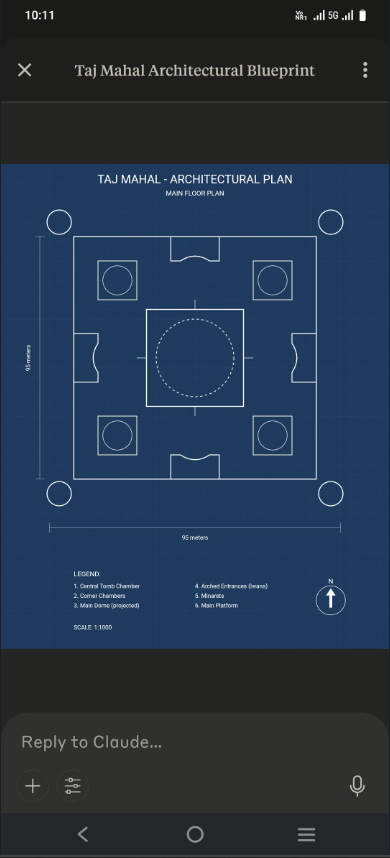
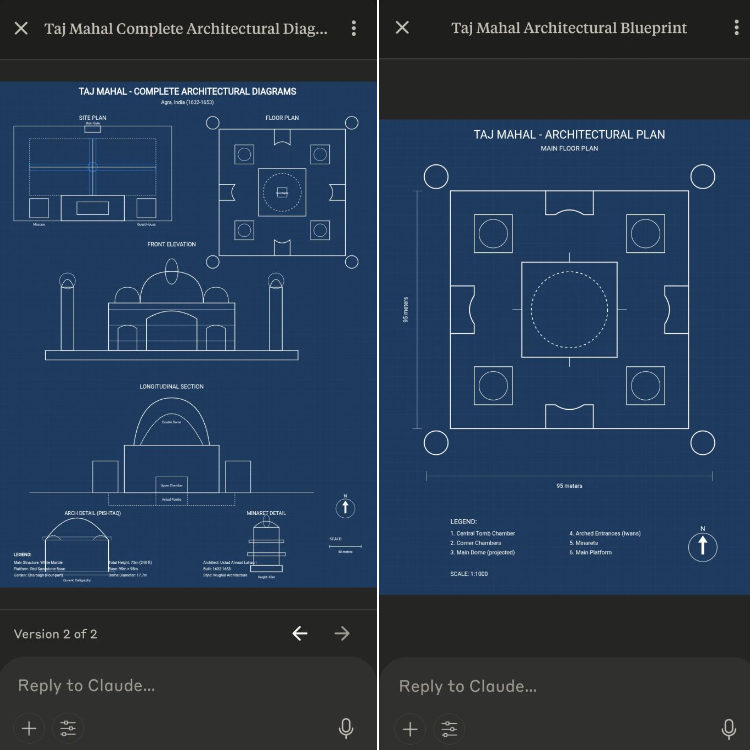
    A few nights ago, I fed a ridiculous prompt to an AI model.

    “Design the architectural blueprints of the Taj Mahal.”

    And it did.

    Domes. Minarets. Symmetry. The AI creativity surpassed what even textbooks capture, bringing architectural precision to life through artificial intelligence.

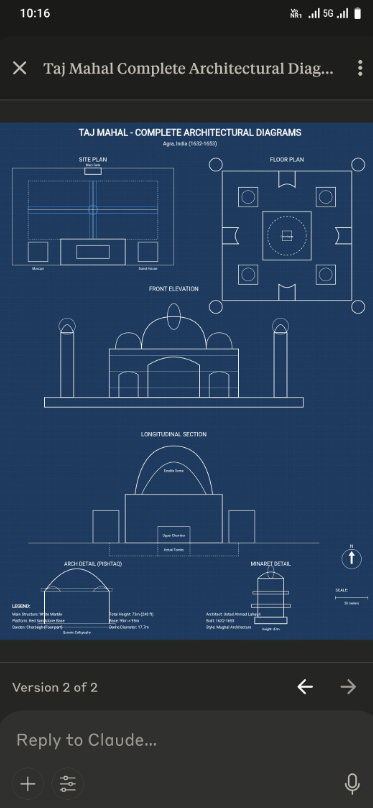
    Then I got ambitious—and asked it to draft an entire project plan.

    Dependencies, timelines, labor estimates, procurement schedules—like a 17th-century Jira board. It crashed my language model. Twice.

    And yet, that crash told me more than any success could.

    This Wasn’t a Stunt. It Was a Stress Test.

    Because the Taj Mahal isn’t just a building. It’s a metaphor.

    It was commissioned with vision, executed with rigor, and built on method. And that’s exactly what AI is made for.

    We keep looking at AI as if it’s magic—some genie that writes poems, cracks jokes, or designs logos. But that’s the performance art version of artificial intelligence.

    What AI creativity really excels at is something deeper, quieter:

    Reconstructing anything that’s built on rules, repetition, and structure through artificial intelligence.

    • Architecture and creative design
    • HR dashboards and analytics
    • Financial reports and forecasting
    • Onboarding journeys and user experience
    • SOP documents and process automation
    • Learning paths and educational content
    • Even your Monday sales forecast powered by AI

    If it follows a logic, it can be reimagined through AI creativity.

    That’s not scary. That’s liberating.

    Creativity Was Never in Danger. Routine Disguised as Creativity Is.

    There’s a certain kind of “creativity” we’ve all been guilty of—work that artificial intelligence now exposes for what it really was.

    The PowerPoint slide deck with four mandatory bullet points. The recruitment email template slightly reworded for the hundredth time. The policy document that just adds last year’s change log in a different font.

    We called it knowledge work. But really, it was structured imitation. Stylized repetition. Creativity-by-format that AI creativity can now handle with ease.

    And artificial intelligence eats that for breakfast.

    Because it doesn’t get tired. It doesn’t need inspiration. And it certainly doesn’t care about formatting rules from 2006.

    The Blueprint Has Changed.

    This isn’t about layoffs or fears. It’s about clarity.

    If AI can create the blueprint of one of the world’s greatest architectural wonders through artificial intelligence creativity— what else can it recreate in your workflow?

    Think of every job that relies on:

    • Predictable rules
    • Set steps
    • Standardized outputs
    • Repeatable logic
    • Well-documented inputs

    That’s not creative chaos. That’s operational discipline. And that’s precisely what artificial intelligence can do better, faster, and more reliably than human creativity alone.

    This isn’t a call to fear. It’s a call to focus.

    Are You Still Drawing With the Old Pencil?

    Because the blueprint is different now.

    It doesn’t start on graph paper. It starts with a prompt—where human creativity meets artificial intelligence.

    You don’t need to be an AI engineer. You just need to understand your own workflow deeply enough to hand it over to a machine—and know what creative elements to keep for yourself.

    AI won’t replace your vision or creative thinking. But it will quietly take over everything that pretended to be creative but was really just habit.

    The Taj Mahal didn’t need artificial intelligence to exist. But today, it needs AI creativity to be explained, replicated, and scaled in seconds.

    What else in your world is waiting to be reimagined?
  • AI Adoption Is Broken—Not Because of Tech, But Because of Thinking

    The empire isn’t falling because it lacks lightsabers. It’s crumbling because its generals still fight with spears.

    That’s the state of AI adoption today.

    Executives flaunt ChatGPT subscriptions like luxury watches. Strategy decks hum with AI ambition. But when it comes to impact?

    McKinsey says 70% of firms “use AI.” Only 23% see real ROI. That’s not a tech failure. That’s a leadership failure in disguise.

    Let’s call it what it is: Most companies are stuck in net practice.

    They’ve bought the bat (ChatGPT), hired the coach (consultants), but haven’t played a real match. No scoreboard. No crowd. No wickets.

    1. Don’t Delegate the Force. Wield It.

    Imagine Luke Skywalker outsourcing lightsaber training to a team of interns. That’s what most leaders are doing with AI.

    They’ve built AI labs, hired innovation heads, and… kept writing board notes the same way they did in 2017.

    If you’re a CXO reading this: Use GPT to rewrite your board note. Automate your own Monday morning sales report. Build a Slackbot that summarizes your team’s weekly huddles.

    If AI feels magical, you’re not using it enough.

    1. Build Skills Like You Build IPL Squads

    The winning team doesn’t rely on a single star. It invests in depth.

    Your org doesn’t need 5 AI unicorns. It needs 50 employees who can:

    • Write clear prompts
    • Automate recurring tasks
    • Audit GPT’s output for bias
    • Use AI in their daily workflow without waiting for permission

    HBR says teams with basic AI fluency are 40% more productive.

    Not because they “understand AI,” but because they make it a reflex. It’s not a masterclass. It’s muscle memory.

    Forget three-day bootcamps. Run weekly show-and-tells. Reward smart automations. Make prompt-writing a team sport.

    1. Stop Spinning the Wheel. Break It.

    AI isn’t here to speed up legacy mess. It’s here to ask: Why does this even exist?

    • Don’t automate a 6-step approval. Kill the unnecessary steps.
    • Don’t summarize a pointless meeting. Cancel it.
    • Don’t use AI as a fancy pen. Use it as a lightsaber.

    Stanford research shows structured AI enablement leads to 3.4x faster adoption. Not because teams got smarter. Because the rules got rewritten.

    The future won’t reward those who do old things faster. It’ll reward those who ask better questions.

    You Don’t Need a Head of AI

    You need someone who can rethink clunky workflows. Someone hands-on with tools. Someone bold enough to challenge the process—not just follow it.

    More than strategy, you need action. More than pilots, you need momentum.

    Start small. Win fast. Share often. Build internal capability, not just external dependency.

    Let me know if you want the full playbook, ready-to-use workflows, or team templates to get started.

    Because no transformation happens alone.

  • Your Complete Guide Through the AI Jungle: From LLMs to Agentic AI

    Your Complete Guide Through the AI Jungle: From LLMs to Agentic AI

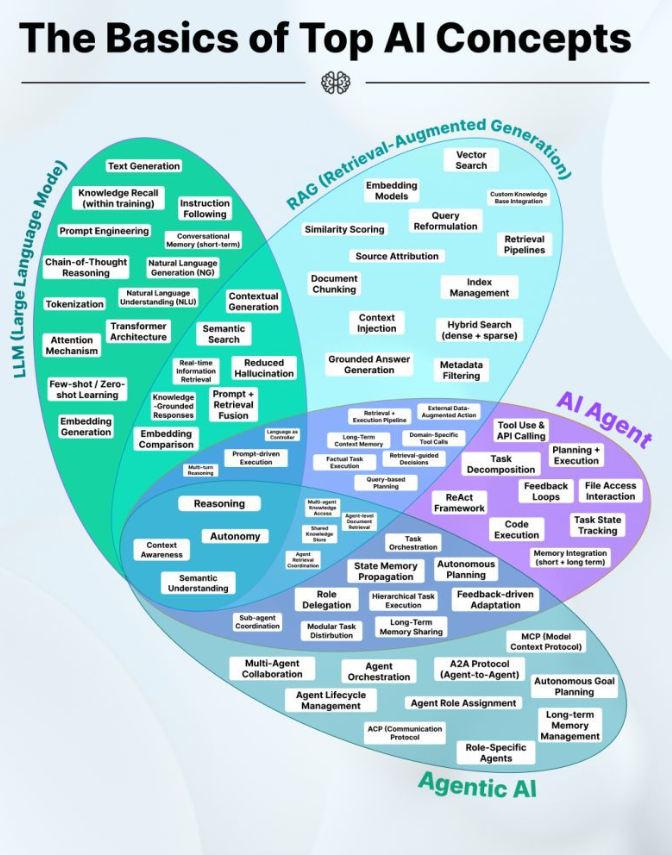
    The AI landscape isn’t a jungle of competing technologies—it’s a carefully architected intelligence stack that every enterprise needs to understand. After implementing AI systems across Fortune 500 companies, I’ve seen firsthand how the most successful organizations treat GenAI as layered infrastructure, not isolated tools.

    Let me break down the four-layer architecture that’s transforming how businesses operate.

    Layer 1: Large Language Models (The Foundation)

    Think of LLMs as your AI’s brain stem—they handle the core language processing that everything else builds on.

    What LLMs Actually Do:

    • Tokenize your text into processable chunks

    • Embed language into mathematical representations

    • Generate coherent, contextual responses

    • Follow instructions with remarkable accuracy

    • Reason through complex problems

    Reality Check: LLMs are incredibly powerful but fundamentally limited. They can’t access real-world data, can’t take actions, and can’t learn from new information. They’re pure language intelligence—nothing more, nothing less.

    Enterprise Applications That Work Right Now:

    • Content generation (I’ve seen 70% time savings in marketing teams)

    • Code completion and documentation

    • Initial customer service responses

    • Data analysis and report generation

    Layer 2: Retrieval-Augmented Generation (The Knowledge Bridge)

    RAG is where LLMs stop hallucinating and start being useful. It connects your AI to real, current information.

    Here’s what RAG actually fixes:

    The Hallucination Problem: LLMs confidently make up facts. RAG grounds responses in your actual data, reducing hallucinations by up to 85% in our implementations.

    How RAG Transforms Your AI:

    • Vector search finds semantically similar content across millions of documents

    • Document chunking breaks your knowledge base into searchable pieces

    • Source grounding links every response back to specific information

    • Real-time access to live databases and APIs

    Game-Changing Use Cases:

    • Internal knowledge management (one client reduced support ticket resolution time by 60%)

    • Compliance and regulatory guidance with audit trails

    • Customer support with product-specific accuracy

    • Research and competitive intelligence

    Layer 3: AI Agents (Where Talk Becomes Action)

    This is where things get interesting. AI Agents are where your AI stops talking and starts doing.

    What Makes Agents Different:

    • Planning: Breaking complex tasks into executable steps

    • Tool usage: Actually calling APIs and interacting with systems

    • State management: Remembering context across multi-step processes

    • Decision making: Choosing the right action based on current situation

    Real Impact: One manufacturing client uses AI agents to manage their entire supply chain exception handling. What used to take hours of human coordination now happens in minutes, automatically.

    Enterprise Agent Applications:

    • Process automation end-to-end

    • Customer journey orchestration

    • IT operations and incident response

    • Sales pipeline management

    Layer 4: Agentic AI (The Orchestration Layer)

    Agentic AI is where multiple intelligent agents collaborate, assign roles, share memory, and pursue complex goals together.

    This isn’t science fiction—it’s happening now in leading enterprises.

    What Agentic AI Enables:

    • Multi-agent collaboration across different business functions

    • Dynamic role assignment based on expertise and workload

    • Shared memory systems creating institutional knowledge

    • Goal adaptation as situations evolve

    • Autonomous coordination without human intervention

    Success Story: A financial services firm uses agentic AI to manage their entire trading operations. Multiple specialized agents handle market analysis, risk assessment, execution, and reporting—collaborating in real-time to optimize portfolio performance.

    How The Complete Stack Works Together

    Here’s a real-world example from customer service:

    1. LLM Layer: Understands customer inquiry in natural language

    2. RAG Layer: Retrieves relevant product documentation and customer history

    3. Agent Layer: Routes tickets, schedules follow-ups, escalates when needed

    4. Agentic Layer: Coordinates across support, billing, and technical teams automatically

    Result: 78% of customer issues resolved without human intervention, 45% faster resolution times.