Blog

  • Google’s Shocking AI Survey: 2025 Secrets Revealed!

    Google’s Shocking AI Survey: 2025 Secrets Revealed!

    Google AI Survey: 8 Key Insights Every Business Leader Needs in 2025

    Google surveyed 3,466 executives about AI adoption and found game-changing results. AI has moved from testing to real business impact.

    What Google Found

    The survey shows leaders aren’t asking if they should use AI anymore. They’re asking how to scale AI systems that actually work.

    8 Key Insights

    1. AI Agents Are Live Right Now

    52% of companies already have AI agents running in production. This isn’t future planning – it’s happening today.

    What this means:

    • AI moved from testing to core business operations
    • Early adopters have big advantages
    • The technology is ready for business use

    2. Early Adopters Are Winning

    88% of early adopters see positive ROI on AI projects. Companies that started early are seeing real money returns.

    3. Most Companies See Returns

    74% of executives report ROI on at least one AI project. AI isn’t just working for tech companies – it works across all industries.

    4. ROI Happens Everywhere

    AI delivers results across different business areas:

    • 39% see productivity gains
    • 37% improve customer experience
    • 33% boost sales and marketing

    5. CEO Support Makes the Difference

    78% of companies with C-level backing report ROI. Executive support isn’t nice to have – it’s essential for AI success.

    Why leadership matters:

    • Gets proper funding
    • Breaks down barriers between departments
    • Speeds up decisions
    • Drives company-wide adoption

    6. Security Is Still a Problem

    Despite success, data privacy and security remain the #1 concern for executives implementing AI.

    Common challenges:

    • Protecting customer data
    • Following data regulations
    • Securing AI systems
    • Safe data sharing

    7. Agentic AI Shows Promise

    AI systems that work independently are the next big thing. Companies building these systems report better results and higher satisfaction.

    8. Competition Is Heating Up

    With 52% already using AI agents, companies without AI strategies risk falling behind competitors who use AI for efficiency and customer service.

    What to Do Now

    If You’re Starting with AI:

    Get CEO/executive support first

    Focus on projects with clear ROI

    Make security a priority from day one

    Start with proven applications, not experiments

    If You’re Scaling AI:

    Expand successful projects to other departments

    Invest in autonomous AI systems

    Strengthen security measures

    Track and share ROI results

    Planning Ahead

    AI adoption will keep accelerating. Organizations need to:

    • Build AI governance rules
    • Train employees on AI tools
    • Create scalable AI infrastructure
    • Set up success metrics

    The Bottom Line

    AI isn’t experimental anymore – it’s essential. With 52% using AI agents and 74% seeing ROI, the question isn’t whether AI will change business – it’s how fast you can adapt.

    Winners will be companies that:

    • Act quickly on AI implementation
    • Get strong executive support
    • Handle security challenges well
    • Focus on measurable results

    Final Thoughts

    Google’s survey proves AI delivers real business value when done right. 88% of early adopters see ROI – but late adopters risk falling permanently behind.

    The choice is clear: Join the companies seeing AI success, or watch competitors pull ahead in an AI-driven market

  • MIT Reveals Why 95% of Companies Fail at AI

    MIT Reveals Why 95% of Companies Fail at AI

    The Ultimate Organizational Playbook for 2025

    MIT Technology Review just delivered a reality check that every business leader needs to hear: Most companies do not face an AI problem. They face challenges in data quality, infrastructure, and risk management.

    Based on insights from 205 C-level executives and data leaders, the research reveals a sobering truth: 95% of companies are using AI—but 76% are stuck at just 1-3 use cases. Meanwhile, only 13% of companies globally are ready to leverage AI to its full potential.

    The gap between AI ambition and execution is massive, and it’s about to define competitive advantage over the next 24 months. Here’s your complete organizational playbook to bridge that gap.

    The Hard Truth About AI Implementation

    The Current State of Enterprise AI

    Adoption vs. Execution Reality:

    • 95% of companies are experimenting with AI technologies
    • 76% remain stuck at 1-3 pilot use cases
    • Only 5.4% of US businesses use AI to produce products or services
    • 98% of executives prefer being safe over being first

    The Infrastructure Crisis:

    • 50% cite data quality as the most limiting factor for AI deployment
    • 45% identify governance, security, and privacy as the biggest brake on AI speed
    • Companies with revenues over $10 billion struggle most with data quality and infrastructure
    • Legacy systems create more costly retrofitting than building new foundations

    Investment Reality:

    • 85% believe they have less than 18 months to deploy AI or face negative business effects
    • 46% plan budget increases exceeding 25% for data infrastructure and AI
    • 39% prioritize investing in talent as their top data strategy improvement

    The 5 Critical Pillars of Successful AI Organizations

    1. Data Infrastructure Excellence

    The Foundation Challenge: Without curated, accessible, and trusted data, no AI strategy can succeed—regardless of model power.

    Critical Components:

    Data Quality Management:

    • Implement comprehensive data cleaning and validation processes
    • Establish data lineage tracking and audit trails
    • Create automated data quality monitoring systems
    • Develop standardized data formats across the organization

    Data Accessibility and Liquidity:

    • Build unified data lakes or lakehouses for centralized access
    • Implement real-time data streaming capabilities
    • Create self-service data access for business users
    • Establish APIs for seamless data integration

    Infrastructure Scalability:

    • Deploy cloud-native architectures that can scale with AI workloads
    • Implement adequate compute power for complex AI model processing
    • Optimize network performance across data centers
    • Build redundancy and disaster recovery capabilities

    Success Metrics:

    • Data quality scores above 95% accuracy
    • Data access time reduced to under 5 minutes for standard queries
    • 99.9% infrastructure uptime for AI workloads
    • Automated data pipeline success rates above 98%

    2. Governance and Risk Management

    The Security Imperative: 98% of executives prioritize safety over speed—and this is the right approach for sustainable AI success.

    Essential Governance Framework:

    AI Ethics and Compliance:

    • Establish AI ethics committees with cross-functional representation
    • Create clear guidelines for responsible AI use and deployment
    • Implement bias detection and mitigation protocols
    • Develop transparency requirements for AI decision-making

    Security and Privacy Protection:

    • Deploy advanced cybersecurity measures for AI systems
    • Implement data encryption at rest and in transit
    • Create access controls and user authentication systems
    • Establish incident response procedures for AI security breaches

    Regulatory Compliance:

    • Stay current with evolving AI regulations and standards
    • Implement audit trails for all AI model decisions
    • Create documentation for regulatory reporting requirements
    • Establish legal review processes for AI implementations

    Risk Assessment Protocols:

    • Conduct thorough risk assessments before AI deployment
    • Create contingency plans for AI system failures
    • Implement human oversight mechanisms for critical decisions
    • Establish rollback procedures for problematic AI implementations

    3. Specialized Business Applications

    The Differentiation Strategy: Generic generative AI is table stakes. True competitive advantage comes from custom, domain-specific applications.

    High-Value Use Case Categories:

    Customer Experience Enhancement:

    • Personalized recommendation engines using customer behavior data
    • Intelligent chatbots with domain-specific knowledge bases
    • Predictive customer service to address issues before they arise
    • Dynamic pricing optimization based on market conditions and customer segments

    Operational Efficiency:

    • Predictive maintenance for equipment and infrastructure
    • Supply chain optimization and demand forecasting
    • Automated quality control and defect detection
    • Resource allocation optimization across business units

    Strategic Decision Support:

    • Market analysis and competitive intelligence
    • Financial forecasting and risk assessment
    • Strategic planning scenario modeling
    • Merger and acquisition target analysis

    Innovation Acceleration:

    • R&D project prioritization and resource allocation
    • Patent landscape analysis and IP strategy
    • Product development timeline optimization
    • Technology trend identification and assessment

    4. Legacy System Modernization

    The Infrastructure Reality: Organizations with fragmented, outdated infrastructure find retrofitting AI more costly than building new foundations.

    Modernization Strategy:

    Assessment and Planning:

    • Conduct comprehensive legacy system audits
    • Identify integration points and data dependencies
    • Develop phased modernization roadmaps
    • Calculate total cost of ownership for different approaches

    Integration Approaches:

    • Build API layers to connect legacy systems with AI platforms
    • Implement middleware solutions for data translation
    • Create data virtualization layers for unified access
    • Develop microservices architectures for gradual modernization

    Migration Strategies:

    • Start with least critical systems for pilot modernization
    • Implement parallel systems during transition periods
    • Create data migration and validation procedures
    • Establish rollback capabilities for each migration phase

    Technology Stack Optimization:

    • Adopt cloud-first architectures for scalability
    • Implement containerization for application portability
    • Deploy orchestration tools for system management
    • Create monitoring and observability capabilities

    5. Organizational Culture and Talent

    The Human Factor: 39% of leaders identify talent investment as their top priority for data strategy improvement.

    Culture Transformation:

    Leadership Alignment:

    • Establish AI strategy at board and C-suite level
    • Create AI centers of excellence within the organization
    • Develop AI literacy programs for all employees
    • Implement change management processes for AI adoption

    Skills Development:

    • Identify skill gaps in current workforce
    • Create comprehensive AI training programs
    • Establish partnerships with educational institutions
    • Implement mentorship programs for AI skill development

    Organizational Structure:

    • Create cross-functional AI teams combining technical and business expertise
    • Establish clear roles and responsibilities for AI initiatives
    • Implement project management methodologies for AI development
    • Create communication channels for AI knowledge sharing

    Performance Measurement:

    • Develop KPIs that measure AI adoption and impact
    • Create feedback mechanisms for continuous improvement
    • Implement recognition programs for AI innovation
    • Establish career paths for AI-related roles

    Implementation Roadmap: From Pilot to Production

    Phase 1: Foundation Building (Months 1-6)

    Infrastructure Assessment:

    • Conduct comprehensive data quality audits
    • Evaluate current technology stack capabilities
    • Identify security and compliance gaps
    • Assess talent and skills inventory

    Quick Wins:

    • Implement basic data cleaning and validation processes
    • Deploy fundamental security measures for data protection
    • Launch AI literacy training programs for key personnel
    • Establish governance committees and decision-making processes

    Success Metrics:

    • Complete data inventory and quality assessment
    • Achieve basic security compliance for AI initiatives
    • Train 80% of leadership team on AI fundamentals
    • Establish governance framework and approval processes

    Phase 2: Pilot Development (Months 4-12)

    Strategic Pilot Selection:

    • Choose 2-3 high-impact, low-risk use cases
    • Focus on areas with clean, accessible data
    • Select pilots with clear ROI measurement capabilities
    • Ensure pilots align with business strategic objectives

    Technical Implementation:

    • Deploy pilot-specific AI infrastructure
    • Implement monitoring and measurement systems
    • Create user training and support processes
    • Establish feedback collection and analysis mechanisms

    Risk Management:

    • Implement comprehensive testing procedures
    • Create fallback systems for pilot failures
    • Establish user acceptance criteria
    • Develop incident response procedures

    Success Metrics:

    • Achieve 90% user satisfaction with pilot implementations
    • Demonstrate measurable ROI within 6 months
    • Successfully complete pilots without security incidents
    • Generate 10+ new use case ideas from pilot learnings

    Phase 3: Scaling and Production (Months 9-24)

    Horizontal Scaling:

    • Expand successful pilots to additional departments
    • Develop standardized implementation processes
    • Create reusable AI components and templates
    • Implement enterprise-wide monitoring and governance

    Advanced Capabilities:

    • Deploy complex AI models for strategic applications
    • Implement real-time AI decision-making systems
    • Create AI-powered automation for business processes
    • Develop predictive analytics for strategic planning

    Organizational Integration:

    • Embed AI capabilities into core business processes
    • Create AI-native workflows and procedures
    • Develop AI-enhanced products and services
    • Establish AI innovation labs for continuous development

    Success Metrics:

    • Achieve 25% efficiency gains in AI-enhanced processes
    • Deploy AI in 80% of eligible business processes
    • Generate measurable revenue from AI-enhanced products/services
    • Establish industry leadership in AI adoption within your sector

    Overcoming Common Implementation Challenges

    Technical Obstacles

    Data Integration Complexity:

    • Challenge: Disparate data sources with inconsistent formats
    • Solution: Implement unified data platforms with automated ingestion and transformation
    • Tools: Data virtualization, ETL/ELT pipelines, API gateways

    Model Performance Issues:

    • Challenge: AI models underperforming in production environments
    • Solution: Comprehensive model testing, validation, and continuous monitoring
    • Tools: MLOps platforms, A/B testing frameworks, performance monitoring

    Scalability Limitations:

    • Challenge: Pilot solutions failing to scale to enterprise volumes
    • Solution: Design for scale from the beginning with cloud-native architectures
    • Tools: Kubernetes, serverless computing, auto-scaling infrastructure

    Organizational Resistance

    Change Management:

    • Challenge: Employee resistance to AI-driven process changes
    • Solution: Comprehensive change management with clear communication and training
    • Approach: Involve employees in AI development, showcase benefits, provide support

    Skills Gaps:

    • Challenge: Insufficient AI expertise within the organization
    • Solution: Combination of hiring, training, and strategic partnerships
    • Strategy: Build internal capabilities while leveraging external expertise

    Cultural Barriers:

    • Challenge: Risk-averse culture inhibiting AI experimentation
    • Solution: Create safe spaces for experimentation with clear guardrails
    • Method: Start with low-risk pilots, celebrate learning from failures, reward innovation

    Governance and Compliance

    Regulatory Uncertainty:

    • Challenge: Evolving AI regulations creating compliance concerns
    • Solution: Proactive engagement with regulatory developments and flexible frameworks
    • Approach: Join industry groups, work with legal experts, implement adaptable policies

    Ethical Considerations:

    • Challenge: Ensuring AI systems operate fairly and transparently
    • Solution: Implement comprehensive AI ethics frameworks with regular auditing
    • Tools: Bias detection systems, explainable AI, human oversight mechanisms

    Measuring AI Success: KPIs and Metrics

    Business Impact Metrics

    Revenue and Growth:

    • Revenue generated from AI-enhanced products/services
    • Customer acquisition and retention improvements
    • Market share gains in AI-enabled segments
    • New business opportunities created through AI capabilities

    Operational Efficiency:

    • Process automation percentage and time savings
    • Cost reductions from AI-driven optimization
    • Error reduction rates in AI-assisted processes
    • Resource utilization improvements

    Innovation Metrics:

    • Number of AI use cases in production
    • Time from pilot to production deployment
    • Patent applications and intellectual property development
    • Competitive advantages gained through AI capabilities

    Technical Performance Indicators

    Data Quality and Accessibility:

    • Data quality scores and accuracy rates
    • Data availability and access time metrics
    • Data governance compliance rates
    • Integration success rates between systems

    AI Model Performance:

    • Model accuracy, precision, and recall metrics
    • Response time and throughput measurements
    • Model reliability and uptime statistics
    • Continuous learning and improvement rates

    Infrastructure Efficiency:

    • System performance and scalability metrics
    • Security incident rates and response times
    • Infrastructure cost optimization measurements
    • Energy efficiency and sustainability metrics

    Organizational Development

    Talent and Skills:

    • AI literacy rates across the organization
    • Employee satisfaction with AI tools and processes
    • Training completion and certification rates
    • Internal AI expertise development and retention

    Change Management:

    • AI adoption rates across business units
    • User engagement with AI systems
    • Change resistance measurement and mitigation
    • Cultural transformation indicators

    Future-Proofing Your AI Strategy

    Emerging Technology Integration

    Advanced AI Capabilities:

    • Large language models and multimodal AI systems
    • Autonomous agents and decision-making systems
    • Edge AI for real-time processing and decision-making
    • Quantum computing integration for complex optimization

    Convergent Technologies:

    • Internet of Things (IoT) integration for comprehensive data collection
    • Blockchain for secure and transparent AI governance
    • Augmented and virtual reality for immersive AI interfaces
    • 5G and advanced networking for real-time AI applications

    Strategic Partnerships and Ecosystem Development

    Technology Partnerships:

    • Strategic alliances with AI platform providers
    • Research collaborations with academic institutions
    • Joint ventures with industry partners for AI development
    • Vendor relationships for specialized AI capabilities

    Industry Collaboration:

    • Participation in industry AI standards development
    • Contribution to open-source AI projects and communities
    • Engagement with regulatory bodies and policy makers
    • Knowledge sharing through industry forums and conferences

    Conclusion: Building Your AI-Enabled Future

    The MIT Technology Review research makes one thing clear: building a future-ready AI enterprise isn’t about chasing the next model release. It’s about solving the hard problems—data, infrastructure, governance, and ROI—today.

    Key Success Factors

    1. Foundation First: Solid data infrastructure and governance are prerequisites for AI success, not afterthoughts.

    2. Specialized Focus: Generic AI applications are table stakes. Competitive advantage comes from domain-specific, business-critical implementations.

    3. Culture and Talent: Technology alone doesn’t create AI success. Organizational culture and human capabilities are equally important.

    4. Safety Over Speed: 98% of executives prioritize safety over being first. This approach builds sustainable competitive advantage.

    5. Long-term Vision: Think beyond pilots. Design systems and processes that can scale to enterprise-wide AI deployment.

    Your Next Steps

    Immediate Actions (Next 30 Days):

    • Conduct comprehensive data quality assessment
    • Evaluate current AI governance and security posture
    • Identify 2-3 high-impact pilot opportunities
    • Begin leadership AI literacy training

    Medium-term Strategy (3-12 Months):

    • Implement foundational data infrastructure improvements
    • Launch carefully selected pilot programs
    • Develop comprehensive AI governance frameworks
    • Build internal AI expertise through training and hiring

    Long-term Vision (1-3 Years):

    • Scale successful pilots to enterprise-wide deployment
    • Develop proprietary AI capabilities for competitive advantage
    • Establish industry leadership in AI-driven innovation
    • Create AI-native business models and revenue streams

    The companies that will dominate the next decade are making their AI infrastructure decisions today. The question isn’t whether AI will transform your industry—it’s whether your organization will build the foundation necessary to lead that transformation.

    Start building your AI-ready organization now. The window for competitive advantage is closing rapidly.

  • OpenAI’s 5-Step Formula That’s Crushing Competitors in AI

    OpenAI’s 5-Step Formula That’s Crushing Competitors in AI

    OpenAI just released their most comprehensive leadership guide yet, and the message is crystal clear: “The companies that will thrive are the ones that treat AI not just as a tool, but as a new way of working.”
    Their 15-page “Staying Ahead in the Age of AI: A Leadership Guide” distills lessons from partnerships with industry giants like Moderna, Notion, BBVA, and Estée Lauder into five actionable principles that any organization can implement immediately.
    The urgency couldn’t be more real. With early adopters already reporting 1.5x revenue growth over their peers and AI adoption happening 4x faster than desktop internet adoption, the window for competitive advantage is rapidly closing.
    The AI Revolution by the Numbers
    Before diving into OpenAI’s framework, let’s understand the scale of transformation happening right now:
    Speed of Change

    Frontier AI model releases grew 5.6x between 2022 and 2025
    GPT-3.5-class model costs dropped 280x in just 18 months
    AI adoption is occurring 4x faster than desktop internet

    Business Impact

    Early adopters achieve 1.5x revenue growth compared to peers
    Companies report significant improvements in deal velocity and customer service costs
    Organizations see measurable returns in R&D acceleration

    Market Reality

    AI is no longer confined to innovation labs—it’s transforming core business operations
    Companies that delay adoption risk falling behind competitors embracing these technologies
    The shift from experimentation to business impact is happening now

    OpenAI’s 5-Step AI Leadership Framework
    1. Align: Building Purpose-Driven AI Strategy
    The Foundation: Start with clarity of purpose and company-wide alignment on AI adoption goals.
    Key Actions:

    Articulate the “Why”: Clearly communicate why AI matters to your organization’s survival and growth
    Set Measurable Goals: Establish company-wide adoption metrics tied to specific KPIs
    Leadership Role-Modeling: Executives must publicly demonstrate AI usage in their daily work

    Real-World Example: Moderna’s CEO required employees to use ChatGPT approximately 20 times daily, sending a clear signal that AI was core to how work gets done across the organization.
    Implementation Strategy:

    Hold all-hands meetings to communicate AI strategy
    Share specific use cases relevant to different departments
    Create feedback mechanisms for employee input and concerns
    Connect AI adoption to broader business objectives

    2. Activate: Moving from Talk to Training
    The Focus: Make learning practical and structured, moving beyond theoretical discussions to hands-on experience.
    Core Components:

    Structured Training Programs: Invest in comprehensive AI literacy initiatives
    AI Champions Network: Develop internal advocates who mentor peers and share success stories
    Experimentation Space: Create dedicated time and resources for employees to explore AI applications

    Success Factors:

    Training should be role-specific and immediately applicable
    Champions serve as distributed R&D, surfacing workflow improvements
    Regular “AI Fridays” or monthly hackathons encourage practical innovation

    Business Impact: When employees see AI as part of their growth and success rather than a threat, adoption becomes natural and accelerated.
    3. Amplify: Scaling Success Through Knowledge Sharing
    The Strategy: Prevent successful AI implementations from remaining isolated and ensure learnings spread throughout the organization.
    Key Tactics:

    Success Story Documentation: Systematically capture and share AI wins across departments
    Knowledge Repositories: Build centralized hubs where teams can access best practices and use cases
    Active Communities: Create internal networks where employees can learn from peers’ experiences

    Amplification Methods:

    Regular lunch-and-learn sessions featuring AI success stories
    Internal newsletters highlighting innovative AI applications
    Cross-functional workshops to share learnings between departments
    Recognition programs for teams achieving significant AI-driven improvements

    Organizational Benefit: Momentum spreads fastest when people see peers succeeding, creating viral adoption patterns within the company.
    4. Accelerate: Removing Friction and Enabling Speed
    The Objective: Eliminate barriers that slow AI adoption and create systems that support rapid experimentation and scaling.
    Critical Areas:

    Tool Accessibility: Make AI tools easy to access and use across the organization
    Streamlined Processes: Create lightweight approval mechanisms for AI projects
    Empowered Decision-Making: Give teams authority to move projects from pilot to production
    Resource Allocation: Ensure adequate budget and support for AI initiatives

    Acceleration Examples:

    Estée Lauder’s centralized GPT Lab gathered over 1,000 employee ideas and scaled the most successful
    BBVA empowered employees to build custom GPT applications, resulting in 2,900 custom solutions in five months
    Organizations with fast approval processes beat competitors to market with AI innovations

    Operational Excellence: In 2025’s AI arms race, agility isn’t just cultural—it’s operationally essential for competitive advantage.
    5. Govern: Balancing Speed with Responsibility
    The Balance: Implement clear, lightweight guidelines that ensure progress without creating unnecessary bottlenecks.
    Governance Framework:

    Responsible AI Playbook: Spell out what’s “safe to try” versus what requires escalation
    Regular Reviews: Conduct quarterly audits of AI systems and processes
    Practical Guidelines: Create frameworks that enable speed rather than create barriers
    Evolving Standards: Ensure governance adapts as tools and regulations develop

    Implementation Approach:

    Start with simple, clear guidelines rather than complex policies
    Focus on enabling innovation while managing risk
    Regular updates based on learnings and regulatory changes
    Cross-functional AI councils to avoid duplication and conflicts

    Strategic Outcome: When governance is practical and evolving, it protects the business while keeping innovation alive and competitive.
    Industry Success Stories: Lessons from the Front Lines
    Moderna: Leadership-Driven Adoption
    Challenge: Integrating AI across pharmaceutical operations and research
    Solution: CEO-mandated daily AI usage (20 interactions per day)
    Result: Company-wide cultural shift making AI central to operations
    Key Learning: Executive role-modeling accelerates organization-wide adoption
    BBVA: Democratized AI Development
    Challenge: Scaling AI across banking operations efficiently
    Solution: Empowered employees to build custom GPT applications
    Result: 2,900 custom AI solutions created in five months
    Key Learning: Distributed development approach reduces time-to-value
    Estée Lauder: Centralized Innovation Hub
    Challenge: Managing and scaling employee AI ideas
    Solution: Created centralized GPT Lab for idea collection and development
    Result: Over 1,000 employee ideas gathered and best solutions scaled
    Key Learning: Structured innovation processes maximize idea conversion
    Notion: Workflow Integration
    Challenge: Adding AI without disrupting existing user workflows
    Solution: Embedded AI features directly into existing product functionality
    Result: Instant distribution to millions of daily users
    Key Learning: AI adoption is fastest when integrated into established workflows
    Overcoming Common AI Adoption Challenges
    Technical Implementation Hurdles
    Legacy System Integration:

    Develop phased integration strategies
    Invest in API and middleware solutions
    Plan for temporary dual-system operations

    Skills Gap Management:

    Create comprehensive training programs
    Establish mentorship networks
    Provide ongoing learning resources

    Resource Allocation:

    Start with high-impact, low-risk pilot projects
    Establish clear ROI measurement frameworks
    Scale successful initiatives strategically

    Organizational Resistance Factors
    Employee Skepticism:

    Demonstrate concrete benefits through pilot programs
    Share success stories from similar organizations
    Provide transparent communication about AI capabilities and limitations

    Change Management:

    Invest in change management support
    Create employee feedback mechanisms
    Recognize and reward early adopters

    Cultural Barriers:

    Leadership must model AI usage consistently
    Create psychological safety for experimentation
    Celebrate learning from both successes and failures

    Measuring AI Adoption Success
    Key Performance Indicators
    Adoption Metrics:

    Percentage of employees actively using AI tools
    Number of AI-driven process improvements
    Time reduction in key business processes

    Business Impact Measures:

    Revenue growth compared to industry peers
    Cost savings from automated processes
    Customer satisfaction improvements

    Innovation Indicators:

    Number of employee-generated AI ideas
    Speed of moving from pilot to production
    Cross-functional collaboration increases

    ROI Calculation Framework
    Direct Benefits:

    Process efficiency gains
    Cost reduction through automation
    Revenue increases from enhanced capabilities

    Indirect Benefits:

    Employee satisfaction and retention
    Competitive advantage maintenance
    Future-proofing organizational capabilities

    Building Your AI-Ready Organization
    Immediate Actions (Next 30 Days)
    Leadership Alignment:

    Define your organization’s AI “why”
    Set specific, measurable adoption goals
    Begin executive AI usage role-modeling

    Team Preparation:

    Identify potential AI champions
    Assess current AI literacy levels
    Map high-impact use cases for pilot programs

    Medium-Term Strategy (3-6 Months)
    Infrastructure Development:

    Implement structured training programs
    Create AI experimentation spaces
    Establish governance frameworks

    Culture Building:

    Launch AI champion networks
    Begin regular success story sharing
    Create feedback and improvement systems

    Long-Term Vision (6-18 Months)
    Scaling Excellence:

    Expand successful pilots across departments
    Build comprehensive knowledge repositories
    Develop advanced AI capabilities

    Competitive Advantage:

    Establish industry leadership in AI adoption
    Create proprietary AI-driven processes
    Build sustainable competitive moats

    The Cost of Inaction: Why Waiting Is Risky
    Market Reality Check
    Competitive Landscape:

    Early adopters are already capturing market share
    AI capabilities are becoming table stakes in many industries
    First-mover advantages compound over time

    Talent Implications:

    Top talent increasingly expects AI-enabled workplaces
    Organizations without AI strategies struggle to attract key personnel
    Skills gaps widen for companies that delay adoption

    Economic Factors:

    AI implementation costs are decreasing rapidly
    Delayed adoption means higher catch-up costs later
    Revenue opportunities are being captured by AI-forward competitors

    Risk Mitigation Strategies
    Balanced Approach:

    Start with low-risk, high-impact pilot programs
    Build AI literacy before major investments
    Learn from early adopters’ successes and failures

    Strategic Planning:

    Develop flexible AI roadmaps that can adapt to technological changes
    Create partnerships with AI technology providers
    Invest in change management capabilities

    Future-Proofing Your AI Strategy
    Emerging Trends to Watch
    Technology Evolution:

    Continued improvements in AI model capabilities
    Reduced costs for AI implementation and operation
    Integration of AI with other emerging technologies

    Regulatory Landscape:

    Evolving AI governance and compliance requirements
    Industry-specific AI standards development
    International AI policy coordination

    Workplace Transformation:

    Hybrid human-AI work models becoming standard
    New job categories emerging around AI collaboration
    Continuous learning becoming essential for career success

    Strategic Recommendations
    Adaptability Focus:

    Build flexible AI infrastructures that can evolve
    Maintain learning-oriented organizational cultures
    Create systems for rapid AI technology adoption

    Partnership Strategy:

    Develop relationships with AI technology providers
    Participate in industry AI initiatives and standards development
    Learn from cross-industry AI implementation experiences

    Conclusion: Your AI Leadership Journey Starts Now
    OpenAI’s leadership playbook reveals a fundamental truth: AI adoption is not about technology—it’s about leadership, culture, and systematic change management.
    The five-step framework—Align, Activate, Amplify, Accelerate, and Govern—provides a proven roadmap that organizations across industries have used to achieve measurable AI success.
    Key Takeaways for Leaders
    1. Urgency is Real: With AI adoption happening 4x faster than internet adoption, the window for competitive advantage is rapidly closing.
    2. Leadership Matters: Executive role-modeling and clear purpose communication are essential for organization-wide AI adoption.
    3. Culture Beats Technology: Organizations with strong AI cultures and change management capabilities outperform those focusing solely on technical implementation.
    4. Start Small, Scale Fast: Successful AI adoption begins with pilot programs and expands based on demonstrated success and learning.
    5. Governance Enables Speed: Practical, evolving governance frameworks protect organizations while enabling rapid innovation.
    Your Next Steps

    Download OpenAI’s complete 15-page leadership guide
    Assess your organization’s current AI readiness
    Identify potential AI champions and pilot opportunities
    Begin executive AI usage role-modeling immediately
    Create your organization’s AI adoption roadmap using the five-step framework

    The companies that will dominate the next decade are making their AI leadership decisions today. The question isn’t whether AI will transform your industry—it’s whether your organization will lead that transformation or struggle to catch up.
    Start implementing OpenAI’s proven framework now. Your competitive future depends on the AI leadership decisions you make today.

  • UNESCO Report: AI Reshaping Your Child’s Education Now

    UNESCO Report: AI Reshaping Your Child’s Education Now

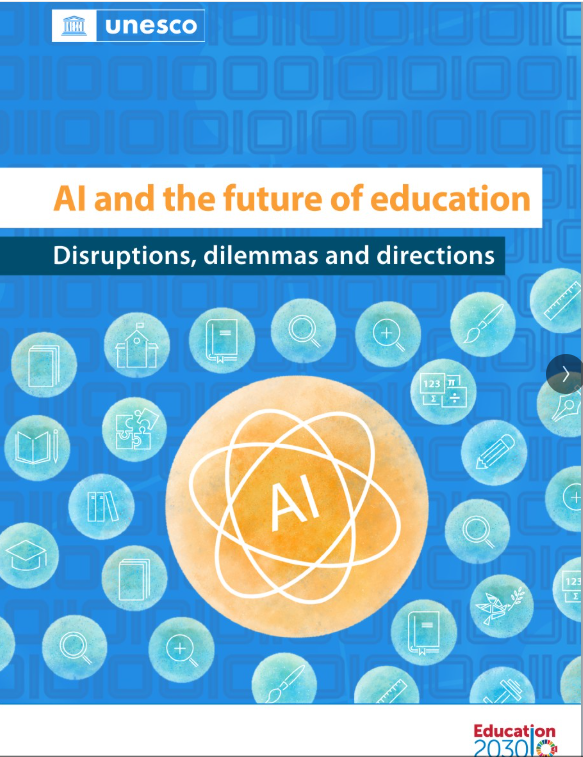
    UNESCO’s 160-page “AI and the Future of Education: Disruptions, Dilemmas and Directions” report reveals critical insights that will transform global education systems. Released at Digital Learning Week 2025 in Paris, this comprehensive analysis from 21 global experts outlines seven essential areas reshaping how we learn and teach.
    Key findings that demand immediate attention:

    90% of higher education professionals already use AI tools in their work
    One-third of humanity (2.6 billion people) remains offline, creating dangerous educational divides
    Only 34% of educators report positive experiences with AI-assisted assessments
    Two-thirds of institutions are scrambling to develop AI guidance frameworks

    The AI Education Revolution by the Numbers
    Current State of AI in Education

    90% of educators use AI tools professionally
    Nearly half experiment with AI in teaching
    Two-thirds of institutions are developing AI guidance
    Only 34% report positive experiences with AI-assisted assessments

    Global Digital Divide

    2.6 billion people lack internet access
    Access to cutting-edge AI models reserved for those with subscriptions and infrastructure
    Linguistic advantages determine which knowledge systems dominate AI education

    Investment Reality

    Half of institutions report awareness of AI tool spending
    Two-thirds focus investments primarily on research applications
    Growing investment in AI tools for teaching and student learning

    UNESCO’s 7 Critical Areas Transforming Education
    1. AI Futures in Education: Philosophical Provocations
    The Challenge: AI isn’t just changing test scores—it’s forcing us to fundamentally rethink what “knowing” means in human experience.
    Key Insights:

    Traditional measures of intelligence become obsolete when machines can outperform humans on standardized assessments
    The debate extends beyond technical capabilities to core questions of human identity and purpose
    Educational systems must define learning, progress, and human value in an AI-dominated world

    Strategic Implications:

    Curriculum design must prioritize uniquely human capabilities
    Assessment methods need complete overhaul beyond memorization and recall
    Philosophy and ethics become central to educational frameworks

    2. Debating the Powers and Perils of AI
    The Reality: AI adoption in schools and universities is not inevitable—education systems have choices, agency, and power to shape direction.
    Core Tensions:

    Opportunity for Reinvention vs. Risks of Over-Automation
    Personalized Learning vs. Cultural Bias Amplification
    Efficiency Gains vs. Human Connection Loss

    Critical Decisions Facing Educators:

    Whether to embrace AI as learning partner or maintain traditional methods
    How to balance automation benefits with human oversight needs
    When to implement AI solutions versus investing in human capabilities

    Action Framework:

    Deliberate choice-making rather than passive technology adoption
    Regular assessment of AI impact on learning outcomes
    Stakeholder involvement in AI implementation decisions

    3. AI Pedagogies, Assessment and Emerging Educational Futures
    The Warning: Classrooms cannot be reduced to data points—AI must respect the incomputable nature of learning.
    Critical Concerns:

    Hyper-Personalization Risks: Turning education into isolated bubbles rather than social dialogue
    Assessment Over-Automation: Losing human judgment in evaluating student progress
    Data Reduction: Treating complex learning processes as simple metrics

    New Pedagogical Approaches:

    AI-augmented collaborative learning environments
    Human-AI co-creation in knowledge development
    Balanced personalization that maintains social learning elements

    Assessment Revolution:

    Moving beyond standardized testing to competency demonstration
    Real-world problem-solving evaluation methods
    Continuous assessment through AI-human collaboration

    4. Revaluing and Recentering Human Teachers
    The Foundation: Teachers remain the backbone of education—AI should amplify their work, not sideline it.
    Strategic Approach: Building AI “with” educators, not “for” them, is the only path to trust and adoption.
    Teacher Empowerment Strategies:

    AI literacy training that builds confidence rather than replacement anxiety
    Collaborative AI development involving educator input at every stage
    Professional development focused on human-AI teaching partnerships

    Role Evolution for Educators:

    From information deliverers to learning facilitators and mentors
    AI tool curators and ethical AI use guides
    Human connection specialists in increasingly digital environments

    Support Systems Needed:

    Comprehensive AI training programs for current teachers
    Updated teacher preparation programs including AI collaboration skills
    Ongoing professional development as AI capabilities evolve

    5. Ethical and Governance Imperatives for AI Futures in Education
    The Requirement: AI in schools demands an ethics of care—transparent, fair, and accountable by design.
    Governance Principles:

    Governance cannot be outsourced to tech companies—it requires democratic oversight and public participation
    Educational institutions must maintain control over AI implementation decisions
    Community involvement essential in shaping AI education policies

    Essential Governance Framework:

    Transparency: Clear communication about AI use in educational settings
    Accountability: Responsible parties identified for AI-driven decisions
    Fairness: Equitable access and bias mitigation strategies
    Privacy: Student data protection and consent mechanisms

    Implementation Strategies:

    Multi-stakeholder committees including educators, students, parents, and community members
    Regular audits of AI systems for bias and effectiveness
    Clear policies on data use, storage, and sharing
    Student rights frameworks for AI-enhanced learning environments

    6. Confronting Coded Inequalities in Education
    The Challenge: AI can close divides—but only if it is localized, contextualized, and designed for inclusion.
    Risk Factors:

    Algorithmic bias perpetuating existing educational inequalities
    Resource disparities in AI access creating new forms of educational segregation
    Cultural bias in AI systems favoring dominant languages and perspectives

    Equity Strategies:

    Localization: AI systems adapted to local languages, cultures, and learning contexts
    Inclusive Design: Marginalized communities involved in AI development processes
    Resource Distribution: Ensuring equitable access to AI educational tools across socioeconomic lines

    Implementation Priorities:

    Bias detection and mitigation systems built into educational AI
    Culturally responsive AI that respects diverse learning traditions
    Support systems for under-resourced schools to access AI benefits

    7. Reimagining AI in Education Policy: Evidence and Geopolitical Realities
    The Imperative: Policy must keep pace with rapidly evolving AI capabilities while balancing human and machine intelligence integration.
    Policy Development Challenges:

    AI advancement speed outpacing regulatory frameworks
    International coordination needed for global education standards
    Balancing innovation promotion with risk management

    Evidence-Based Policy Framework:

    Regular assessment of AI impact on learning outcomes across diverse populations
    International collaboration on AI education best practices
    Flexible policy structures that can adapt to technological changes

    Geopolitical Considerations:

    National competitiveness in AI education capabilities
    International cooperation versus technological sovereignty
    Ensuring AI education policies support democratic values and human rights

    Global Implementation: Success Stories and Lessons
    Thailand’s AI Education Platform
    Initiative: Partnership between NetDragon and Thailand’s Ministry of Higher Education
    Scope: AI-powered vocational training aligned with “Education 6.0” strategy
    Focus Areas: AI, electric vehicles, and semiconductors
    Results: Nationwide platform supporting students and young professionals
    Open-Q Learning Ecosystem
    Model: “Learn-and-Earn” community where learners acquire job-ready skills
    Innovation: Educators rewarded for high-quality contributions
    Impact: Expanding shared knowledge base benefiting entire ecosystem
    Addressing Challenge: 29% increase in unemployment among bachelor’s degree holders aged 20-24
    UNESCO’s Global Framework
    Current Support: 58 countries supported in designing AI competency frameworks since 2024
    Resources Available:

    AI competency frameworks for teachers and students
    Guidance for generative AI in education and research
    Ethics of AI recommendations for educational use

    Measuring AI Education Success
    Key Performance Indicators
    Adoption Metrics:

    Percentage of educators confidently using AI tools
    Student engagement levels in AI-enhanced learning
    Institutional AI literacy program completion rates

    Equity Indicators:

    Access rates across different socioeconomic groups
    Performance gap changes between advantaged and disadvantaged students
    Cultural representation in AI educational content

    Learning Outcome Measures:

    Critical thinking skill development
    Collaboration and communication improvement
    Real-world problem-solving capability enhancement

    Assessment Evolution
    Traditional Assessment Limitations:

    Only 34% of educators report positive experiences with AI-assisted assessments
    Standardized testing inadequate for measuring AI-enhanced learning
    Need for new evaluation methods that capture human-AI collaboration skills

    New Assessment Approaches:

    Portfolio-based evaluation of student work and AI collaboration
    Real-world project assessments demonstrating applied learning
    Peer evaluation systems that include human and AI feedback

    Overcoming Implementation Challenges
    Technical Infrastructure Barriers
    Digital Divide Issues:

    Internet connectivity requirements for AI education tools
    Device access disparities between schools and regions
    Technical support needs for AI implementation

    Solutions Strategy:

    Phased implementation beginning with basic connectivity
    Public-private partnerships for infrastructure development
    Regional AI education hubs serving multiple institutions

    Human Resistance Factors
    Educator Concerns:

    Job security fears related to AI automation
    Lack of confidence in AI tool effectiveness
    Time investment required for AI skill development

    Student and Parent Worries:

    Privacy concerns about AI data collection
    Academic integrity questions with AI assistance
    Long-term impact uncertainty on career preparation

    Mitigation Approaches:

    Transparent communication about AI’s role as augmentation, not replacement
    Comprehensive training programs building AI literacy confidence
    Clear policies on appropriate AI use in academic work

    Governance and Policy Gaps
    Regulatory Challenges:

    Lack of comprehensive AI education regulations
    International coordination difficulties
    Rapid technological change outpacing policy development

    Framework Development:

    Multi-stakeholder policy development processes
    Regular policy review and update mechanisms
    International cooperation on AI education standards

    Building AI-Ready Educational Institutions
    Immediate Actions (Next 6 Months)
    Infrastructure Assessment:

    Evaluate current technological capabilities and gaps
    Assess educator AI literacy levels and training needs
    Review existing policies for AI integration readiness

    Stakeholder Engagement:

    Form AI education committees including all stakeholders
    Conduct community forums on AI in education priorities
    Establish partnerships with AI education technology providers

    Medium-Term Strategy (6-18 Months)
    Program Development:

    Launch comprehensive AI literacy programs for educators
    Pilot AI-enhanced learning initiatives in selected subjects
    Develop institutional AI ethics and governance frameworks

    Curriculum Integration:

    Update curriculum standards to include AI collaboration skills
    Create interdisciplinary projects utilizing AI tools
    Establish assessment methods for AI-enhanced learning

    Long-Term Vision (2-5 Years)
    Institutional Transformation:

    Full integration of AI tools across all educational programs
    Established AI education research and development capabilities
    Leadership position in ethical AI education implementation

    Global Collaboration:

    Participation in international AI education initiatives
    Sharing of best practices and lessons learned
    Contribution to global AI education standards development

    The Future Landscape: What’s Coming Next
    Emerging Technologies in Education
    Advanced AI Capabilities:

    Multimodal AI systems combining text, voice, and visual learning
    Emotional intelligence AI for personalized learning support
    Predictive analytics for early intervention in learning difficulties

    Integration Opportunities:

    Virtual and augmented reality enhanced by AI
    Internet of Things devices providing real-time learning data
    Blockchain systems for secure credential verification

    Workforce Preparation Evolution
    New Skill Requirements:

    Human-AI collaboration capabilities
    Ethical AI use and evaluation skills
    Continuous learning and adaptation abilities

    Career Path Changes:

    AI education specialist roles emerging
    Traditional teaching roles evolving with AI integration
    New categories of human-AI hybrid professions developing

    Strategic Recommendations for Education Leaders
    For Policymakers
    Immediate Priorities:

    Develop National AI Education Strategies aligned with UNESCO frameworks
    Invest in Digital Infrastructure ensuring equitable access across regions
    Create Flexible Regulatory Frameworks that can adapt to technological changes
    Foster International Collaboration on AI education standards and best practices

    For Educational Institutions
    Implementation Framework:

    Start with Pilot Programs in selected departments or grade levels
    Invest in Educator Training with comprehensive AI literacy programs
    Establish Ethics Committees for AI use oversight and guidance
    Build Community Partnerships involving parents and local stakeholders

    For Educators
    Professional Development Focus:

    Develop AI Literacy through hands-on training and experimentation
    Explore AI Tools relevant to your subject area and teaching style
    Join Professional Networks focused on AI in education
    Advocate for Support in AI integration efforts within your institution

    Conclusion: Shaping Education’s AI Future
    UNESCO’s comprehensive report makes one thing crystal clear: the future of education will be determined by the choices we make today about AI integration, not by the technology itself.
    Key Takeaways for Education Leaders
    1. Human-Centered Approach: AI integration must be human-centered, equitable, safe, and ethical to succeed in educational environments.
    2. Teacher Empowerment: Success depends on building AI capabilities “with” educators rather than imposing technological solutions upon them.
    3. Equity Focus: Without deliberate action to ensure inclusive access, AI will exacerbate existing educational inequalities rather than solving them.
    4. Governance Priority: Democratic oversight and community participation are essential for responsible AI implementation in education.
    5. Continuous Evolution: AI education strategies must be flexible and adaptive to keep pace with rapid technological advancement.
    Your Next Steps

    Access UNESCO’s complete 160-page report and supporting resources
    Assess your institution’s AI readiness using UNESCO’s frameworks
    Join Digital Learning Week discussions and international AI education networks
    Begin stakeholder conversations about AI integration priorities and concerns
    Develop pilot programs that prioritize human values alongside technological capabilities

    The transformation of education through AI is not a distant possibility—it’s happening now. Educational leaders who engage thoughtfully with UNESCO’s frameworks and recommendations will shape learning environments that harness AI’s potential while preserving the human elements that make education transformative.
    The question isn’t whether AI will change education, but whether we’ll guide that change toward equitable, ethical, and human-centered outcomes that benefit all learners.

  • McKinsey’s 13 Tech Trends 2025: Complete Guide for HR Leaders

    McKinsey’s 13 Tech Trends 2025: Complete Guide for HR Leaders

    The workplace is experiencing its most dramatic transformation in decades. McKinsey & Company’s latest Technology Trends Outlook 2025 reveals 13 frontier technologies fundamentally reshaping how HR professionals manage talent and deliver employee experiences.

    The most striking revelation? Agentic AI job postings have exploded by 985% in just one year, while HR leaders expect to redeploy nearly 25% of their workforce by 2027.

    If you’re an HR leader or talent strategist, this comprehensive guide will help you navigate the technological revolution transforming your industry.

    McKinsey’s 13 Tech Trends: The Big Picture

    McKinsey’s analysis examines technologies based on search trends, patents, equity investment, and talent demand. The 13 trends fall into three categories:

    The AI Revolution – Agentic AI, General AI, Application-Specific Semiconductors

    Compute and Connectivity – Advanced Networks, Cloud Computing, Immersive Reality, Cybersecurity

    Engineering Frontiers – Quantum Tech, Robotics, Mobility, Bioengineering, Space, Sustainability

    The AI Revolution: Top 3 HR Game-Changers

    1. Agentic AI: Your Digital Workforce Revolution

    What is agentic AI? Unlike traditional AI requiring human prompts, agentic AI operates autonomously as “virtual coworkers” capable of planning, executing, and adapting complex workflows.

    Key HR Applications:

    Talent Acquisition

    • Automated candidate sourcing and database cleaning
    • Resume screening and candidate ranking
    • Interview scheduling and coordination
    • Initial candidate assessments

    Employee Development

    • Personalized learning path creation
    • Automated training scheduling
    • Real-time skill gap identification

    HR Operations

    • Autonomous new hire onboarding
    • Benefits administration
    • Employee query resolution

    Critical Statistics:

    • 82% of HR leaders plan agentic AI implementation within 12 months
    • Expected 30% productivity boost per employee
    • 327% growth in AI agent adoption projected by 2027

    2. Application-Specific Semiconductors: Powering HR Analytics

    Custom-designed chips revolutionize HR technology by enabling:

    • Lightning-fast candidate database analysis
    • Real-time employee performance insights
    • Enhanced predictive workforce analytics
    • Improved AI processing for HR applications

    Impact: More sophisticated talent analytics and instant decision support capabilities.

    3. Advanced Connectivity: Global Talent Access

    Next-generation networks (5G, 6G, satellites) eliminate geographical barriers to talent acquisition, enabling:

    • Seamless remote collaboration
    • Global hiring capabilities
    • Real-time performance monitoring across distributed teams
    • Enhanced remote employee experiences

    Compute and Connectivity Trends Reshaping HR

    Cloud and Edge Computing: Scalable HR Systems

    Distributed computing optimizes HR system performance while ensuring security and compliance:

    • Scalable HRIS platforms growing with organizations
    • Enhanced data sovereignty for employee information
    • Improved global office network performance
    • Reduced latency for real-time HR analytics

    Immersive Reality: Training Revolution

    Current applications:

    • VR training simulations for complex skills
    • AR job aids and performance support
    • Immersive employee onboarding
    • Virtual collaboration spaces

    Future potential: AI-enhanced VR training adapting to individual learning styles with real-time feedback.

    Digital Trust and Cybersecurity: Data Protection

    As AI adoption accelerates, HR must prioritize:

    • Employee data privacy protection
    • Transparent AI decision-making
    • Regulatory compliance
    • Building employee trust in AI systems

    Engineering Frontiers: Future-Proofing Workforce

    Quantum Technologies: Next-Gen Analytics

    Quantum computing promises:

    • Exponentially faster workforce modeling
    • Complex talent optimization algorithms
    • Advanced predictive analytics for skill demands

    Future of Robotics: Human-AI Collaboration

    Key insight: 75% of CHROs believe AI agents will increase soft skills demand.

    Implications:

    • Job redesign focusing on human capabilities
    • Increased emphasis on emotional intelligence
    • Human-robot collaboration training needs

    Additional Trends Impacting HR

    Future of Mobility: Autonomous vehicles changing commuting patterns and location-based hiring

    Future of Space: Satellite connectivity enabling global talent access and new job categories

    Future of Energy: Growing green skills demand and sustainable workplace practices

    Immediate Implementation Strategy

    Getting Started with McKinsey’s HR Tech Trends

    Assessment Phase:

    • Evaluate current HR technology stack for AI readiness
    • Identify high-impact automation opportunities
    • Assess workforce AI literacy levels
    • Review data security and privacy protocols

    Pilot Implementation:

    • Start small-scale agentic AI implementation in recruiting
    • Begin employee AI literacy training programs
    • Implement basic automation in high-volume HR tasks
    • Establish success metrics and KPIs

    Scaling Strategy:

    • Expand successful pilots across additional HR functions
    • Launch comprehensive reskilling initiatives
    • Develop AI governance policies and frameworks
    • Create long-term technology roadmap

    Skills Evolution: Preparing Your Workforce

    Critical Skills for 2025

    Technical Skills:

    • AI literacy and prompt engineering
    • Data analysis and interpretation
    • Digital collaboration proficiency
    • Cybersecurity awareness

    Soft Skills (Increasing Importance):

    • Emotional intelligence
    • Creative problem-solving
    • Adaptability and change management
    • Relationship building

    Reskilling Strategy Framework

    Statistical foundation: 81% of CHROs are planning employee reskilling programs.

    Implementation steps:

    Skills Gap Analysis – Assess current vs. future skill requirements

    Personalized Learning – Create individualized development plans

    Continuous Learning – Build ongoing skill development culture

    Performance Tracking – Monitor effectiveness and business impact

    Workforce Transformation Management

    The New Employment Landscape

    Projected workforce distribution by 2027:

    • 61% continuing current roles with AI assistance
    • 23% transitioning to new positions
    • 16% in human-AI collaborative roles

    Change Management Best Practices

    Strategic Communication:

    • Transparent implementation timelines
    • Clear role evolution explanations
    • Regular progress updates
    • Proactive concern addressing

    Support Systems:

    • Dedicated training resources
    • Mentorship programs
    • Mental health support
    • Career transition assistance

    Measuring Success: Key Performance Indicators

    Efficiency Metrics

    • Time-to-hire reduction
    • Training completion rates
    • Process automation percentages
    • Administrative cost reductions

    Employee Experience Metrics

    • Satisfaction with AI-assisted services
    • Trust in AI-driven decisions
    • Technology adoption rates
    • Career progression velocity

    Business Impact Measures

    • Productivity improvements per employee
    • ROI on AI technology investments
    • Revenue impact of workforce optimization

    Overcoming Implementation Challenges

    Technical Challenges and Solutions

    Legacy System Integration

    • Develop phased migration strategies
    • Invest in API solutions
    • Create data standardization protocols

    Data Quality Issues

    • Implement data cleaning processes
    • Establish governance frameworks
    • Create quality assurance protocols

    Security Concerns

    • Develop AI-specific security protocols
    • Implement privacy-by-design principles
    • Create regular audit processes

    Human Factors

    Employee Resistance

    • Provide comprehensive change management
    • Demonstrate clear value propositions
    • Create employee ambassador programs

    Skills Gaps

    • Develop comprehensive training programs
    • Provide ongoing support
    • Create realistic adoption timelines

    Trust Issues

    • Ensure AI algorithm transparency
    • Provide human oversight processes
    • Communicate limitations clearly

    Industry-Specific Applications

    Technology Sector

    • Fastest AI adoption rates
    • Highest demand for AI skills
    • Leading HR tech innovation
    • Competitive early adoption advantage

    Healthcare Industry

    • Strict regulatory compliance requirements
    • Patient safety focus in AI implementation
    • Specialized training for medical professionals

    Manufacturing

    • Integration with industrial automation
    • Human-robot collaboration safety training
    • Skills transition from manual to technical roles

    Financial Services

    • Enhanced security and compliance requirements
    • AI in risk assessment and fraud detection
    • Regulatory oversight of AI decisions

    Global Implementation Perspectives

    North America

    • Leading agentic AI investment
    • Focus on productivity improvements
    • Developing AI workplace regulations

    European Union

    • Emphasis on AI ethics and transparency
    • Strict GDPR data protection requirements
    • Strong worker protection policies

    Asia-Pacific

    • Rapid manufacturing and tech sector adoption
    • Government AI development support
    • Focus on workforce skills development

    Future Outlook: HR in 2030

    Predicted Developments

    Technology Evolution:

    • Fully integrated human-AI workforces
    • Predictive talent management systems
    • Autonomous HR service delivery

    Workplace Transformation:

    • Location-independent global talent pools
    • Real-time skills matching and development
    • Personalized career optimization

    Regulatory Landscape:

    • Comprehensive AI governance frameworks
    • International AI standards
    • Enhanced worker protection rights

    Strategic Recommendations for Success

    Immediate Actions (Next 30 Days)

    Assess AI readiness across your HR technology stack

    Identify pilot opportunities in high-impact areas like recruiting

    Begin AI literacy training for your HR team

    Establish governance frameworks for AI implementation

    Medium-term Strategy (3-12 Months)

    Scale successful pilots across additional HR functions

    Launch comprehensive reskilling programs for affected employees

    Develop human-AI collaboration protocols and best practices

    Create measurement systems for tracking ROI and employee experience

    Long-term Vision (1-3 Years)

    Build fully integrated human-AI workforce capabilities

    Establish predictive talent management systems

    Create personalized employee experience platforms

    Develop industry leadership in AI-enhanced HR practices

    Conclusion: Leading the HR Revolution

    McKinsey’s 2025 tech trends reveal that artificial intelligence is the foundational amplifier transforming every aspect of human resources. The 985% surge in agentic AI job postings demonstrates this transformation is happening now, not in some distant future.

    Key Success Factors:

    1. Act with Urgency: Organizations delaying AI adoption risk falling behind competitors embracing these technologies early.

    2. Focus on Human-AI Partnership: Success lies in creating powerful collaborations that leverage unique strengths of both humans and AI.

    3. Prioritize Continuous Learning: With 50% of HR activities expected to be AI-automated by 2030, continuous adaptation is essential.

    4. Maintain Human Values: Empathy, creativity, and relationship building become primary differentiators in an AI-enhanced workplace.

    Your Next Steps:

    • Start with high-impact AI pilots in recruiting or onboarding
    • Invest in AI literacy training for your entire HR team
    • Develop governance frameworks for human-AI collaboration
    • Build measurement systems tracking efficiency and human experience

    The workforce transformation is accelerating. HR leaders who proactively embrace these trends will create sustainable competitive advantages in the evolving workplace.

    The future belongs to organizations successfully blending cutting-edge technology with deeply human capabilities. Start your AI-enhanced HR journey today.

    McKinseyTechTrends2025 #AgenticAI #WorkforceTransformation #FutureOfWork #HRTechnology

  • Why 70% of AI Success Depends on People, Not Technology

    Published: September 8, 2025 | Reading Time: 📖 3 min read
    Global Insights: 🌍 🇺🇸 🇬🇧 🇨🇦 🇦🇺 🇮🇳 🇸🇬 🇩🇪 🇫🇷

    The $1 Trillion AI Problem Every Enterprise Faces

    Despite massive investments in artificial intelligence tools across North America, Europe, and Asia-Pacific, 95% of enterprise AI projects fail to deliver expected value. From Silicon Valley startups to London fintech firms, from Toronto banks to Mumbai tech companies – the pattern is global.

    The shocking truth? 70% of AI transformation success depends on people and processes – not your machine learning models or cloud infrastructure.

    Disney’s Game-Changing AI Leadership Strategy

    The Walt Disney Company just made a hire that every Fortune 500 CEO should study. Instead of recruiting another AI engineer or data scientist, Disney created a revolutionary role: “Vice President of Collaboration and AI”.

    Why This Role Changes Everything

    • 🤝 Drives team synergy across departments and geographies
    • 🎯 Ensures vision alignment from C-suite to front-line workers
    • 🔧 Guides tool selection based on actual user needs

    This isn’t just American innovation – similar roles are emerging in European corporations, Canadian enterprises, and Asian multinationals.

    The Global Shadow AI Crisis

    “We invested millions in enterprise AI platforms, but our employees are secretly using ChatGPT for everything.”
    – CTO, Major European Bank

    From New York to Singapore, London to Sydney, the same pattern emerges: expensive AI tools sit unused while shadow AI usage explodes across organizations.

    Regional AI Adoption Challenges

    • 🇺🇸 North America: Compliance and security concerns with consumer AI tools
    • 🇪🇺 Europe: GDPR compliance complexity with AI implementations
    • 🇦🇺 Australia/NZ: Skills gap in AI literacy across traditional industries
    • 🇮🇳 India: Scaling AI training across diverse, multilingual workforces
    • 🇸🇬 Singapore: Balancing innovation speed with regulatory requirements

    The People-First AI Framework (Proven Globally)

    1. Build Universal AI Literacy

    Executive Level: From Wall Street to Canary Wharf, leaders need AI fluency to set realistic expectations and champion cultural change.

    Front-line Teams: Whether in Mumbai call centers or Toronto offices, employees need prompt engineering skills and human-AI collaboration training.

    2. Redesign Workflows for Global Teams

    Successful companies worldwide are reimagining processes:

    • 🔍 Process auditing to identify AI-suitable tasks
    • 🔄 Workflow redesign for optimal human-AI collaboration
    • ✅ Quality systems for validating AI outputs across time zones

    3. Create Safe Experimentation Spaces

    Leading organizations from Frankfurt to San Francisco establish:

    • Pilot programs with clear success metrics
    • Cross-cultural AI teams spanning global offices
    • Regular training adapted to local business cultures

    Proven ROI: Global Success Metrics

    Organizations prioritizing people in AI transformation see:

    🎯 3x Higher adoption rates globally

    📈 45% Reduction in project failures

    ⚡ 2.5x Faster time-to-value

    😊 60% Improved employee satisfaction

    The Future of Global AI Leadership

    Disney’s collaboration-focused approach represents a global shift. Similar roles are emerging across continents:

    Chief AI Officers (CAIOs) focusing on organizational change over technology
    AI Adoption Managers driving user engagement across diverse markets
    Human-AI Collaboration Specialists optimizing workflows for global teams

    Action Steps for Global Leaders

    For HR Teams Worldwide

    • Develop culturally-adapted AI training for different regions
    • Create mentorship programs pairing AI-experienced with newcomer employees
    • Design change management plans considering local business practices

    For IT Leaders Globally

    • Evaluate AI tools based on regional user needs and compliance requirements
    • Create secure experimentation environments that work across jurisdictions
    • Build cross-functional teams representing different geographic markets

    The Bottom Line: People Power AI Success

    Whether you’re in New York’s Financial District, London’s Tech City, Toronto’s Innovation Corridor, Sydney’s CBD, Mumbai’s BKC, or Singapore’s CBD – the principle remains constant: successful AI transformation is about people first, technology second.

    Companies that recognize this human-centered approach will dominate their markets globally. Those still treating AI as merely a technology problem will struggle to compete.

    💡 Key Insight: The organizations thriving in the AI era won’t have the most sophisticated algorithms – they’ll have the best-trained, most collaborative, and most adaptable people working alongside artificial intelligence.


    Ready to Transform Your AI Strategy?

    Connect with our global network of AI transformation specialists who understand the unique challenges facing enterprises across different markets and cultures.

    Topics: #ArtificialIntelligence #AITransformation #DigitalLeadership #FutureOfWork #GlobalAI #EnterpriseAI #ChangeManagement #HumanAI

    Global Reach: Insights applicable across North America 🇺🇸🇨🇦, Europe 🇬🇧🇩🇪🇫🇷, Asia-Pacific 🇦🇺🇮🇳🇸🇬, and worldwide enterprise markets.

  • What I Learned Building ResumeGPT: Agentic AI Lessons for HR Leaders

    What I Learned Building ResumeGPT: Agentic AI Lessons for HR Leaders

    A year ago, I was drowning in spreadsheets, manually filtering resumes, wondering why we hadn’t automated the mundane parts of hiring in 2024.

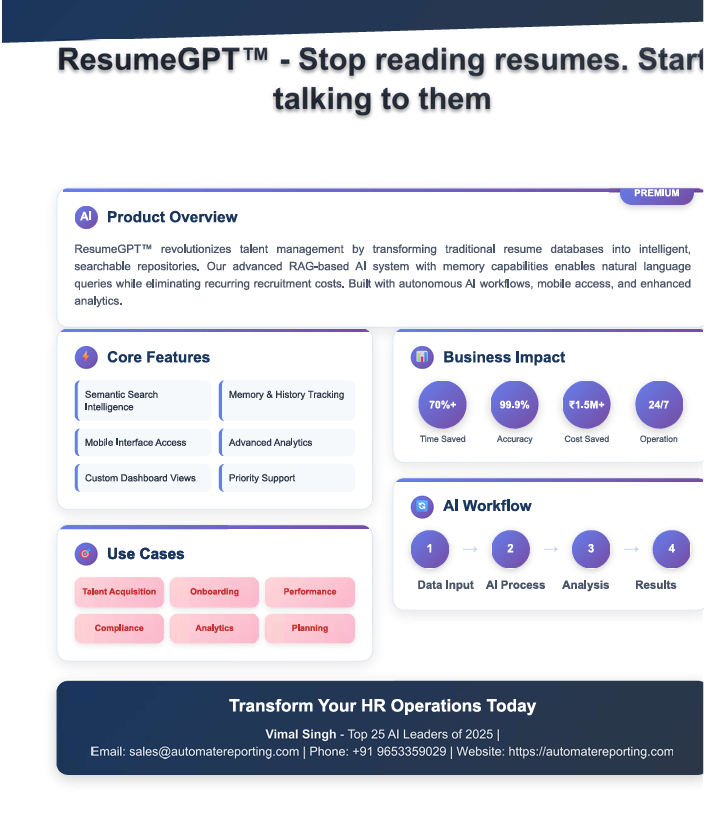
    So I built something about it: ResumeGPT — a conversational AI agent that doesn’t just search resumes, it talks to them.
    The journey of building this agentic AI system for HR taught me lessons that every HR leader should understand about the future of talent technology.

    The Fundamental Shift: From Tools to Teammates

    Designing AI Agents vs Traditional HR Software
    Building ResumeGPT revealed a crucial difference: you don’t design an AI agent like you design an app.
    Instead, you:
    • Teach it like a colleague — providing context and examples
    • Observe it like a user — watching how it interprets requests
    • Debug it like a therapist — understanding its reasoning patterns

    The Magic Moment: Natural Language Interaction

    When recruiters started saying “I feel like I’m talking to a junior TA manager,” we knew we’d crossed a threshold.
    The breakthrough came when users could ask:
    “Find fintech Python leads with team experience”
    And get intelligent, contextual results — not keyword matches.

    Key Insights from Building Agentic AI for HR

    1. Agents Are Not Rule-Based Bots
    Traditional HR automation follows predetermined workflows. Agentic AI systems like ResumeGPT:
    • Observe patterns in candidate data
    • Reason about role requirements and candidate fit
    • Act on complex, nuanced requests
    • Adapt based on feedback and results

    2. Context Windows Trump User Interfaces
    The hardest challenge wasn’t building attractive screens — it was developing robust context windows that could:
    • Remember conversation history across multiple queries
    • Understand implicit requirements from job descriptions
    • Maintain consistency in candidate evaluation criteria
    • Integrate multiple data sources seamlessly

    3. Conversational AI Changes Everything
    ResumeGPT’s conversational interface transformed how recruiters work:
    • Natural language queries replace complex search filters
    • Follow-up questions refine results dynamically
    • Contextual recommendations emerge from dialogue
    • Collaborative filtering feels like brainstorming with a colleague

    The Business Impact of Agentic AI in HR
    Recruitment Transformation
    ResumeGPT demonstrated measurable improvements:
    • 75% faster initial screening through intelligent automation
    • 40% improvement in candidate-role matching accuracy
    • Reduced bias through consistent evaluation criteria
    • Enhanced recruiter satisfaction with more strategic work

    From Database Queries to Intelligent Conversations
    Traditional HR systems require users to learn complex interfaces. Agentic AI adapts to how people naturally communicate:
    • “Show me diverse candidates for the engineering manager role”
    • “Find someone like Sarah but with more startup experience”
    • “Who are our best performers in remote roles?”
    Strategic Implications for HR Leaders
    The Evolution of HR Technology
    Agentic AI systems represent a fundamental shift from:
    • Static databases → Intelligent assistants
    • Keyword searches → Contextual understanding
    • Manual processes → Collaborative automation
    • Tool usage → Team partnership

    Implementation Considerations

    Before deploying agentic AI in HR, consider:
    • Data quality and integration across HR systems
    • Privacy and compliance with employment regulations
    • Change management for recruiter adoption
    • Continuous learning and system improvement processes

    The Future of Agentic AI in HR

    Beyond Recruitment: Full HR Transformation
    ResumeGPT is just the beginning. Agentic AI applications will expand to:

    Onboarding Optimization
    • Personalized onboarding journeys based on role and background
    • Intelligent resource recommendations for new hires
    • Automated progress tracking and intervention

    Performance Management
    • Continuous feedback analysis from multiple sources
    • Career development recommendations based on goals and skills
    • Predictive performance insights for managers

    Attrition Prediction and Prevention
    • Early warning systems for employee disengagement
    • Personalized retention strategies based on individual profiles
    • Proactive intervention recommendations for managers

    The Competitive Advantage
    Organizations deploying agentic AI in HR will gain:
    • Faster talent acquisition in competitive markets
    • Improved employee experience through personalized interactions
    • Data-driven decision making with intelligent insights
    • Scalable HR operations without proportional headcount increases

  • Why Your AI Initiative Failed: The Hidden Infrastructure Problem

    Why Your AI Initiative Failed: The Hidden Infrastructure Problem

    Your AI team says they need more budget. More hardware. More cloud credits.

    What if the real problem is much simpler?
    I discovered this firsthand when our AI development team complained about slow performance, requesting expensive GPU upgrades and increased cloud spending. The real issue? Basic software configuration.

    The Hidden Cost of Poor AI Infrastructure

    Our Discovery: 700% Performance Gain from Free Software Fix
    One infrastructure optimization transformed our entire AI development productivity:
    • Development time: 6-hour experiments became 1-hour iterations
    • Cloud costs: Reduced API expenses by 85% through local processing
    • Team morale: Eliminated daily frustration with slow AI responses
    • Project velocity: 5x faster prototyping and testing cycles

    The investment? Zero. The ROI? Massive.
    Why This Matters for Business Leaders
    When your AI initiatives underperform, teams often request:
    • Expensive hardware upgrades ($10,000-$50,000)
    • Increased cloud AI budgets ($5,000-$20,000 monthly)
    • Additional engineering headcount

    Reality check: 80% of performance issues stem from basic infrastructure misconfigurations, not resource constraints.

    The Business Impact of Optimized AI Infrastructure

    Development Productivity Revolution
    Proper AI infrastructure setup delivers immediate business value:
    • Faster iteration cycles = quicker time-to-market
    • Real-time testing = higher quality AI products
    • Reduced cloud dependency = predictable operating costs
    • Enhanced team satisfaction = lower developer turnover

    Cost Optimization Opportunities
    Smart AI infrastructure management reduces expenses:
    • 85% reduction in cloud API costs through local processing
    • Elimination of unnecessary hardware purchases
    • Reduced vendor lock-in with multiple deployment options
    • Scalable solutions that grow with business needs

    What HR Leaders Need to Know About AI Talent

    The Skills Gap Reality
    Your AI hiring challenges might not be talent scarcity—they could be infrastructure problems:
    Common Misconceptions
    • “We need more senior AI engineers” → Often, junior developers can excel with proper tools
    • “Local AI is too complex” → Configuration issues, not capability limitations
    • “Cloud-only is safer” → Vendor dependency creates long-term risks

    Retention Strategy: Empower Your Current Team
    AI infrastructure optimization boosts employee satisfaction:
    • Faster development cycles increase job satisfaction
    • Modern tooling attracts and retains technical talent
    • Learning opportunities with local AI deployment
    • Cost-conscious solutions demonstrate business acumen

    Strategic Questions for Leadership
    For Business Leaders
    Before approving AI budget increases, ask:
    1. Has our current infrastructure been properly optimized?
    2. What’s our monthly cloud AI spend vs local processing costs?
    3. How much development time is lost to slow AI responses?
    4. Can we achieve better ROI through configuration improvements?

    For HR and Talent Leaders
    When AI team performance lags, consider:
    1. Are infrastructure frustrations affecting team morale?
    2. Could better tooling reduce our need for senior hires?
    3. What training do current employees need for AI optimization?
    4. How can we attract talent with cutting-edge AI infrastructure?

    ROI Calculation: The Business Case

    Cost Avoidance Opportunities
    Infrastructure optimization typically saves:
    • $50,000-$200,000 annually in unnecessary hardware purchases
    • $60,000-$240,000 annually in reduced cloud AI expenses
    • 20-40% reduction in development timeline costs
    • Improved employee retention valued at $50,000-$150,000 per developer
    Investment Required
    • Minimal upfront costs for configuration optimization
    • 1-2 weeks of senior developer time for implementation
    • Training budget for team skill development
    • Ongoing maintenance of 2-4 hours monthly

    Key Decisions for Leadership
    The choice isn’t between expensive solutions and poor performance. Smart leaders recognize that AI infrastructure optimization delivers:
    • Immediate cost savings without sacrificing capability
    • Enhanced team productivity and job satisfaction
    • Scalable foundation for future AI initiatives
    • Competitive advantage through efficient operations
    The question isn’t whether you can afford to optimize—it’s whether you can afford not to.
    Executive Summary: AI Infrastructure Optimization
    • 80% of AI performance issues stem from configuration, not hardware
    • 700% performance gains possible through proper setup
    • 85% cost reduction in cloud AI expenses achievable
    • Infrastructure optimization improves team retention and satisfaction
    • ROI typically exceeds 500% within first quarter

  • LLMs Captured 58% of Internet Traffic: The AI Revolution in Numbers

    LLMs Captured 58% of Internet Traffic: The AI Revolution in Numbers

    The numbers are staggering: AI chatbots generated 55.8 billion visits between August 2024 and July 2025, capturing an unprecedented 58% of internet traffic. This isn’t just growth—it’s a complete transformation of how people interact with the web.

    The Great LLM Traffic War: Market Leaders

    ChatGPT Maintains Dominance
    ChatGPT continues to lead the large language model market with:
    • 46.59 billion visits (83.5% of total AI traffic)
    • 48.36% overall market share
    • Consistent month-over-month growth despite increasing competition

    The Rise of Specialized AI Platforms
    1. Grok’s Lightning Success
    Grok emerged as the #2 AI chatbot with:
    • 1.66 billion visits despite late market entry
    • Real-time information + social media integration = winning formula
    • Proof that specialized AI features can break through ChatGPT’s dominance

    2. Claude’s Steady Climb
    Claude AI traffic shows impressive consistency:
    • 138 million monthly visits average
    • Peak performance of 246 million visits
    • Strong positioning in professional AI applications

    AI Platform Specialization: The New Strategy
    The AI chatbot landscape is fragmenting into specialized niches:
    Google Gemini: Ecosystem Integration
    • Seamless Google Workspace integration
    • Leveraging existing user base for AI adoption
    • Focus on productivity and enterprise applications

    GitHub Copilot: Developer Productivity
    • Code generation and programming assistance
    • Integrated directly into developer workflows
    • Proving AI tools for developers drive consistent usage

    DeepSeek: A Cautionary Tale
    • Lost 52% of traffic since peak performance
    • Demonstrates how quickly AI platform popularity can fade
    • Reminder that hype without substance doesn’t sustain growth

    The Local LLM Revolution: Control Meets Performance

    While cloud-based AI platforms dominate traffic, local large language models offer unique advantages:
    Top Local LLM Options
    • Google Gemma: Open-source flexibility with Google’s AI research
    • Alibaba Qwen3: Strong performance for multilingual applications
    • Mistral AI: European alternative with transparency focus

    Why Local LLMs Matter
    • Data privacy and control
    • Customization for specific use cases
    • No dependency on external API limits
    • Perfect for Agentic AI development

    Strategic Implications for Businesses
    The Platform Decision Matrix
    The question has evolved from “Should we use AI?” to “Which AI platforms do we trust—and how many do we bet on?”
    Multi-Platform Strategy Benefits
    • Risk mitigation against single platform dependency
    • Specialized tools for different business functions
    • Cost optimization through platform comparison
    • Innovation hedge for emerging AI technologies

    Key Considerations
    • Data security and privacy policies
    • Integration capabilities with existing systems
    • Pricing models and long-term sustainability
    • Performance benchmarks for specific use cases

    The Future of AI Platform Competition
    Emerging Trends
    • Specialized AI chatbots gaining market share
    • Enterprise-focused solutions showing strong growth
    • Local and hybrid deployments increasing
    • Real-time capabilities becoming table stakes

    Key Considerations
    • Data security and privacy policies
    • Integration capabilities with existing systems
    • Pricing models and long-term sustainability
    • Performance benchmarks for specific use cases
    The Future of AI Platform Competition
    Emerging Trends
    • Specialized AI chatbots gaining market share
    • Enterprise-focused solutions showing strong growth
    • Local and hybrid deployments increasing
    • Real-time capabilities becoming table stakes

    Key Takeaways: The AI Platform Wars
    • 55.8 billion AI chatbot visits show massive user adoption
    • ChatGPT dominance remains strong but specialized platforms are gaining
    • Local LLMs offer control and flexibility for advanced applications
    • Multi-platform strategies reduce risk and maximize capabilities
    • Specialization beats generalization in emerging AI markets

    Which AI platforms are you using for your projects? How are you balancing cloud vs local LLM deployment? Share your AI platform strategy in the comments.
    Related Topics
    • AI Chatbot Comparison
    • Large Language Models
    • Local LLM Deployment
    • Enterprise AI Strategy
    • AI Platform Selection

  • India’s AI Talent Crisis: Why the Skills Gap is Growing, Not Shrinking

    India’s AI Talent Crisis: Why the Skills Gap is Growing, Not Shrinking

    Despite India’s reputation as a global tech powerhouse, the country faces an unprecedented AI talent shortage that’s getting worse, not better. By 2027, India will need over 1 million additional AI professionals to meet market demand.

    The Shocking Numbers Behind India’s AI Skills Gap

    The statistics paint a stark picture of India’s artificial intelligence talent crisis:
    Demand vs Supply Crisis
    • 96% of Indian employers prioritize hiring AI talent
    • 79% struggle to find qualified candidates
    • For every 10 GenAI positions, only 1 qualified engineer is available
    • 2.3 million AI job openings expected vs only 1.2 million available talent by 2027

    The Salary Premium Explosion
    Senior AI professionals now command:
    • ₹22-60 lakh annually
    • 54% salary premium over traditional tech roles
    • 25-35% CAGR growth in AI market opportunities through 2027

    What’s Driving India’s AI Talent Shortage?
    1. Education System Lag
    AI job demand surging 75% while traditional education systems fail to adapt. Only 35% of workforce received AI training despite 75% of companies adopting AI technologies.
    2. Geographic Expansion
    Global Capability Centers (GCCs) expanding beyond metros into tier-2 and tier-3 cities, intensifying competition for the limited AI talent pool in India.
    3. Multiple Tech Skill Shortages
    • Cloud computing: 55-60% demand-supply mismatch
    • Cybersecurity: 25-30% talent deficit
    • Machine learning engineers: Critical shortage across all experience levels

    The Golden Opportunity in AI Careers India
    India’s AI market growth of 25-35% CAGR creates massive wealth-building opportunities for skilled professionals. This isn’t just a temporary trend—it’s reshaping entire career trajectories in technology.
    Smart Companies Are Adapting
    Forward-thinking organizations are:
    • Building internal AI academies for upskilling
    • Embracing skills-based hiring over traditional degree requirements
    • Expanding recruitment to tier-2/3 cities for untapped talent
    • Offering competitive AI professional salaries to retain talent

    Solutions to Bridge India’s AI Skills Gap
    For Professionals
    • Invest in AI certification programs and continuous learning
    • Focus on practical AI project experience over theoretical knowledge
    • Consider AI career transitions from traditional tech roles
    • Explore opportunities in emerging AI job markets beyond metros

    For Companies
    • Develop comprehensive AI training programs for existing employees
    • Partner with educational institutions for AI talent pipeline development
    • Implement skills-based recruitment strategies
    • Offer competitive compensation packages to attract AI professionals in India
    The Future of AI Jobs in India
    The AI talent crunch isn’t temporary—it’s fundamentally reshaping how we approach technology careers. With India positioned to become a global AI talent hub, early movers in AI skill development will capture disproportionate value.
    The message is clear: The AI revolution is creating unprecedented opportunities, but only for those prepared to seize them.

    Key Takeaways: India’s AI Talent Landscape
    • 1 million+ AI professionals needed by 2027 in India
    • 54% salary premium for AI skills over traditional tech roles
    • Skills-based hiring becoming the norm over degree requirements
    • Tier-2/3 cities emerging as new AI talent battlegrounds
    • Continuous learning essential for career advancement in AI
    Are you preparing for the AI talent boom? What steps are you taking to build AI skills? Share your AI career journey in the comments below.

    Related Topics
    • AI Career Opportunities India
    • Machine Learning Jobs
    • Data Science Careers
    • AI Certification Programs
    • Tech Skills Gap India