The CHRO said it flatly. Not as a challenge. As a truth of the HR universe. The kind uttered after decades of battling dashboards, gut feel, and last-minute exit interviews.
I didn’t respond. Just opened my laptop.
“Watch.”
He leaned forward. I hit run. Five seconds. The screen blinked.
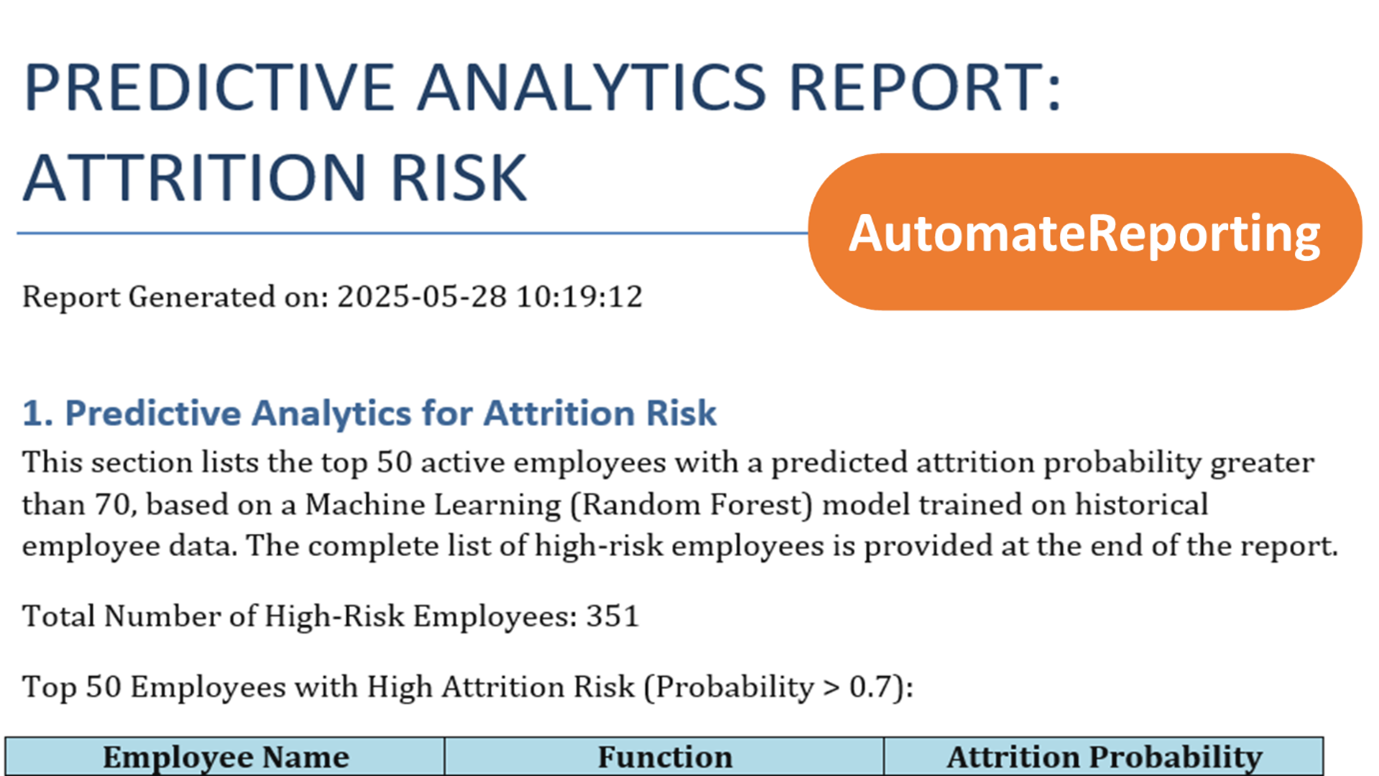
A clean report emerged. Not a dashboard. A verdict.
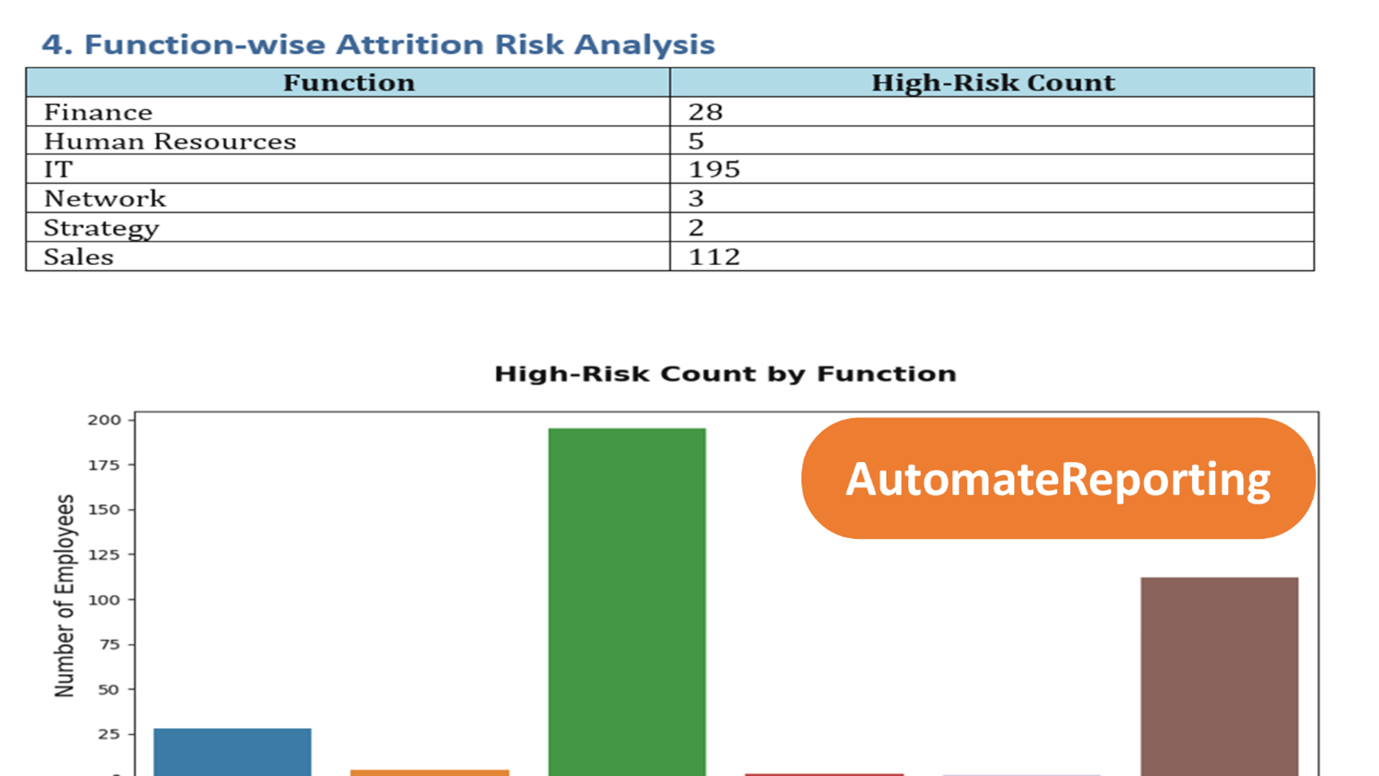
High-risk employees: 12. Function-wise split: Done. Grade-wise pattern: Flagged. Individual flight risk probabilities: 0.82, 0.76, 0.91…
95% confidence. Generated in five seconds. By a Random Forest Model trained on separation trackers, tenure trends, compensation shifts, and a few things we’re not supposed to admit HR tracks.
He looked up. “That’s not how HR works.”
I smiled.
Maybe it should be.
The AI Revolution in HR Analytics: Beyond Traditional Workforce Management
This wasn’t magic. Just math with purpose.
We built an AI Agent for employee retention. Not to replace HR judgment—but to upgrade it.
The predictive analytics system does 3 things HR teams dream of but rarely dare to ask for:
- Predict employee attrition before it becomes a headline
- Quantify individual flight risk with probabilities—months in advance
- Automate workforce analytics reports—by function, location, grade, and tenure
The AI Revolution in HR Analytics: Beyond Traditional Workforce Management
This wasn’t magic. Just math with purpose.
We built an AI Agent for employee retention. Not to replace HR judgment—but to upgrade it.
The predictive analytics system does 3 things HR teams dream of but rarely dare to ask for:
- Predict employee attrition before it becomes a headline
- Quantify individual flight risk with probabilities—months in advance
- Automate workforce analytics reports—by function, location, grade, and tenure
No more Excel gymnastics. No more panicked calls before the Board meets. Just actionable insights in place of data noise.
Why Traditional HR Analytics Fail at Employee Retention
HR doesn’t need another dashboard.
It needs decisions.
Here’s the uncomfortable truth: We’ve spent the last decade building visibility. But very little of it translated to action.
Predictive AI for HR bridges that gap. Not by giving us certainty, but by refining our doubt.
When a manager says, “I didn’t see it coming,” you can now ask: “Or did you just not look in the right place?”
The Transformation: From Reactive to Predictive HR
So what happened next?
The CHRO leaned back. Silent for a moment. Then:
“Can we scale this?”
Not “Is this real?” Not “Will employees resist?” Just a quiet, serious request: “Can we make this standard?”
And that’s the shift AI brings to human resources. Not automation. Augmentation. Not replacing judgment. Sharpening it. Not removing the human. Revealing it.
The Future of Workforce Analytics: Evidence-Based HR Decisions
Employee attrition prediction will never be fully predictable. But ignorance? That’s now a choice.
Final thought: In HR, we’ve always had instincts. Now, we have evidence. The question is—will we act on it?
Ready to transform your HR analytics? The tools exist. The data exists. The only question is whether you’re ready to move from reactive to predictive workforce management. What’s your experience with AI in HR? Share your thoughts in the comments below.