𝐆𝐨𝐨𝐝 𝐩𝐫𝐨𝐦𝐩𝐭𝐢𝐧𝐠 𝐢𝐬𝐧’𝐭 𝐚𝐛𝐨𝐮𝐭 𝐚𝐬𝐤𝐢𝐧𝐠 𝐛𝐞𝐭𝐭𝐞𝐫 𝐪𝐮𝐞𝐬𝐭𝐢𝐨𝐧𝐬 𝐢𝐭’𝐬 𝐚𝐛𝐨𝐮𝐭 𝐠𝐞𝐭𝐭𝐢𝐧𝐠 𝐛𝐞𝐭𝐭𝐞𝐫 𝐚𝐧𝐬𝐰𝐞𝐫𝐬
In most AI projects, the difference between mediocre outputs and powerful results often comes down to how prompts are designed.
That’s why understanding different prompting techniques is becoming a must-have skill for anyone working with LLMs.
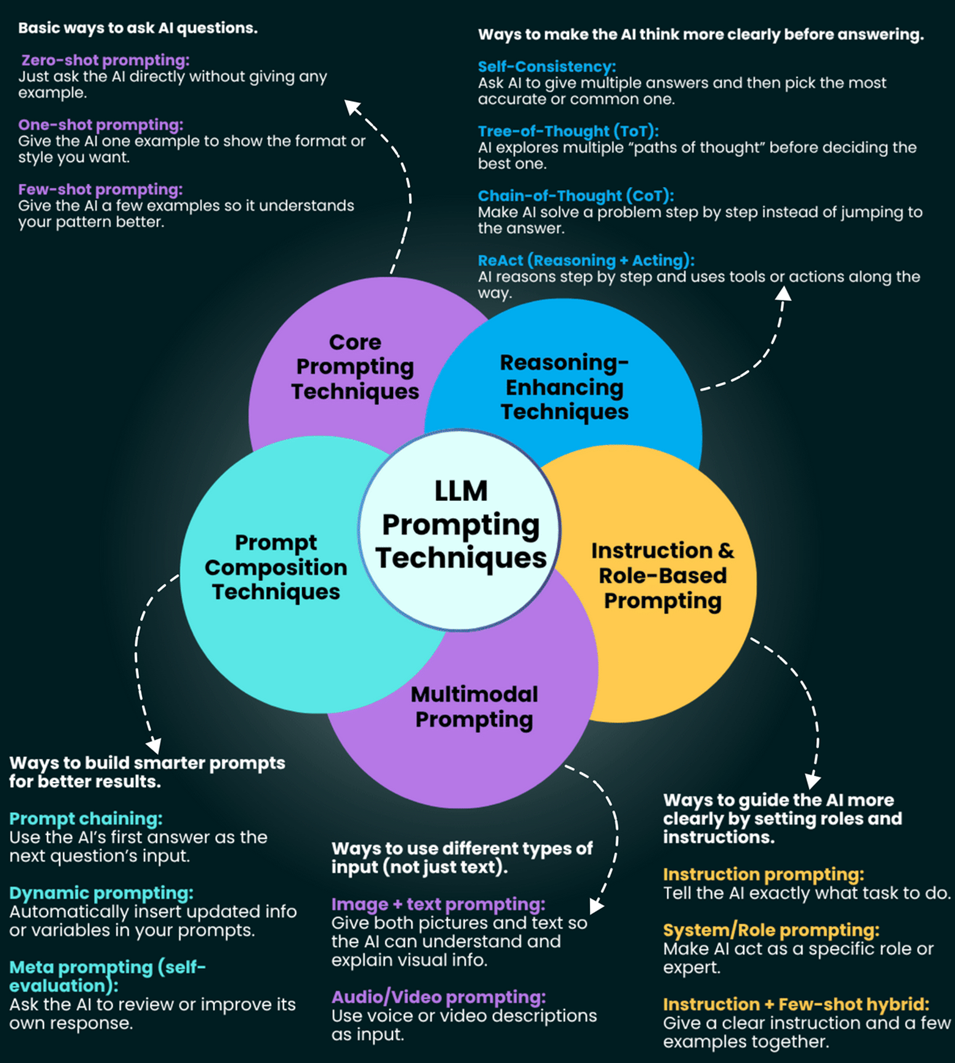
𝐇𝐞𝐫𝐞’𝐬 𝐚 𝐛𝐫𝐞𝐚𝐤𝐝𝐨𝐰𝐧 𝐨𝐟 𝐭𝐡𝐞 𝐦𝐚𝐣𝐨𝐫 𝐋𝐋𝐌 𝐩𝐫𝐨𝐦𝐩𝐭𝐢𝐧𝐠 𝐭𝐞𝐜𝐡𝐧𝐢𝐪𝐮𝐞𝐬 𝐭𝐡𝐚𝐭 𝐜𝐚𝐧 𝐝𝐫𝐚𝐦𝐚𝐭𝐢𝐜𝐚𝐥𝐥𝐲 𝐥𝐞𝐯𝐞𝐥 𝐮𝐩 𝐲𝐨𝐮𝐫 𝐫𝐞𝐬𝐮𝐥𝐭𝐬:
𝟏. 𝐂𝐨𝐫𝐞 𝐏𝐫𝐨𝐦𝐩𝐭𝐢𝐧𝐠 𝐓𝐞𝐜𝐡𝐧𝐢𝐪𝐮𝐞𝐬
* Zero-shot prompting: Ask the AI directly without giving examples.
* One-shot prompting: Provide one example to set the format or structure.
* Few-shot prompting: Share multiple examples so the model understands your intent better.
𝟐. 𝐑𝐞𝐚𝐬𝐨𝐧𝐢𝐧𝐠-𝐄𝐧𝐡𝐚𝐧𝐜𝐢𝐧𝐠 𝐓𝐞𝐜𝐡𝐧𝐢𝐪𝐮𝐞𝐬
* Self-consistency: Ask for multiple answers, then select the most accurate or common.
* Tree-of-Thought: Let the model explore different reasoning paths before finalizing.
* Chain-of-Thought: Force step-by-step reasoning instead of direct answers.
ReAct: Combine reasoning with tool usage or actions.
𝟑. 𝐏𝐫𝐨𝐦𝐩𝐭 𝐂𝐨𝐦𝐩𝐨𝐬𝐢𝐭𝐢𝐨𝐧 𝐓𝐞𝐜𝐡𝐧𝐢𝐪𝐮𝐞𝐬
* Prompt chaining: Use the AI’s previous response as the next input.
* Dynamic prompting: Insert real-time or updated variables.
* Meta prompting: Ask the AI to evaluate and improve its own output.
𝟒. 𝐈𝐧𝐬𝐭𝐫𝐮𝐜𝐭𝐢𝐨𝐧 𝐚𝐧𝐝 𝐑𝐨𝐥𝐞-𝐁𝐚𝐬𝐞𝐝 𝐏𝐫𝐨𝐦𝐩𝐭𝐢𝐧𝐠
* Instruction prompting: Give direct, clear instructions.
* Role prompting: Ask the AI to act like a domain expert or specific persona.
* Instruction + Few-shot: Combine clear instructions with examples for precision.
𝟓. 𝐌𝐮𝐥𝐭𝐢𝐦𝐨𝐝𝐚𝐥 𝐏𝐫𝐨𝐦𝐩𝐭𝐢𝐧𝐠
* Image + text prompting: Feed both text and visuals for richer context.
* Audio/video prompting: Enable the model to interpret voice or video input.
Prompting isn’t just an input trick. It’s a structured approach to guide the AI’s reasoning process and the difference shows in the quality of outputs.
𝐖𝐡𝐢𝐜𝐡 𝐨𝐟 𝐭𝐡𝐞𝐬𝐞 𝐩𝐫𝐨𝐦𝐩𝐭𝐢𝐧𝐠 𝐬𝐭𝐫𝐚𝐭𝐞𝐠𝐢𝐞𝐬 𝐝𝐨 𝐲𝐨𝐮 𝐮𝐬𝐞 𝐦𝐨𝐬𝐭 𝐨𝐟𝐭𝐞𝐧 𝐢𝐧 𝐲𝐨𝐮𝐫 𝐰𝐨𝐫𝐤𝐟𝐥𝐨𝐰𝐬?
Blog
-
Master LLM Prompting Techniques: A Complete Guide
-
Why AI outputs are cultural artifacts, not math problems
Why AI outputs are cultural artifacts, not math problems—and why we need humanities scholars as co-builders, not sidekicks.

The Short Answer: They Can (And Must)
AI outputs aren’t math problems. They’re cultural artifacts.
Think about it. When ChatGPT writes a poem, recommends a movie, or explains a concept, it’s not calculating. It’s interpreting.
It’s drawing from patterns learned from human culture. Human biases. Human blind spots.
The result? AI systems that look objective but carry invisible assumptions about how the world works.
Why AI Needs Storytellers More Than Statisticians
Most AI systems today share a troubling similarity: they’re built the same way.
Same data diets. Same architectures. Same silent biases—scaled globally.
Here’s the problem: AI doesn’t just make errors when it lacks cultural context. It erases stories.
Real-World Examples of Cultural Blindness
Healthcare AI:
- Diagnoses illness without understanding cultural expressions of pain
- Misses symptoms described differently across communities
- Assumes Western medical frameworks apply universally
Climate Policy AI:
- Designs solutions without understanding local farming practices
- Ignores indigenous knowledge systems
- Misses community-specific environmental relationships
Hiring AI:
- Screens resumes without grasping cultural name variations
- Penalizes career gaps common in certain communities
- Misunderstands educational systems from different countries
The pattern is clear: Technical brilliance without cultural intelligence creates systematic exclusion.
What Are Cultural Artifacts in AI?
Every AI output carries invisible cultural DNA.
Language Models Reflect Worldviews
Consider these AI-generated responses:
Question: “What makes a good leader?”
Typical AI Response: “Good leaders are decisive, confident, and results-oriented.”
Cultural Blind Spot: This reflects Western, individualistic leadership ideals. Many cultures value consensus-building, humility, and relationship-focused leadership.
Recommendation Systems Encode Preferences
Netflix’s Algorithm:
- Trained on viewing patterns from specific demographics
- Reinforces existing content preferences
- Misses cultural storytelling traditions not represented in training data
Result: Global audiences receive recommendations based on narrow cultural assumptions.
The Alan Turing Institute’s Solution: Interpretive AI
The Alan Turing Institute is pioneering a new approach: Interpretive AI.
Core Principles:
- Embrace ambiguity instead of eliminating it
- Honor context rather than ignoring it
- Work with humans, not around them
- Question assumptions, not just optimize metrics
Professor Hemment’s Warning
“We have a narrowing window to build interpretive capabilities from the ground up.”
Translation: We’re rapidly scaling AI systems built on narrow foundations. The longer we wait to integrate cultural intelligence, the harder it becomes to fix.
How Historians Shape AI Development
Historians bring critical skills AI development desperately needs.
Pattern Recognition Across Time
What historians do:
- Identify recurring patterns in human behavior
- Understand how context shapes events
- Recognize when current situations echo past dynamics
How this helps AI:
- Better prediction of human responses to technological change
- Understanding of cultural resistance patterns
- Recognition of historical biases embedded in data
Example: Historical Context in Financial AI
The Problem: AI credit scoring systems penalize applicants from historically redlined neighborhoods.
Historian’s Insight: These patterns reflect deliberate exclusion policies, not inherent risk factors.
Better AI: Incorporates historical context to identify and correct systematic bias rather than perpetuating it.
How Anthropologists Transform AI
Anthropologists understand culture as a living, breathing system.
Deep Cultural Pattern Recognition
Anthropological Skills:
- Participant observation reveals hidden cultural rules
- Cross-cultural comparison identifies universal vs. specific patterns
- Ethnographic methods uncover unspoken assumptions
AI Applications:
- Design systems that adapt to local cultural contexts
- Identify biases invisible to technical teams
- Create culturally sensitive user interfaces
Example: Anthropology in Social Media AI
The Challenge: Content moderation AI struggles with context-dependent communication.
Anthropological Solution:
- Map cultural communication patterns
- Understand humor, sarcasm, and social dynamics
- Design moderation that considers cultural context
Result: More nuanced, fair content policies.
The Current State: Monoculture AI
Most AI development happens in narrow geographic and cultural bubbles.
Geographic Concentration
AI Development Centers:
- Silicon Valley: 40% of AI research
- Beijing: 25% of AI patents
- London: 15% of AI startups
Cultural Homogeneity:
- Similar educational backgrounds
- Shared cultural assumptions
- Limited global perspective
Data Diet Problems
Training Data Sources:
- English-language content: 60% of training data
- Western cultural contexts dominate
- Underrepresented communities provide minimal input
Result: AI systems that work well for some, poorly for others.
Building Interpretive AI: Practical Steps
1. Diverse Team Composition
Traditional AI Team:
- Computer scientists
- Data engineers
- Machine learning researchers
Interpretive AI Team:
- Anthropologists for cultural context
- Historians for temporal perspective
- Linguists for communication nuance
- Sociologists for social dynamics
- Local community representatives
2. Cultural Context Integration
Technical Implementation:
- Multi-cultural training datasets
- Context-aware algorithms
- Regional adaptation capabilities
- Community feedback loops
Example: Google Translate’s improvement when linguists joined development teams to understand cultural idioms and context.
3. Interpretive Design Principles
Question-Driven Development:
- “Whose perspective does this serve?”
- “What stories might this erase?”
- “How does cultural context change meaning?”
- “What assumptions are we embedding?”
Real-World Success Stories
Microsoft’s Inclusive AI Initiative
Approach: Partnered with anthropologists to study global communication patterns.
Implementation:
- Cultural consultants for each major market
- Local testing with community groups
- Iterative design based on cultural feedback
Result: 40% improvement in cross-cultural user satisfaction.
IBM Watson’s Healthcare Evolution
Original Problem: Watson recommended treatments based on narrow medical datasets.
Anthropological Input:
- Studied cultural expressions of illness
- Mapped traditional healing practices
- Understood patient-doctor communication patterns
Improved Outcome: Better diagnostic accuracy across diverse populations.
The Economic Case for Interpretive AI
Cultural intelligence isn’t just ethical—it’s profitable.
Market Expansion
Companies with culturally intelligent AI:
- Access broader global markets
- Reduce customer churn from cultural misunderstandings
- Build stronger brand loyalty through inclusive design
Risk Reduction
Cultural blind spots create business risks:
- Regulatory penalties for biased algorithms
- Public relations disasters from cultural insensitivity
- Lost revenue from excluded user groups
Innovation Acceleration
Diverse perspectives drive innovation:
- Novel solutions from different cultural approaches
- Breakthrough insights from cross-cultural collaboration
- Faster problem-solving through varied mental models
Challenges and Barriers
Technical Resistance
Common Objections:
- “Cultural context slows development”
- “Interpretive approaches are too subjective”
- “We need scalable, not customizable solutions”
Counter-Arguments:
- Cultural context prevents expensive fixes later
- Subjectivity reflects human reality
- Customization enables true scalability
Resource Constraints
Investment Requirements:
- Hiring diverse expertise
- Longer development timelines
- Complex testing across cultures
Return on Investment:
- Reduced bias-related lawsuits
- Expanded market reach
- Improved user engagement
The Future of Human-AI Collaboration
Interpretive AI represents a fundamental shift in how we think about artificial intelligence.
From Automation to Augmentation
Old Model: AI replaces human judgment New Model: AI enhances human understanding
From Efficiency to Effectiveness
Old Focus: Faster, cheaper, more automated New Focus: More inclusive, contextual, culturally intelligent
From Universal to Adaptive
Old Approach: One-size-fits-all solutions New Approach: Context-aware, culturally responsive systems
Practical Recommendations for Organizations
Immediate Actions (Next 30 Days):
Audit Current AI Systems:
- Identify cultural assumptions in existing models
- Map user diversity across different regions
- Assess feedback patterns from underrepresented groups
Build Diverse Teams:
- Recruit humanities scholars for AI projects
- Establish cultural advisory boards
- Create cross-functional collaboration processes
Strategic Planning (Next 6 Months):
Implement Interpretive Design:
- Develop cultural context frameworks
- Create community testing protocols
- Establish bias detection and correction processes
Investment in Education:
- Train technical teams in cultural competency
- Educate humanities scholars in AI basics
- Foster cross-disciplinary collaboration skills
Long-term Vision (1-3 Years):
Build Interpretive Capabilities:
- Develop culturally adaptive AI architectures
- Create global testing and feedback networks
- Establish interpretive AI as competitive advantage
The Urgency of Now
Professor Hemment’s warning echoes throughout the industry: We have a narrowing window.
Why the urgency?
- AI systems become harder to change as they scale
- Cultural biases compound over time
- Early design decisions create long-term lock-in effects
The window is closing for building interpretive capabilities from the ground up.
What This Means for Different Stakeholders
For AI Developers:
- Learn basic anthropology and historical thinking
- Question cultural assumptions in your work
- Seek diverse perspectives throughout development
For Humanities Scholars:
- Engage with AI development teams
- Translate cultural insights into technical requirements
- Bridge the gap between interpretation and implementation
For Organizations:
- Invest in diverse AI development teams
- Prioritize cultural intelligence alongside technical capability
- View interpretive AI as competitive advantage
For Policymakers:
- Require cultural impact assessments for AI systems
- Fund interdisciplinary AI research
- Support inclusive AI development standards
The Bottom Line: Better Questions, Not Just Better Code
The future of AI won’t be saved by better algorithms. It’ll be shaped by better questions.
Questions historians ask:
- “How has this pattern played out before?”
- “What voices are missing from this narrative?”
- “How does context change meaning?”
Questions anthropologists ask:
- “Whose cultural framework does this assume?”
- “How do different communities interpret this?”
- “What invisible rules are we encoding?”
These questions matter because AI systems aren’t neutral tools. They’re cultural artifacts that reflect the assumptions of their creators.
The Path Forward: Humanities as Co-Builders
The old model: Humanities scholars as critics, pointing out problems after AI is built.
The new model: Humanities scholars as co-builders, shaping AI from the beginning.
This isn’t about slowing down AI development. It’s about building AI that actually works for everyone.
Because when we ignore cultural context:
- Medical AI misdiagnoses across communities
- Educational AI reinforces existing inequalities
- Economic AI perpetuates historical biases
But when we embrace interpretive AI:
- Systems adapt to local contexts
- Technology enhances rather than erases cultural diversity
- AI becomes truly intelligent—not just computationally powerful
Conclusion: The Humanities Imperative
AI outputs are cultural artifacts. They carry stories, assumptions, and worldviews.
The question isn’t whether historians and anthropologists can shape AI development.
The question is whether we’ll include them before it’s too late.
Because the future of AI isn’t just about processing power or algorithmic efficiency.
It’s about creating technology that honors the full complexity of human experience.
And that requires more than engineers and data scientists.
It requires storytellers. Pattern-readers. Cultural interpreters.
It requires the humanities.
The window is narrowing. But it’s still open.
The choice is ours.
About the Author: Vimal Singh explores the intersection of technology and human culture at vimalsingh.in. Connect for insights on interpretive AI and inclusive technology development.
Tags: #AI #InterpretiveAI #TechEthics #Humanities #DesignForHumans #FutureOfWork #AlanTuring #FutureOfAI #CulturalIntelligence #InclusiveTech
-
How NVIDIA GPUs Became the New Oil: Foundation of 21st Century Geopolitics
The technical advantage creating unprecedented geopolitical leverage and reshaping global power dynamics.
The New Resource War: Silicon Instead of Oil
NVIDIA GPUs aren’t just computer chips anymore. They’re the foundation of 21st-century geopolitics.
Just as oil defined 20th-century power structures, computational infrastructure now determines national competitiveness.
The shift happened quietly. Then suddenly, everyone noticed.
The Technical Advantage Creating Global Leverage
NVIDIA’s dominance isn’t just about marketing. It’s built on measurable technical superiority.
Tensor Core Performance Leadership
NVIDIA’s Technical Edge:
- Tensor Cores deliver 125 teraflops of AI computing power
- Google TPU offers competitive performance but limited ecosystem access
- AMD alternatives lag 18-24 months behind in AI-specific optimizations
The numbers don’t lie. NVIDIA’s architecture processes AI workloads 2-5x faster than alternatives.
CUDA: The Development Gravity Well
CUDA integration with PyTorch and TensorFlow creates what experts call “development gravity.”
Why migration becomes costly:
- 10+ years of CUDA-optimized codebases
- Developer expertise concentrated in NVIDIA ecosystem
- Library compatibility reduces development time by 40-60%
- Switching requires complete infrastructure overhaul
Result: Teams see immediate 2-5x performance boosts, making vendor switching economically painful.
Policy Response Accelerating Fragmentation
Government intervention is reshaping the global GPU landscape through strategic restrictions.
U.S. Export Control Strategy
Three-Tier Approach:
- Allies: Unrestricted NVIDIA access (UK, Japan, South Korea)
- Adversaries: Complete ban on advanced GPUs (China, Russia)
- Others: Performance caps and quantity limits (Middle East, emerging markets)
This creates technological stratification at the geopolitical level.
Jensen Huang’s Unprecedented Influence
NVIDIA’s CEO now wields influence typically reserved for heads of state.
Recent Examples:
- High-level meetings leading to policy reversals on export restrictions
- Direct consultation on national AI strategies
- Influence over $50B+ government AI initiatives
The shift: Corporate leaders becoming quasi-diplomatic figures.
China’s $100B+ Response
China’s massive investment in domestic GPU development reveals how restrictions may drive innovation rather than dependence.
Key Initiatives:
- Huawei’s Ascend processors targeting NVIDIA alternatives
- Government-backed semiconductor fabs
- University research programs focused on AI chip design
- Strategic partnerships with non-U.S. semiconductor companies
The Strategic Infrastructure Transformation
Computational infrastructure is becoming as critical as highways, ports, and power grids.
National Security Implications
Countries now evaluate:
- AI computing capacity as military readiness indicator
- GPU supply chain security for economic stability
- Domestic semiconductor production as sovereignty measure
- Technical talent pipeline for competitive advantage
Economic Dependencies
New vulnerabilities emerge:
- Entire industries dependent on single-vendor ecosystems
- Research institutions locked into specific platforms
- Startups facing scaling limitations based on hardware access
- Cloud providers competing for GPU allocation
Real-World Impact: Organizations Adapt
Smart organizations are building platform-agnostic strategies to reduce single-vendor risk.
Multi-Platform Development Strategies
Leading companies implement:
- AMD integration for cost-sensitive workloads
- Google TPU adoption for cloud-native applications
- Intel GPU testing for emerging use cases
- Apple Silicon optimization for edge deployment
Cost Optimization Through Diversification
Example: OpenAI’s Approach
- Primary training on NVIDIA H100 clusters
- Inference optimization across multiple platforms
- Custom chip development for specific use cases
- Strategic vendor relationships for supply security
Result: 30-40% cost reduction while maintaining performance.
Regional Responses to GPU Geopolitics
Different regions are developing distinct strategies for AI hardware independence.
Europe: Sovereignty Through Standards
EU Strategy:
- Digital sovereignty initiatives targeting hardware independence
- €43B chip manufacturing investment
- Open-source hardware development programs
- Strategic partnerships with non-U.S. vendors
Asia-Pacific: Manufacturing Advantage
Regional Approach:
- Taiwan maintains semiconductor manufacturing leadership
- South Korea invests in memory and processing integration
- Japan focuses on specialized AI chip applications
- Singapore becomes neutral hub for hardware distribution
Middle East: Strategic Positioning
Gulf States Strategy:
- Massive data center investments attracting GPU clusters
- Sovereign wealth fund backing for chip startups
- Neutral positioning between U.S. and China ecosystems
- Oil wealth transitioning to computational infrastructure
The Developer’s Dilemma: Today’s Choices Shape Tomorrow’s Options
Your development decisions today determine competitive options in 3-5 years.
Platform Lock-in Risks
CUDA Dependency Indicators:
- Custom kernel optimizations for NVIDIA hardware
- Deep integration with CUDA-specific libraries
- Performance tuning based on Tensor Core architecture
- Team expertise concentrated in NVIDIA ecosystem
Mitigation Strategies
Best Practices for Platform Independence:
- Abstraction layers for hardware-specific optimizations
- Benchmark testing across multiple platforms
- Team training on alternative ecosystems
- Gradual migration planning for critical workloads
Market Dynamics: Beyond Technical Performance
NVIDIA’s position involves more than superior hardware.
Ecosystem Network Effects
NVIDIA’s Advantages:
- Developer community of 4+ million active users
- Educational partnerships with top universities
- Research collaboration with leading AI labs
- Cloud integration across all major providers
Competitive Pressure Points
Emerging Challenges:
- Cost sensitivity driving alternative adoption
- Supply constraints forcing diversification
- Regulatory pressure limiting market concentration
- Open-source initiatives reducing vendor lock-in
Investment Implications: The New Resource Economy
GPU access is becoming a competitive moat for technology companies.
Valuation Impact
Companies with guaranteed GPU access trade at premium valuations:
- Cloud providers with massive GPU clusters
- AI startups with preferred vendor relationships
- Hardware manufacturers with production capacity
- Research institutions with infrastructure advantages
Supply Chain Security
Critical considerations:
- Long-term contracts for hardware allocation
- Geographic distribution of computational resources
- Vendor relationship diversity for risk management
- Technical talent pipeline for platform flexibility
Future Scenarios: Three Potential Outcomes
Scenario 1: Continued NVIDIA Dominance
- Technical leadership maintains market position
- Geopolitical leverage increases with AI adoption
- Alternative platforms struggle with ecosystem development
- Global fragmentation accelerates
Scenario 2: Competitive Fragmentation
- Multiple viable platforms emerge
- Standards-based interoperability reduces lock-in
- Regional champions develop in different markets
- Innovation accelerates through competition
Scenario 3: Open-Source Disruption
- Hardware-agnostic development becomes standard
- Commodity chip manufacturers gain market share
- Software optimization reduces hardware dependencies
- Geopolitical tensions decrease with democratization
Practical Recommendations for Organizations
Immediate Actions (Next 30 Days):
- Audit current GPU dependencies across all projects
- Evaluate alternative platforms for non-critical workloads
- Assess vendor lock-in risks in current development stack
- Review supply chain security for hardware procurement
Strategic Planning (Next 12 Months):
- Develop multi-platform competencies within technical teams
- Establish relationships with alternative hardware vendors
- Create abstraction layers for platform-independent development
- Plan gradual migration strategies for critical applications
Long-term Positioning (3-5 Years):
- Build platform-agnostic architecture for core systems
- Maintain vendor diversity in hardware procurement
- Develop internal expertise across multiple ecosystems
- Monitor geopolitical developments affecting hardware access
The Bottom Line: Computational Sovereignty
NVIDIA GPUs became the new oil through technical excellence and ecosystem lock-in.
But unlike oil, computational resources can be democratized through innovation.
Key takeaways:
- Technical advantages create geopolitical leverage
- Platform diversity reduces strategic risk
- Development choices today shape future options
- Computational infrastructure is national security
The question isn’t whether NVIDIA will maintain dominance. The question is whether organizations will prepare for a multi-platform future.
Your development choices today determine your competitive options tomorrow.
The new oil economy is here. But unlike traditional resources, this one can be replicated, optimized, and democratized.
The organizations that recognize this will own the future.
About the Author: Vimal Singh analyzes the intersection of technology and geopolitics at vimalsingh.in. Connect for insights on tech strategy and global innovation trends.
Tags: #TechStrategy #AI #Geopolitics #Innovation #Semiconductors #NVIDIA #GPUs #TPUs #TensorCores #ComputationalSovereignty
-
CHRO Job Descriptions Now Include “AI Whisperer” – The HR Revolution Is Here
How the Chief Human Resources Officer role transformed from people management to AI-human collaboration architect in 2024.
The Stat That Changes Everything
A data point stopped me mid-scroll: 42% of new CHROs in 2024 came from existing CHRO roles.
Only 17% came from “other HR” functions.
This isn’t just career progression. It’s a seismic shift in how boardrooms view HR leadership.
The message is clear: HR isn’t a stepping stone anymore. It’s a seat of power.
Why CHROs Are Now “AI Whisperers”
Today’s CHRO faces unprecedented challenges:
- Talent shortages across every industry
- AI integration reshaping entire workforces
- Economic volatility demanding agile strategies
- Remote work redefining company culture
The role evolved from people management to human-AI collaboration architecture.
CHROs don’t just hire humans anymore. They orchestrate the dance between human talent and artificial intelligence.
The New CHRO Skill Set: Beyond Traditional HR
Traditional CHRO Responsibilities:
- Recruitment and hiring
- Performance management
- Employee relations
- Compensation planning
- Culture development
2024 CHRO Requirements:
- AI workforce strategy
- Human-AI collaboration design
- Digital transformation leadership
- Data-driven decision making
- Tech talent acquisition
- Automation impact assessment
The evolution is dramatic. CHROs now need technical fluency alongside people skills.
Emerging AI-Powered HR Roles
Companies are creating entirely new positions to bridge the human-AI gap:
[1] AI Workforce Architect
Responsibility: Design optimal human-AI team structures
Key Functions:
- Map AI capabilities to human skills
- Identify automation opportunities
- Plan workforce transitions
- Design hybrid team workflows
[2] AI Relations Manager
Responsibility: Manage employee-AI interactions and relationships
Key Functions:
- Train employees on AI collaboration
- Address AI-related workplace anxiety
- Optimize human-AI communication
- Monitor AI impact on team dynamics
[3] Chief HR Bot
Responsibility: Oversee AI-powered HR operations and chatbots
Key Functions:
- Manage HR automation systems
- Design conversational AI for employees
- Ensure AI compliance and ethics
- Optimize AI-driven HR processes
These aren’t fancy titles. They’re strategic necessities.
The Data Behind the CHRO Evolution
Hiring Patterns Reveal Strategic Shift
2024 CHRO Hiring Sources:
- 42% from existing CHRO roles
- 17% from other HR functions
- 23% from consulting backgrounds
- 18% from technology/operations roles
What this means: Boards want proven strategic leaders, not HR generalists.
Skills in Highest Demand
Top 5 CHRO Skills in 2024:
- AI strategy development (89% of job postings)
- Digital transformation (76% of job postings)
- Data analytics (68% of job postings)
- Change management (84% of job postings)
- Technology integration (71% of job postings)
Source: LinkedIn HR Leadership Report 2024
Real-World CHRO AI Integration Examples
Microsoft: The AI-First HR Model
Microsoft’s CHRO leads an AI-integrated talent strategy:
- AI-powered recruitment screening
- Predictive analytics for employee retention
- Automated performance review insights
- AI-driven learning recommendations
Result: 35% improvement in hiring quality metrics.
Amazon: Human-AI Workforce Planning
Amazon’s HR leadership manages massive human-AI workforce integration:
- AI optimization of warehouse operations
- Human oversight of automated systems
- Retraining programs for displaced workers
- New role creation for AI management
Result: Successful transition of 100,000+ employees to AI-collaborative roles.
Google: AI Ethics in HR
Google’s CHRO champions responsible AI use in human resources:
- Bias detection in hiring algorithms
- Ethical AI training for managers
- Transparent AI decision-making processes
- Employee AI literacy programs
Result: Industry-leading AI ethics standards in HR.
The Strategic Impact: HR as System-Critical
From Cost Center to Profit Driver
Traditional view: HR as operational expense.
New reality: HR as strategic revenue generator.
How CHROs drive business value:
- Optimize human-AI productivity ratios
- Reduce hiring costs through AI screening
- Increase employee retention via predictive analytics
- Accelerate innovation through AI-human collaboration
Boardroom Influence Expansion
CHROs now influence:
- Technology budgets for AI tools
- Business strategy for workforce planning
- Risk management for automation transitions
- Innovation initiatives for human-AI projects
Challenges Facing Modern CHROs
1. The AI Skills Gap
Problem: Employees lack AI collaboration skills.
CHRO Solution:
- Comprehensive AI literacy programs
- Human-AI collaboration training
- Continuous learning platforms
- Cross-functional AI project teams
2. Employee AI Anxiety
Problem: Workers fear job displacement by AI.
CHRO Solution:
- Transparent communication about AI integration
- Reskilling and upskilling programs
- New role creation opportunities
- AI augmentation instead of replacement focus
3. Ethical AI Implementation
Problem: Bias and fairness in AI-driven HR decisions.
CHRO Solution:
- AI ethics committees and guidelines
- Regular algorithm auditing
- Diverse AI development teams
- Employee feedback mechanisms
The Future CHRO Toolkit
Essential Technologies
AI-Powered HR Platforms:
- Workday for workforce analytics
- BambooHR for automated processes
- Greenhouse for AI recruitment
- Slack for AI-enhanced communication
Data Analytics Tools:
- People analytics dashboards
- Predictive retention modeling
- Performance pattern recognition
- Skill gap identification systems
Critical Competencies
Technical Skills:
- AI/ML basics understanding
- Data interpretation capabilities
- Digital platform management
- Automation workflow design
Strategic Skills:
- Change management expertise
- Cross-functional collaboration
- Innovation leadership
- Risk assessment abilities
Building the AI-Ready Organization
Step 1: Assess Current State
- Audit existing AI capabilities
- Identify automation opportunities
- Map employee skill levels
- Evaluate technology infrastructure
Step 2: Develop AI Strategy
- Define human-AI collaboration goals
- Create implementation roadmap
- Establish success metrics
- Plan change management approach
Step 3: Execute Integration
- Launch pilot AI projects
- Train employees on new tools
- Monitor performance impacts
- Iterate based on feedback
Step 4: Scale and Optimize
- Expand successful AI implementations
- Refine human-AI workflows
- Develop advanced capabilities
- Share learnings across organization
Regional Differences in CHRO AI Adoption
North America: Early Adopter Market
- 67% of companies have AI-enabled HR processes
- Focus on recruitment and performance management
- Strong investment in employee AI training
Europe: Ethics-First Approach
- 54% adoption rate with emphasis on compliance
- Strict AI governance frameworks
- Employee privacy protection prioritized
Asia-Pacific: Rapid Integration
- 71% adoption rate, fastest growth globally
- Manufacturing and tech sectors leading
- Government support for AI workforce development
What This Means for HR Professionals
Career Advancement Strategies
For Current HR Leaders:
- Develop AI literacy immediately
- Lead digital transformation projects
- Build cross-functional relationships
- Acquire data analytics skills
For Aspiring CHROs:
- Gain experience with AI implementations
- Understand business strategy beyond HR
- Develop technology partnership skills
- Learn change management methodologies
Salary Impact
AI-skilled CHROs command premium compensation:
- 23% higher average salary than traditional CHROs
- Additional equity opportunities in tech-forward companies
- Performance bonuses tied to AI implementation success
The Question Every Organization Must Answer
What HR role does your organization need next — but hasn’t created yet?
Consider these emerging possibilities:
AI Talent Scout: Identifies high-potential human-AI collaboration candidates
Digital Culture Curator: Shapes company culture in AI-integrated environments
Automation Ethics Officer: Ensures responsible AI implementation in workforce decisions
Human-AI Experience Designer: Optimizes employee interactions with AI systems
Practical Next Steps for CHROs
Immediate Actions (Next 30 Days):
- Audit current AI tools in your organization
- Identify one HR process for AI pilot project
- Connect with technology leadership team
- Research AI HR platforms for your industry
Short-term Goals (Next 90 Days):
- Develop AI integration roadmap
- Launch employee AI literacy survey
- Create cross-functional AI committee
- Begin AI vendor evaluation process
Long-term Vision (Next 12 Months):
- Implement comprehensive AI HR strategy
- Establish new AI-focused HR roles
- Measure human-AI collaboration ROI
- Share success stories and learnings
The Bottom Line: HR’s Strategic Evolution
The CHRO role transformed from people management to strategic technology leadership.
Success requires balancing human empathy with AI efficiency. The best CHROs don’t choose between humans and machines—they orchestrate their collaboration.
Key takeaways:
- AI integration is non-negotiable for modern CHROs
- New roles are emerging to bridge human-AI gaps
- Boards view HR as system-critical, not support function
- The skills gap creates opportunity for prepared leaders
The future belongs to CHROs who can whisper to both humans and AI—and help them work together.
The question isn’t whether AI will change HR. The question is whether you’ll lead that change or be changed by it.
About the Author: Vimal Singh explores the intersection of technology and human resources at vimalsingh.in. Connect for insights on AI workforce strategy and HR leadership evolution.
Tags: #CHRO #HRLeadership #AIinHR #FutureOfWork #TalentStrategy #HumanAI #DigitalTransformation #WorkforceStrategy
-
How I Used ChatGPT to Decode My X-Ray
How AI diagnosed my back injury before the doctor could – and what this means for healthcare.
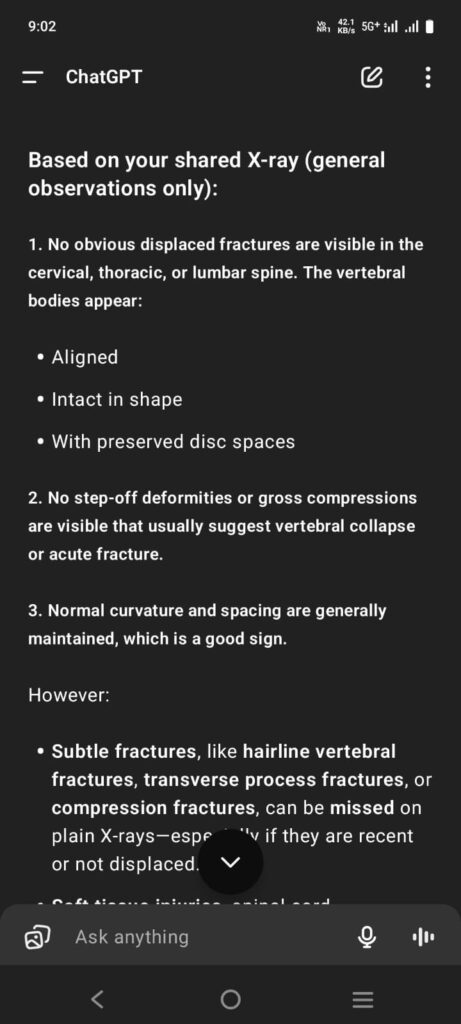
When AI Beats the 48-Hour Wait
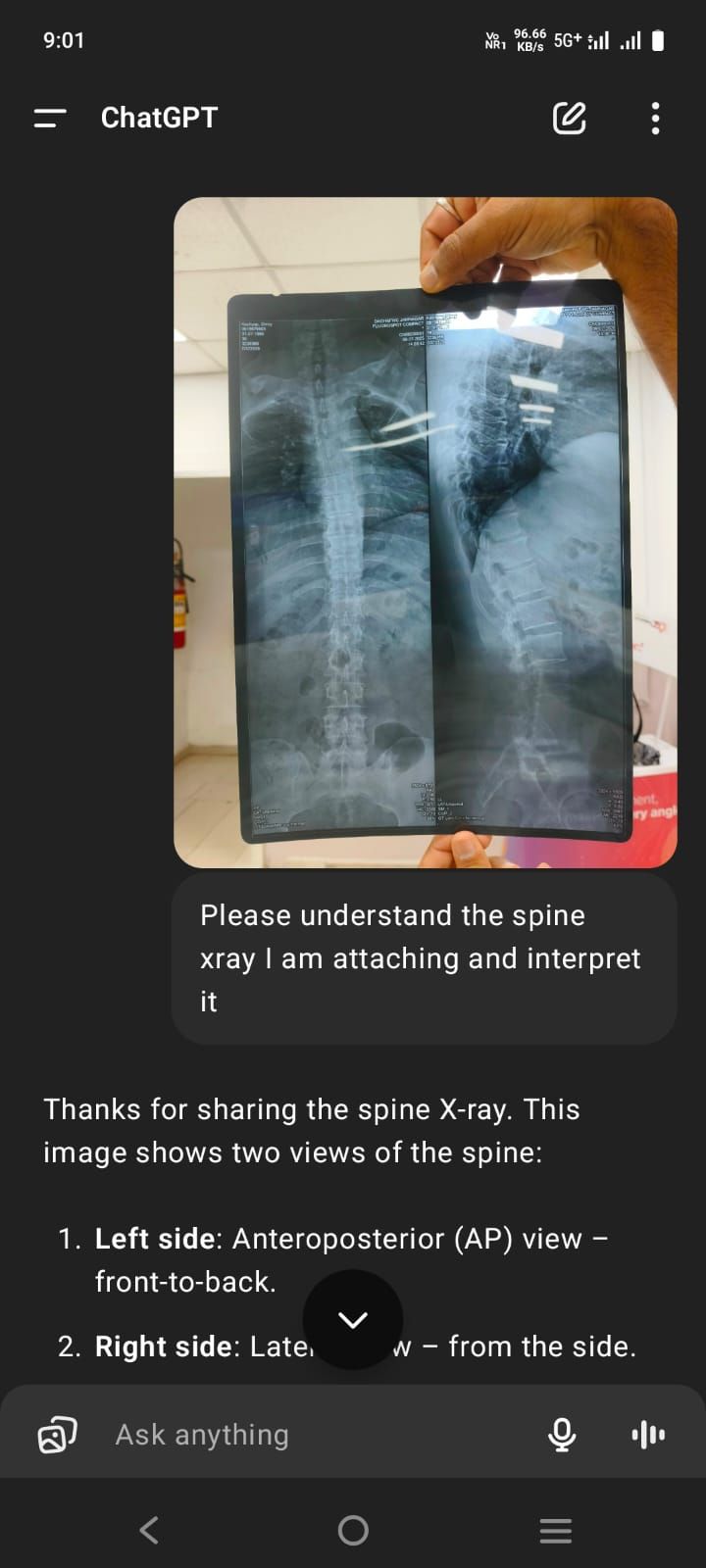
I injured my back during a workout. The emergency room ordered X-rays. The radiologist wouldn’t read them for two days.
Anxiety kicked in. I uploaded my X-ray to ChatGPT.
The result? Mind-blowing.
What ChatGPT Found in 10 Seconds
ChatGPT analyzed my spinal X-ray instantly:
AI Analysis:
- No fractures or dislocations
- Normal spinal alignment
- Proper disc spacing
- Intact bone quality
- No structural damage
The analysis was detailed. Professional. Reassuring.
The Official Results: Identical Findings
Two days later, the radiologist report arrived.
Doctor’s findings:
- No acute fractures
- Normal alignment maintained
- Preserved disc heights
- No bony abnormalities
The verdict? ChatGPT was spot-on.
Why This Matters for Healthcare
This isn’t just a cool tech story. It’s a glimpse into healthcare’s future.
Instant Peace of Mind
Medical anxiety is real. Waiting 48 hours for results amplifies stress. AI provided immediate reassurance when I needed it most.
Studies show patient anxiety worsens pain perception. Instant analysis could improve recovery outcomes.
Better Doctor Conversations
I walked into my appointment informed. I asked better questions. I understood the medical terms.
This creates more productive patient-doctor relationships.
The Speed Revolution
Healthcare moves slowly. AI moves instantly. This gap matters more than we realize.
Emergency situations benefit from rapid analysis. Rural areas with limited specialists could access instant expertise.
How ChatGPT Reads X-Rays
ChatGPT uses computer vision trained on millions of medical images.
What it recognizes:
- Bone density patterns
- Structural alignments
- Common injuries
- Normal variations
What it can’t do:
- Replace clinical judgment
- Consider patient history
- Provide treatment plans
- Offer legal medical advice
Real-World AI in Healthcare Today
My experience reflects a growing trend. Hospitals worldwide are adopting AI imaging tools.
Current Applications
Radiology departments use AI for:
- Flagging urgent cases
- Identifying subtle abnormalities
- Reducing interpretation time
- Providing second opinions
Global Success Stories
United Kingdom: NHS uses AI to detect cancer in mammograms 20% faster than radiologists.
South Korea: AI systems identify pneumonia in chest X-rays with 97% accuracy.
India: Rural hospitals use AI to bridge radiologist shortages in remote areas.
The Limitations You Need to Know
AI isn’t perfect. Understanding limits is crucial.
What AI Cannot Replace
- Comprehensive patient evaluation
- Bedside manner and empathy
- Complex clinical reasoning
- Treatment decision-making
- Emergency medical response
Privacy Concerns
Uploading medical images to commercial platforms raises questions:
- Data storage security
- HIPAA compliance
- Long-term data usage
- Privacy protection
Using AI Responsibly: The Do’s and Don’ts
DO:
✅ Use AI for educational insights
✅ Prepare better questions for doctors
✅ Reduce anxiety with preliminary information
✅ Always follow up with professional careDON’T:
❌ Skip professional medical consultation
❌ Make treatment decisions from AI alone
❌ Share sensitive data on unsecured platforms
❌ Assume AI is always correctThe Future of AI Healthcare
This technology is evolving rapidly. Here’s what’s coming:
Next-Generation Capabilities
Within 5 years:
- Real-time surgical guidance
- Predictive health analytics
- Personalized treatment plans
- Remote patient monitoring
- Drug discovery acceleration
Global Healthcare Impact
Potential benefits:
- Reduced healthcare costs
- Improved diagnostic accuracy
- Better access in underserved areas
- Faster medical processes
- Earlier disease detection
Challenges Ahead
Regulatory Hurdles
Medical AI needs proper oversight. Current regulations lag behind technology advancement.
Training Healthcare Workers
Doctors and nurses need AI literacy training. Integration requires education and adaptation.
Access Inequality
Advanced AI tools could widen healthcare gaps between rich and poor regions.
My Key Takeaways
After this unexpected AI medical experience, here’s what matters:
1. AI Enhances, Doesn’t Replace
Technology should augment human expertise, not substitute it. Doctors bring irreplaceable judgment and empathy.
2. Information Reduces Anxiety
Access to preliminary medical insights significantly decreased my stress. Mental health matters in healing.
3. Better Preparation Improves Care
AI-informed patients ask better questions and understand explanations more clearly.
4. Speed Has Value
Instant analysis provides psychological benefits even when official results take time.
Practical Tips for Patients
Before Using AI for Medical Analysis:
Research the platform: Ensure data privacy and security measures.
Set realistic expectations: AI provides insights, not diagnoses.
Plan professional follow-up: Schedule appointments with qualified healthcare providers.
Document everything: Save AI analysis to discuss with your doctor.
For Healthcare Professionals
Embracing AI in Practice:
Stay informed: Learn about AI capabilities and limitations in your specialty.
Educate patients: Help them understand appropriate AI use in healthcare.
Consider integration: Explore how AI tools could improve your workflow.
Maintain standards: Never compromise patient safety for technological convenience.
The Bottom Line
AI analyzed my X-ray in 10 seconds with remarkable accuracy. But it didn’t replace my doctor’s expertise or care.
The future of healthcare isn’t human vs. machine. It’s human + machine working together.
AI can provide instant insights, reduce anxiety, and improve communication. But healing requires human touch, clinical wisdom, and professional judgment.
My advice? Use AI as a powerful tool for health education and preparation. But always, always consult healthcare professionals for official medical care.
The technology is impressive. The potential is enormous. But the responsibility remains ours to use it wisely.
Medical Disclaimer: AI analysis should never replace professional medical consultation. Always seek qualified healthcare advice for medical conditions. This article shares a personal experience for educational purposes only.
Privacy Note: Consider data security when uploading medical information to any platform.
Tags: #AIHealthcare #MedicalImaging #ChatGPT #DigitalHealth #XRayAnalysis #HealthTech #MedicalAI #PatientCare
-
AI Conquers CAT 2024 in 120 Seconds at TISS Mumbai
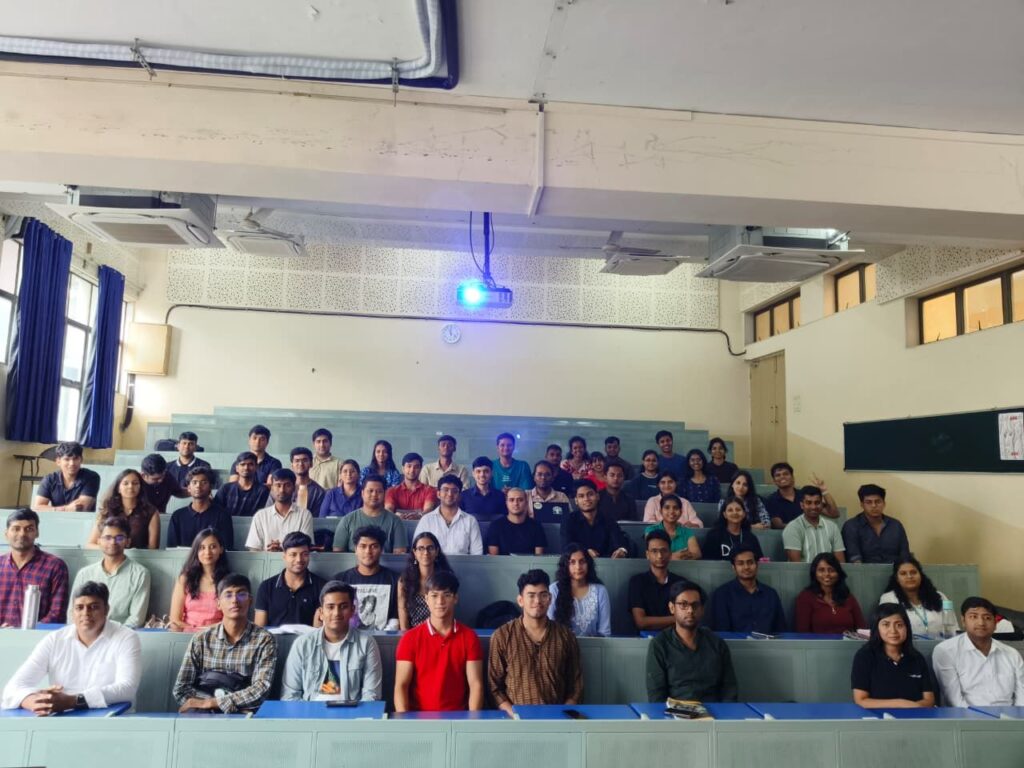
A shocking moment happened at TISS Mumbai recently. AI solved the CAT 2024 exam in just 2 minutes. The same AI system finished UPSC 2024 questions in 60 seconds. Over 60 future leaders watched in stunned silence.
Years of human study time were matched in moments. This wasn’t a demonstration of the future. This was September 2025. This is happening right now.
The Shocking Reality: AI vs Years of Human Effort
For decades, India’s brightest students have spent years preparing for competitive exams. CAT and UPSC exams are gateways to top business schools and civil service jobs. Students study 12-16 hours daily for months or years.
Then AI changed everything.
What Happened at TISS Mumbai
The AI demonstration showed more than just speed. It showed complete capability across all areas:
Advanced Reasoning: AI solved complex logical problems instantly. These usually take months of practice for humans to master.
Math Excellence: AI computed difficult mathematical problems perfectly. Data interpretation and analytical reasoning were completed in seconds.
Language Skills: AI showed reading comprehension and critical reasoning abilities. The performance matched top human performers.
Strategic Thinking: AI used problem-solving methods that often beat traditional human approaches.
Current AI Capabilities Reshaping Education
Today’s AI isn’t experimental technology anymore. It has evolved into sophisticated systems that match or beat human performance:
PhD-Level Reasoning
Modern AI can process complex academic concepts. It synthesizes information from many sources. It generates insights that match doctoral-level research. This works across science, humanities, technology, and social sciences.
Professional Writing Quality
AI produces clear, engaging, and accurate content. It meets professional journalism standards. It adapts writing styles and maintains consistent tone. It structures information for different audiences with perfect precision.
Advanced Coding Skills
AI completes programming tasks in minutes. Tasks that take experienced engineers hours or days are done quickly. This includes debugging, optimization, and creating complex applications from scratch.
Strategic Consulting Abilities
AI shows strategic thinking that rivals top consulting firms. It analyzes business problems and market conditions. It provides actionable recommendations based on comprehensive data analysis.
The Speed Problem: Technology vs Learning Systems
The main challenge isn’t that Indian education is broken. The challenge is speed mismatch. Technology advances exponentially. Educational approaches remain mostly linear.
Traditional vs AI Performance
Traditional CAT Preparation:
- 12-18 months of intensive study
- 4-6 hours daily practice
- Multiple mock tests and assessments
- Coaching fees from ₹50,000 to ₹2,00,000
- Success rates of 1-2% for top schools
AI Performance:
- Complete CAT 2024 solution in 2 minutes
- 100% accuracy in math sections
- Perfect logical reasoning scores
- Instant performance analysis
- Cost: Almost nothing
This isn’t about replacing human intelligence. It’s about recognizing that valuable human contribution is changing.
The New Leadership Question for India
The key question isn’t “Can you crack CAT 2025?” anymore. It’s not “Can you clear UPSC on your first try?”
The real question is: “Can you command intelligence greater than your own?”
This is the biggest change in leadership requirements since the industrial revolution. Future leaders won’t be valued for processing information faster than others. They’ll be valued for their ability to:
- Direct AI systems to solve complex problems
- Combine AI insights with human judgment and emotional intelligence
- Handle ethical decisions in AI use
- Build teamwork between human creativity and artificial intelligence
The Choice for India’s Future Leaders
India’s emerging leaders face a clear choice. Their decision will determine their success in the AI-first economy:
Path 1: Adaptation and Leadership
Build AI Partnership: Learn to work with AI systems. Use artificial intelligence to amplify human abilities instead of competing against it.
Lead Change: Position yourself at the front of India’s AI transformation. Become a bridge between traditional methods and innovative solutions.
Keep Evolving: Develop learning skills that allow quick adaptation. AI capabilities keep advancing rapidly.
Path 2: Resistance and Risk
Stay the Same: Keep focusing only on traditional exam preparation. Stick to conventional skill development.
Ignore AI: Refuse to learn AI collaboration skills. Dismiss the technology as a temporary trend.
Risk Becoming Irrelevant: Find yourself unprepared for an economy where AI literacy is as important as basic literacy.
What Doesn’t Work Anymore
Memory-Based Learning
Traditional memorizing of formulas, facts, and procedures becomes less valuable. AI can instantly access and apply vast knowledge bases. Rote learning loses its competitive advantage.
Individual Genius Focus
The idea of the lone genius who beats everyone through individual brilliance is outdated. Success now depends on orchestrating multiple forms of intelligence—human and artificial.
Speed of Information Processing
Human advantages in quick calculation and fast recall become irrelevant. AI systems perform these tasks much faster and more accurately.
What Becomes Essential: New Success Rules
Human-AI Collaboration as Basic Skill
Working effectively with AI systems becomes as important as reading or math. This includes understanding AI capabilities, limitations, and best collaboration methods.
Commanding AI as Advantage
Leaders who can effectively direct and manage AI systems gain huge leverage. This involves prompt engineering, AI workflow design, and strategic AI implementation.
Emotional Intelligence and Ethics
As AI handles analytical tasks, human value shifts to emotional intelligence. Ethical reasoning, creative problem-solving, and interpersonal skills remain uniquely human.
Integration Thinking
The ability to see how AI can be integrated into existing systems and processes becomes a core leadership skill.
Extraordinary Opportunity for Early Adopters
This moment represents a unique historical opportunity. Those who recognize and adapt to AI transformation first won’t just survive. They’ll gain huge advantages:
First-Mover Benefits
Early AI adopters can become experts and thought leaders in AI integration. They position themselves as valuable resources for organizations navigating digital transformation.
Amplified Impact
Human capabilities combined with AI create multiplied effects. A strategic leader with AI skills can achieve outcomes that used to require entire teams.
Shaping the Future
Early adopters don’t just adapt to change. They influence how AI integration happens in their fields and organizations.
Practical Steps for Future Leaders
Start Now
Begin AI Experiments: Start using AI tools for research, writing, analysis, and problem-solving in your current studies or work.
Learn Prompt Engineering: Learn to communicate effectively with AI systems to get the best results.
Study AI Ethics: Understand responsible AI use, including bias detection and privacy considerations.
Build Skills
Master Integration: Learn how to integrate AI tools into existing workflows and processes effectively.
Develop Learning Agility: Focus on learning how to learn quickly. The AI landscape keeps evolving rapidly.
Strengthen Human Skills: Build emotional intelligence, creative thinking, and complex interpersonal abilities.
Lead Change
Become a Bridge: Position yourself as someone who can translate between traditional approaches and AI-enhanced methods.
Guide Digital Transformation: Develop skills to lead organizations through AI adoption and cultural change.
Shape Ethical Practices: Help develop responsible AI use policies in your field.
India’s AI Opportunity
India stands at a unique position in the global AI revolution. With the world’s largest youth population and growing digital infrastructure, India can lead AI transformation.
India’s Advantages
- Young Population: A young, adaptable population ready for new technologies
- Technical Talent: Strong foundation in math, engineering, and computer science
- English Skills: Advantage in working with English-language AI systems
- Innovation Culture: Cultural adaptability and entrepreneurial spirit
National Needs
The TISS Mumbai demonstration highlighted national needs. India must ensure its future leaders are prepared for an AI-first world. Otherwise, it risks losing competitive advantage to countries that embrace AI integration faster.
Beyond Individual Success
The AI education revolution goes beyond individual career preparation. It represents a fundamental shift in how society approaches knowledge and learning.
Education System Changes
Traditional schools must evolve from information delivery to AI collaboration training. They need to focus on developing skills that complement artificial intelligence.
Economic Transformation
Industries across India will be transformed by AI integration. This includes healthcare, agriculture, finance, and manufacturing. Future leaders must be prepared to guide these transformations responsibly.
Cultural Integration
India must navigate AI adoption while preserving cultural values. Technological advancement should serve human flourishing rather than replacing human connection and wisdom.
Conclusion: The Time to Act is Now
The moment at TISS Mumbai when AI solved CAT in 2 minutes and UPSC in 60 seconds was more than a demonstration. It was a wake-up call. The future arrived faster than anyone expected.
The choice facing India’s future leaders is clear but time-sensitive. Those who recognize the transformation and adapt quickly will thrive in the AI-first economy. They’ll become the leaders who shape India’s technological future.
This isn’t about abandoning traditional values or dismissing human capabilities. It’s about evolving human potential by partnering with artificial intelligence. Together, humans and AI can achieve outcomes that neither could accomplish alone.
The extraordinary opportunity exists right now for those bold enough to embrace it. The question isn’t whether AI will transform education and leadership. That transformation is already happening. The question is whether you’ll be among those who lead it.
Ready to develop AI leadership skills for India’s future? Discover comprehensive AI collaboration strategies and leadership development resources at vimalsingh.in.
Join the movement of leaders shaping India’s AI-powered tomorrow.
The revolution in education has begun. The only question remaining is: Will you lead it, or will it leave you behind?
AIRevolution #FutureOfEducation #IndiaLeadership #AIEducation #CATExam #UPSCPreparation #CompetitiveExams #TechnologyTransformation #AILearning #EducationTechnology #IndianEducation #GenZLeadership #AIFirst #DigitalTransformation #FutureLeaders #AISkills #EdTech #CompetitiveExamAI #AICareer #TISSMumbai
-
Shocking Twist: India Crushes China in 2025 AI Domination
A groundbreaking report from TRG Datacenters has revealed a dramatic shift in the global AI landscape that few saw coming. India has surged to 6th place globally with 1.2 million H100 equivalents, while China has dropped to 7th position with only 400,000 H100 equivalents – meaning India now commands three times more AI computing power than its northern neighbor.
This stunning reversal marks a pivotal moment in the global technology race, with implications that extend far beyond mere numbers.
The New Global AI Power Rankings
According to the comprehensive TRG Datacenters analysis using the Epoch AI Supercomputers dataset, the top 10 AI powerhouses for 2025 are:
🥇 USA: 39.7M H100 equivalents
🥈 UAE: 23.1M H100 equivalents
🥉 Saudi Arabia: 7.2M H100 equivalents
4️⃣ South Korea: 5.1M H100 equivalents
5️⃣ France: 2.4M H100 equivalents
6️⃣ 🇮🇳 INDIA: 1.2M H100 equivalents
7️⃣ 🇨🇳 China: 400K H100 equivalents
8️⃣ UK: 120K H100 equivalents
9️⃣ Finland: 72K H100 equivalents
🔟 Germany: 51K H100 equivalentsTo put India’s achievement in perspective, while still trailing the USA’s massive 39.7M H100 equivalents, India’s 1.2M represents just 3% of American capacity but 300% of China’s computing power. This positions India as a serious regional AI power with global implications, especially considering the USA’s investment spans decades while India’s surge represents recent strategic positioning.
Visual Comparison: India vs China AI Computing Power
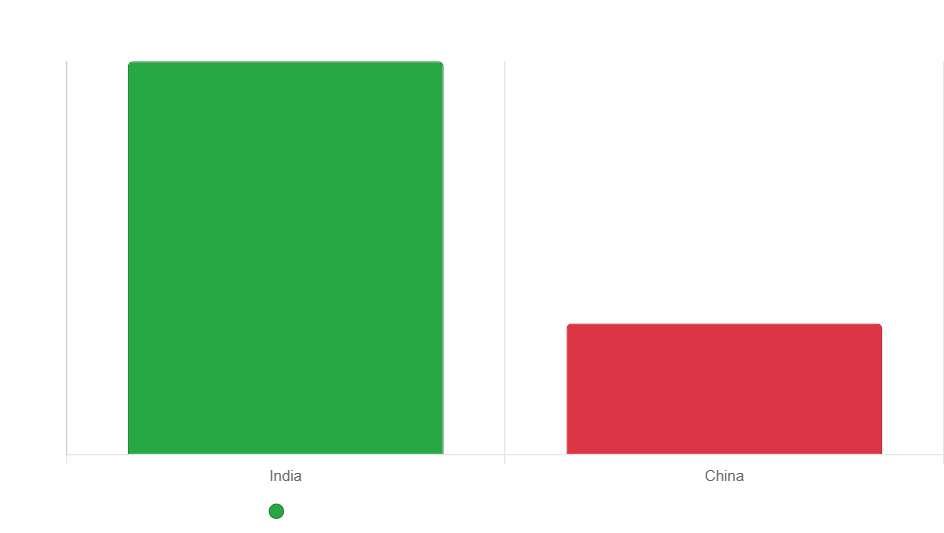
India’s Strategic AI Advantage: Quality Over Quantity
India’s success story isn’t just about raw computing power. The country leads globally with 493,000 AI chips (ranking 3rd worldwide), powering 8 strategic clusters with 1.1 megawatts of capacity. This represents a quality-over-quantity approach that contrasts sharply with China’s infrastructure strategy.
While China operates 230 data center clusters worldwide – the most of any country – it generates only 289 megawatts of total power capacity. This sprawling approach appears less efficient than India’s concentrated, high-performance strategy.
The Numbers That Tell the Real Story
India’s AI Infrastructure:
- 493K AI chips (3rd globally)
- 8 strategic clusters
- 1.1K MW power capacity
- Quality-focused approach
China’s AI Infrastructure:
- 629K AI chips (2nd globally)
- 230 clusters (most worldwide)
- 289 MW power capacity
- Quantity-focused approach
The stark contrast reveals India’s 3.8x better power efficiency per cluster compared to China.
Indian Organizations Leading the AI Revolution
India’s remarkable AI surge is powered by a robust ecosystem of world-class organizations driving innovation across multiple sectors.
Government and Research Institutions
AIIMS Delhi has emerged as a healthcare AI leader. The government has selected AIIMS Delhi to spearhead India’s Center of Excellence in AI for healthcare, with a ₹330 crore grant under the Make AI in India initiative. AIIMS has partnered with IIT Delhi to establish a comprehensive AI research center focused on transforming healthcare delivery nationwide.
Indian Institutes of Technology (IITs) form the backbone of India’s AI research ecosystem:
- IIT Delhi leads the sustainable cities AI initiative, focusing on urban challenges like traffic management and energy efficiency
- IIT Kanpur spearheads agricultural AI applications, developing precision farming and crop management solutions
- IIT Ropar drives interdisciplinary AI research across multiple domains
- IIT Bombay’s C-MInDS (Centre for Machine Intelligence and Data Science) leverages strong interdisciplinary academic communities for AI innovation
- IIT Hyderabad operates India’s first NVIDIA AI Technology Centre (NVAITC) in partnership with NVIDIA
National Informatics Centre (NIC) has developed groundbreaking AI solutions: AI Panini provides text translation services in 22 official Indian languages, with specialized legal translation systems used by the Supreme Court of India. AI Saransh offers text summarization services currently deployed across 12 government projects.
Corporate AI Champions
Tata Consultancy Services (TCS) stands as India’s AI consulting giant. TCS has partnered with IIT Madras to launch an M.Tech program in Industrial AI, specifically designed for working professionals. The company has also established an AI-powered Research & Innovation Centre in Singapore and partnered with Google Cloud to accelerate AI-driven innovation in financial services.
Infosys has made significant AI infrastructure investments. The Infosys Centre for Artificial Intelligence at IIIT Delhi, established in 2016, conducts cutting-edge AI research while running specialized B.Tech and M.Tech programs. Infosys has released open-source AI tools including the Infosys Topaz Responsible AI Suite, designed to identify security risks, privacy violations, and biased AI outputs.
Reliance Industries is making massive AI infrastructure investments. The company announced construction of a 3 GW data center for AI services in Jamnagar in 2025, along with JioBrain, which includes over 500 REST APIs for natural language processing, image-to-video conversion, and enterprise-ready AI services.
Emerging AI Ecosystem
BharatGen Consortium represents India’s collaborative AI research approach. As of February 2025, the consortium includes 50-60 researchers from IIM Indore, IIIT Hyderabad, IIT Bombay, IIT Kanpur, IIT Hyderabad, IIT Mandi, and IIT Madras, working on AI models that incorporate India’s 1,600 languages and scripts.
Microsoft’s India Investment demonstrates international confidence in India’s AI potential. From 2025 to 2027, Microsoft plans to invest ₹25,000 crore (US$3.0 billion) in cloud and AI infrastructure development across India.
Ethical AI Leadership: India’s Responsible Approach
Beyond raw computing power, India is positioning itself as a leader in ethical AI development. The government announced creation of an IndiaAI Safety Institute in January 2025, focusing on ethical and safe AI applications grounded in India’s diverse social, economic, and cultural context.
This institute will promote research using Indian datasets while ensuring AI development remains transparent and unbiased. Key initiatives include watermarking and labeling systems, ethical AI frameworks, risk assessment tools, and deepfake detection capabilities.
Infosys has contributed significantly to responsible AI with its open-source Topaz Responsible AI Suite, designed to identify security risks, privacy violations, biased outputs, and harmful content in AI systems. This toolkit enhances transparency in AI decision-making while ensuring compliance with data protection regulations.
India’s approach contrasts with more centralized AI governance models, emphasizing democratic, collaborative frameworks that balance innovation with social responsibility.
What Drives India’s AI Success?
Strategic Focus on Efficiency
India’s approach prioritizes computing efficiency over infrastructure sprawl. While China builds numerous data centers, India concentrates on high-performance, strategically located facilities that deliver maximum computational output per facility.
World-Class Talent Pipeline
India’s renowned IIT system and technical universities produce globally competitive AI talent. This human capital advantage, combined with strong English proficiency, positions India as an attractive destination for international AI collaborations.
Government Policy Support
The Indian government announced creation of an IndiaAI Safety Institute in January 2025 to ensure ethical AI development grounded in India’s social, economic, and cultural diversity. The government has committed ₹990 crore over five years (2023-28) to establish AI Centers of Excellence under the “Make AI in India and Make AI Work for India” initiative.
Industry-Academia Collaboration
Unlike isolated development models, India emphasizes collaborative ecosystems where government institutions, private companies, and international partners work together on shared AI objectives.
The Workforce Challenge and Opportunity
Despite technological advances, only 0.1% of India’s workforce currently engages with AI – representing both a challenge and an enormous opportunity. In comparison, South Korea leads globally with nearly half its workforce using AI in some capacity.
This gap suggests massive untapped potential. As India accelerates workforce AI adoption through education and training programs, the country could see exponential productivity gains across all sectors.
Global Investment Context
Global AI infrastructure investment reached a record $200 billion in 2025 as nations compete for computational supremacy in what has become a geopolitical and economic race. India’s efficient approach to this investment – achieving more computing power per dollar spent than competitors – positions the country for sustained growth.
What This Means for the Global AI Race
Quality Trumps Quantity
India’s success demonstrates that strategic, efficient AI infrastructure outperforms massive but dispersed deployments. This lessons holds implications for other developing nations seeking AI leadership.
The Rise of AI Multipolarity
The emergence of multiple AI powers beyond the US-China duopoly suggests “a multipolar AI world” where countries like India, UAE, and South Korea play significant roles.
Workforce Development is Critical
Countries that combine AI infrastructure with comprehensive workforce training programs will likely outperform those focusing solely on hardware deployments.
Challenges Ahead for India
Scaling Workforce Adoption
India must dramatically increase AI workforce engagement from the current 0.1% to remain competitive with countries like South Korea (50% engagement). This represents both India’s greatest challenge and most significant opportunity.
Infrastructure Scalability Demands
While India’s efficient approach works well currently, maintaining technological leadership requires sustained investment in next-generation AI infrastructure. The country needs to expand from 8 current clusters to potentially dozens while maintaining power efficiency advantages.
Talent Pipeline Development
Despite strong technical universities, India faces growing demand for specialized AI talent. The country must accelerate training programs in machine learning, neural networks, and AI system design to support continued growth.
Energy Infrastructure Requirements
India’s 1.1K MW current capacity needs substantial expansion to support projected AI growth. Building sustainable, reliable power infrastructure for energy-intensive AI operations presents significant logistical challenges.
Regulatory Framework Development
Recent government cautions about using AI tools like ChatGPT for government work highlight the need for comprehensive AI governance frameworks that balance innovation with security concerns. India must develop policies that encourage innovation while protecting national interests.
The Road Ahead: India’s AI Vision 2030
India’s current 6th place ranking with 3x China’s computing power represents just the beginning. With strategic investments from organizations like Microsoft, Reliance, and TCS, combined with world-class research institutions and government support, India is positioned to challenge the top 5 AI powers.
Key Success Factors Moving Forward:
- Accelerated workforce AI adoption programs
- Continued infrastructure efficiency improvements
- International collaboration expansion
- Ethical AI development leadership
- Industry-academia partnership deepening
Conclusion: A New Chapter in Global AI Leadership
India’s dramatic surge past China in AI computing power marks more than a statistical milestone – it represents a fundamental shift in global technology leadership. By prioritizing efficiency over scale, collaboration over competition, and practical applications over theoretical research, India has created a sustainable model for AI development that other nations are beginning to study and emulate.
The implications extend beyond technology into geopolitics, economics, and social development. India’s success demonstrates that emerging economies can compete with established powers through strategic focus and efficient resource allocation.
As the battle for AI supremacy intensifies, India’s unique combination of technical talent, strategic investments, collaborative ecosystem, and ethical framework positions the country not just as a participant, but as a potential leader in shaping the AI-powered future.
Whether you’re a tech professional, policy maker, or simply curious about AI’s global impact, understanding India’s strategic approach offers valuable insights into successful AI development models.
For comprehensive AI insights, strategic guidance, and tools to navigate the rapidly evolving global AI landscape, visit vimalsingh.in. Stay ahead of AI trends with expert analysis and actionable strategies for the AI-powered future.
The question is no longer whether India will play a major role in global AI development, but how quickly other nations will adapt to India’s efficient, collaborative, and ethically-grounded approach to AI infrastructure and workforce development.
#IndiaAIRevolution #AIComputingPower #VimalSinghAI #GlobalAITrends #IndiaAI2025 #TechLeadership
-
How AI is eliminating weak CHROs ?
One evening in early 2025, during a chaotic townhall with three screens flickering simultaneously, a young HR analyst whispered something to his CHRO: “You know… AI answers faster than we can even agree on the question.”
Nobody laughed. Because everyone knew — it was true.
Somewhere between restructuring a workforce and designing “hyper-personalized” learning journeys, HR quietly crossed a line. Manual HR died. Predictable HR died. And standing over the grave was Artificial Intelligence, holding not a scythe, but a mirror.
Welcome to 2025 — where AI isn’t assisting HR anymore. It’s rewriting it.
How AI Quietly Took Over HR
It didn’t happen with a grand announcement. It started small — a bot scheduling interviews, an algorithm scanning resumes faster than coffee-fueled analysts, a chatbot answering endless leave policy queries at 2 AM.
By the time platforms like LinkedIn’s Hiring Assistant started surfacing dream candidates while managers slept, nobody was asking “Will AI help HR?” anymore. The real question became: “Without AI, can HR even keep up?”
And this wasn’t just about recruitment. AI crept into learning journeys, nudging employees toward just-right micro-courses. It quietly built engagement dashboards that sensed employee burnout before even their managers did. It shifted HR from a reactionary function to a predictive powerhouse.
2025 Predictions: HR as the Org’s Early Warning System
Look ahead, and the AI-HR partnership only deepens.
- Predictive analytics: Not just “who’s likely to quit” — but who’s about to disengage quietly.
- Hyper-personalized growth paths: Not “career ladders” — career maps, built in real-time.
- AI agents: Not just bots fetching data — but digital teammates, managing workforce skilling programs.
LinkedIn’s 2025 Work Trend Index is blunt: 73.5% of HR leaders across APAC have prioritized AI upskilling. Not because it’s trendy — but because the alternative is falling irreversibly behind.
And here’s the curveball: As skills demanded by organizations are projected to shift by 65% by 2030 (Forbes), AI won’t just predict gaps. It’ll actively reshape the workforce — nudging reskilling before crises even emerge.
Why AI Will Tighten Its Grip on HR
Let’s be honest. AI’s dominance isn’t about the technology anymore. It’s about what today’s organizations have become.
1. Efficiency and Scalability Scaling HR support without scaling HR teams? Automation isn’t a cost-saving hack anymore — it’s a survival tactic.
2. Data-Driven Decision Making When business leaders expect real-time workforce health dashboards, “gut feel” doesn’t cut it. AI arms HR with insight — and insight wins boardrooms.
3. Enhanced Employee Experiences The Netflix generation expects everything customized. Career paths, wellness initiatives, feedback systems. AI brings that personalization — not as a luxury, but as a minimum expectation.
And the scoreboard is clear: Companies leveraging AI in HR report 42% boosts in efficiency and productivity (Brian Heger, LinkedIn Report).
Those who adapt will sprint. Those who don’t? They’ll be case studies.
But Here’s the Uneasy Truth:
AI’s dominance demands vigilance.
Because alongside the efficiency surge comes the shadow:
- Data security nightmares
- Algorithmic biases hiding in plain sight
- Ethical blind spots when AI decisions affect real human careers
77% of organizations admit they feel underprepared for AI risk management (ProServeIT). And the greatest danger? Thinking AI literacy is optional for HR.
The future belongs to CHROs who don’t just use AI — but understand it, question it, and govern it responsibly.
Hill Dickinson’s early moves toward formal AI approval protocols might just be a glimpse of tomorrow’s baseline compliance.
The Real Shift
AI isn’t replacing the human in HR. It’s demanding more human leadership than ever.
Not heads-down administration. Not one-size-fits-all programs.
But strategic empathy. Judgment under uncertainty. Courage to question the machine.
The organizations that thrive will be the ones whose HR leaders embrace AI — not as magic, not as menace, but as a mirror.
Because in the end, AI won’t kill HR. But HR’s refusal to adapt might.
And maybe the next time an analyst whispers about AI moving faster than humans can think, the CHRO will smile — because they’ll know: they designed it that way.
#FutureOfHR#AIinHR#CHROLeadership#HRTransformation#WorkforceInnovation#PeopleAnalytics#HRTech#LeadershipInTheAgeOfAI#DigitalHR#AIandWork
Footnotes
- LinkedIn Launches AI Hiring Assistant to Help Recruiters Efficiently Match Talent – www.aibase.com
- AI in the workplace: A report for 2025 | McKinsey – www.mckinsey.com
- HR Leaders Prioritize AI Integration and Upskilling to Bridge Workforce Gaps in 2025: LinkedIn | Inspiring Business News Stories from Asia – www.asiabiztoday.com
- LinkedIn Data Predicts 65% Shift In Job Skills By 2030 Due To AI – www.forbes.com
- The Future of Recruiting 2025 Report: How AI Redefines Recruiting Excellence | LinkedIn Report – BrianHeger.com – www.brianheger.com
- How HR Leaders Can Prepare for 2025 and AI – www.proserveit.com
-
Unlock Enterprise AI Power: How to Make RAG Systems Work Flawlessly in 2025
𝘍𝘳𝘰𝘮 𝘔𝘶𝘮𝘣𝘢𝘪’𝘴 𝘴𝘵𝘢𝘳𝘵𝘶𝘱 𝘦𝘤𝘰𝘴𝘺𝘴𝘵𝘦𝘮 𝘵𝘰 𝘍𝘰𝘳𝘵𝘶𝘯𝘦 500𝘴 𝘢𝘤𝘳𝘰𝘴𝘴 𝘵𝘩𝘳𝘦𝘦 𝘤𝘰𝘯𝘵𝘪𝘯𝘦𝘯𝘵𝘴 – 𝘸𝘩𝘺 𝘦𝘯𝘵𝘦𝘳𝘱𝘳𝘪𝘴𝘦 𝘈𝘐 𝘪𝘴 𝘯𝘰𝘵𝘩𝘪𝘯𝘨 𝘭𝘪𝘬𝘦 𝘵𝘩𝘦 𝘵𝘶𝘵𝘰𝘳𝘪𝘢𝘭𝘴
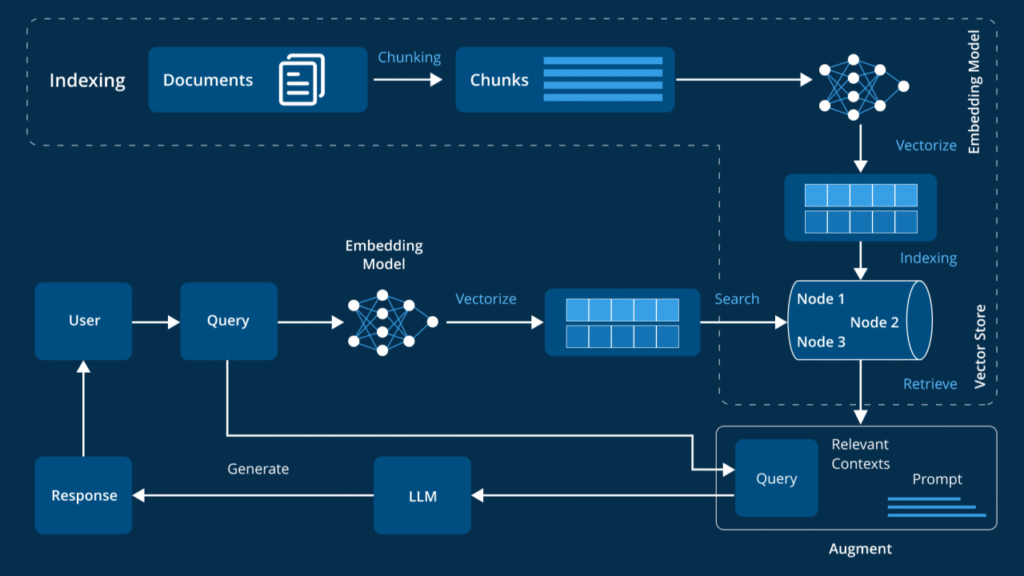
Last Diwali, I was debugging a Retrieval-Augmented Generation (RAG) system at 2 AM, trying to figure out why a pharmaceutical client’s 25-year-old research documents were returning complete nonsense.
The irony wasn’t lost on me – here I was, building “intelligent” systems that couldn’t handle a scanned PDF from 1995.
That moment crystallized something I’d been learning over the past year: 𝗲𝗻𝘁𝗲𝗿𝗽𝗿𝗶𝘀𝗲 𝗥𝗔𝗚 𝗶𝘀 𝗯𝗿𝘂𝘁𝗮𝗹𝗹𝘆 𝗱𝗶𝗳𝗳𝗲𝗿𝗲𝗻𝘁 𝗳𝗿𝗼𝗺 𝗮𝗻𝘆𝘁𝗵𝗶𝗻𝗴 𝘆𝗼𝘂’𝗹𝗹 𝗿𝗲𝗮𝗱 𝗶𝗻 𝘁𝘂𝘁𝗼𝗿𝗶𝗮𝗹𝘀.
After working with 10+ projects across regulated industries – pharma companies in Pune, investment banks in Singapore, law firms in London – I’ve learned something crucial.
The real challenges have nothing to do with choosing between OpenAI and Claude. They’re about the messy reality of decades-old document repositories and the humans who need to use them.
𝟭. 𝗧𝗵𝗲 𝗗𝗼𝗰𝘂𝗺𝗲𝗻𝘁 𝗤𝘂𝗮𝗹𝗶𝘁𝘆 𝗪𝗮𝗸𝗲-𝗨𝗽 𝗖𝗮𝗹𝗹
Here’s what no one tells you: 𝗲𝗻𝘁𝗲𝗿𝗽𝗿𝗶𝘀𝗲 𝗱𝗼𝗰𝘂𝗺𝗲𝗻𝘁𝘀 𝗮𝗿𝗲 𝗮𝗯𝘀𝗼𝗹𝘂𝘁𝗲 𝗴𝗮𝗿𝗯𝗮𝗴𝗲.
I remember sitting with the head of R&D at a Mumbai-based pharma company, watching him scroll through SharePoint folders that looked like digital archaeology. Research papers from the 90s (scanned typewritten pages), mixed with modern clinical trial reports, mixed with handwritten notes someone photographed with their phone.
“Can your AI make sense of this?” he asked, pointing to a folder labeled “Important_Docs_FINAL_v2_USE_THIS_ONE.”
𝘚𝘱𝘰𝘪𝘭𝘦𝘳: 𝘐𝘵 𝘤𝘰𝘶𝘭𝘥𝘯’𝘵.
That’s when I realized the first rule of enterprise RAG: 𝗱𝗼𝗰𝘂𝗺𝗲𝗻𝘁 𝗾𝘂𝗮𝗹𝗶𝘁𝘆 𝗱𝗲𝘁𝗲𝗰𝘁𝗶𝗼𝗻 𝗺𝘂𝘀𝘁 𝗰𝗼𝗺𝗲 𝗯𝗲𝗳𝗼𝗿𝗲 𝗲𝘃𝗲𝗿𝘆𝘁𝗵𝗶𝗻𝗴 𝗲𝗹𝘀𝗲.
𝗖𝗹𝗲𝗮𝗻 𝗣𝗗𝗙𝘀 (perfect text extraction): Full hierarchical processing 𝗗𝗲𝗰𝗲𝗻𝘁 𝗱𝗼𝗰𝘀 (some OCR artifacts): Basic chunking with cleanup 𝗚𝗮𝗿𝗯𝗮𝗴𝗲 𝗱𝗼𝗰𝘀 (scanned handwritten notes): Fixed chunks + manual review flags
This single change fixed more retrieval issues than any embedding model upgrade ever did.
𝟮. 𝗪𝗵𝘆 𝗛𝗥 𝗧𝗲𝗮𝗺𝘀 𝗧𝗮𝘂𝗴𝗵𝘁 𝗠𝗲 𝗔𝗯𝗼𝘂𝘁 𝗖𝗵𝘂𝗻𝗸𝗶𝗻𝗴 𝗦𝘁𝗿𝗮𝘁𝗲𝗴𝘆
The breakthrough on chunking came from an unexpected place: working with HR teams.
Every RAG tutorial says: “Chunk everything into 512 tokens with overlap!” But sit with an HR director trying to find specific policy information, and you’ll quickly see why this is wrong.
When someone asks “What’s our maternity leave policy for contract employees in India?” they don’t want chunks that cut off mid-sentence or combine unrelated policies. They need the complete policy section, with context about exceptions and regional variations.
𝗗𝗼𝗰𝘂𝗺𝗲𝗻𝘁 𝘀𝘁𝗿𝘂𝗰𝘁𝘂𝗿𝗲 𝗺𝗮𝘁𝘁𝗲𝗿𝘀. 𝗔 𝗹𝗼𝘁.
My hierarchical chunking approach: Document level: Title, authors, date, policy type Section level: Policy overview, eligibility, procedures Paragraph level: Specific rules and exceptions Sentence level: For precision queries
The key insight? 𝗤𝘂𝗲𝗿𝘆 𝗰𝗼𝗺𝗽𝗹𝗲𝘅𝗶𝘁𝘆 𝘀𝗵𝗼𝘂𝗹𝗱 𝗱𝗲𝘁𝗲𝗿𝗺𝗶𝗻𝗲 𝗿𝗲𝘁𝗿𝗶𝗲𝘃𝗮𝗹 𝗹𝗲𝘃𝗲𝗹.
𝟯. 𝗧𝗵𝗲 𝗠𝗲𝘁𝗮𝗱𝗮𝘁𝗮 𝗥𝗲𝘃𝗼𝗹𝘂𝘁𝗶𝗼𝗻 (𝗧𝗵𝗮𝗻𝗸𝘀 𝘁𝗼 𝗗𝗼𝗺𝗮𝗶𝗻 𝗘𝘅𝗽𝗲𝗿𝘁𝘀)
Here’s where I spent 40% of my development time – and it had the highest ROI of anything I built.
Enterprise queries are insanely contextual. A pharmaceutical researcher in Bangalore asking about “pediatric studies” needs completely different documents than a regulatory affairs manager in Frankfurt asking the same question.
𝗧𝗵𝗲 𝘀𝗼𝗹𝘂𝘁𝗶𝗼𝗻? 𝗗𝗼𝗺𝗮𝗶𝗻-𝘀𝗽𝗲𝗰𝗶𝗳𝗶𝗰 𝗺𝗲𝘁𝗮𝗱𝗮𝘁𝗮 𝘀𝗰𝗵𝗲𝗺𝗮𝘀 𝗯𝘂𝗶𝗹𝘁 𝘄𝗶𝘁𝗵 𝗮𝗰𝘁𝘂𝗮𝗹 𝘀𝘂𝗯𝗷𝗲𝗰𝘁 𝗺𝗮𝘁𝘁𝗲𝗿 𝗲𝘅𝗽𝗲𝗿𝘁𝘀.
For pharma clients:
- Document type (research paper, regulatory filing, clinical trial)
- Drug classifications and therapeutic areas
- Patient demographics (pediatric, adult, geriatric)
- Regulatory bodies (FDA, EMA, CDSCO)
For financial services:
- Time periods (Q1 FY24, annual reports)
- Financial metrics and KPIs
- Business segments and geographies
- Regulatory frameworks (RBI guidelines, Basel III)
𝗣𝗿𝗼 𝘁𝗶𝗽: Skip LLMs for metadata extraction. They’re inconsistent. Simple keyword matching works infinitely better.
𝟰. 𝗪𝗵𝗲𝗻 𝗦𝗲𝗺𝗮𝗻𝘁𝗶𝗰 𝗦𝗲𝗮𝗿𝗰𝗵 𝗙𝗮𝗶𝗹𝘀 (𝗠𝗼𝗿𝗲 𝗢𝗳𝘁𝗲𝗻 𝗧𝗵𝗮𝗻 𝗬𝗼𝘂 𝗧𝗵𝗶𝗻𝗸)
Pure semantic search fails 𝟭𝟱-𝟮𝟬% 𝗼𝗳 𝘁𝗵𝗲 𝘁𝗶𝗺𝗲 in specialized domains. Not the 5% everyone assumes.
𝗠𝗮𝗶𝗻 𝗳𝗮𝗶𝗹𝘂𝗿𝗲 𝗺𝗼𝗱𝗲𝘀 𝘁𝗵𝗮𝘁 𝗸𝗲𝗽𝘁 𝗺𝗲 𝘂𝗽 𝗮𝘁 𝗻𝗶𝗴𝗵𝘁:
Acronym confusion: “CAR” means “Chimeric Antigen Receptor” in oncology but “Computer Aided Radiology” in medical imaging
Precise technical queries: “What was the exact dosage in Table 3?” Semantic search finds similar content but misses the specific reference
Cross-reference chains: Documents reference other documents constantly. Semantic search misses these relationship networks
𝗧𝗵𝗲 𝗳𝗶𝘅? Hybrid approaches with domain-aware fallbacks: Graph layer to track document relationships Context-aware acronym expansion Rule-based retrieval for precise data points
𝟱. 𝗧𝗵𝗲 𝗢𝗽𝗲𝗻 𝗦𝗼𝘂𝗿𝗰𝗲 𝗥𝗲𝗮𝗹𝗶𝘁𝘆 𝗖𝗵𝗲𝗰𝗸
Most people assume GPT-4 is always better. But enterprise clients have constraints that matter more than benchmark scores:
Cost: API costs explode with 50K+ documents Data sovereignty: Can’t send sensitive data to external APIs Domain terminology: General models hallucinate on specialized terms
I ended up using 𝗤𝘄𝗲𝗻 𝗤𝗪𝗤-𝟯𝟮𝗕 after domain-specific fine-tuning:
- 85% cheaper than GPT-4 for high-volume processing
- Everything stays on client infrastructure
- Fine-tuned on medical/financial terminology
- Consistent response times without API rate limits
𝟲. 𝗧𝗮𝗯𝗹𝗲𝘀: 𝗧𝗵𝗲 𝗛𝗶𝗱𝗱𝗲𝗻 𝗚𝗼𝗹𝗱𝗺𝗶𝗻𝗲 𝗘𝘃𝗲𝗿𝘆𝗼𝗻𝗲 𝗜𝗴𝗻𝗼𝗿𝗲𝘀
Enterprise documents are packed with critical tabular data – financial models, clinical trial results, compliance matrices, salary bands, performance metrics.
Standard RAG either ignores tables or extracts them as unstructured text, losing all relationships. 𝗕𝘂𝘁 𝘁𝗮𝗯𝗹𝗲𝘀 𝗼𝗳𝘁𝗲𝗻 𝗰𝗼𝗻𝘁𝗮𝗶𝗻 𝘁𝗵𝗲 𝗺𝗼𝘀𝘁 𝘃𝗮𝗹𝘂𝗮𝗯𝗹𝗲 𝗶𝗻𝗳𝗼𝗿𝗺𝗮𝘁𝗶𝗼𝗻.
My approach: Treat tables as separate entities with dedicated processing Use pattern recognition for table detection Dual embedding strategy: structured data AND semantic descriptions Preserve hierarchical relationships in metadata
𝟳. 𝗞𝗲𝘆 𝗟𝗲𝘀𝘀𝗼𝗻𝘀 𝗧𝗵𝗮𝘁 𝗔𝗰𝘁𝘂𝗮𝗹𝗹𝘆 𝗠𝗮𝘁𝘁𝗲𝗿
1. Document quality detection first 2. Metadata > embeddings 3. Hybrid retrieval is mandatory 4. Tables are critical 5. Infrastructure determines success
𝗧𝗵𝗲 𝗥𝗲𝗮𝗹 𝗧𝗮𝗹𝗸
Enterprise RAG is 𝟴𝟬% 𝗲𝗻𝗴𝗶𝗻𝗲𝗲𝗿𝗶𝗻𝗴, 𝟮𝟬% 𝗠𝗟.
Most failures aren’t from bad models – they’re from underestimating document processing complexity, metadata requirements, and production infrastructure needs.
But here’s the thing: 𝘁𝗵𝗲 𝗱𝗲𝗺𝗮𝗻𝗱 𝗶𝘀 𝗮𝗯𝘀𝗼𝗹𝘂𝘁𝗲𝗹𝘆 𝗶𝗻𝘀𝗮𝗻𝗲 𝗿𝗶𝗴𝗵𝘁 𝗻𝗼𝘄.
From textile manufacturers in Tamil Nadu digitizing compliance documents, to consulting firms in Gurgaon making their knowledge base searchable – everyone needs these systems.
The ROI, when done right, is transformational. Research teams cut document search from hours to minutes. Compliance teams that spent weeks on audit prep now do it in days.
#AgenticAI #MachineLearning #Enterprise #RAG #DataScience #TechLeadership #ArtificialIntelligence #DigitalTransformation
-
Why Millennials Dominate AI: Unlock Your Career Edge
Your lived experience spans both analog and digital worlds, giving you a crucial perspective that purely digital natives lack. You understand the value of human connection while embracing technological efficiency—exactly the balance needed for successful human-AI collaboration.
For Early-Career Millennials: Use AI to accelerate your learning curve and compete with more experienced professionals by leveraging data-driven insights and automated research capabilities.
For Mid-Career Professionals: Apply AI to scale your expertise across multiple projects, positioning yourself for leadership roles that require both strategic thinking and technological fluency.
For Career Pivots and Freelancers: Utilize AI tools to quickly develop new skills, create professional content, and manage multiple client relationships efficiently.
Strategy 1: Master AI Supervision – From Task-Doer to Strategic Director
Essential AI Tools for Millennials by Industry
Marketing Professionals:
- ChatGPT/Claude: Content creation, campaign ideation, audience analysis
- Canva AI: Automated design generation and brand consistency
- Jasper: Long-form content and email campaigns
Finance and Data Analysts:
- Power BI with AI: Predictive analytics and automated reporting
- Tableau: Data visualization with natural language processing
- Excel Copilot: Advanced formula creation and data analysis
Operations and Project Managers:
- Monday.com AI: Automated project tracking and resource allocation
- Asana Intelligence: Workflow optimization and deadline prediction
- Slack AI: Meeting summaries and action item extraction
The Art of Effective AI Delegation
Transform your approach from “I need to write a market analysis” to “AI, analyze Q3 fintech trends in North American markets, focusing on mobile payment adoption among consumers aged 25-40. Include competitive landscape, growth projections, and three strategic recommendations for a B2B payments company.”
Quality Control Framework:
- Accuracy Check: Cross-reference AI data with recent industry reports
- Relevance Filter: Ensure outputs align with your specific business context
- Bias Detection: Review for potential AI hallucinations or skewed perspectives
- Professional Polish: Add your industry expertise and communication style
Real-World Impact: The Numbers Speak
According to McKinsey’s 2024 AI Impact Study, professionals who effectively integrate AI report:
- 37% average productivity increase within the first six months
- 23% faster project completion rates
- 41% improvement in quality of analytical outputs
Strategy 2: Build Compound AI Skills That Accelerate Your Career
The 15-Minute Daily Practice Revolution
Consistency trumps intensity in AI skill development. Your micro-learning approach should focus on immediately applicable skills:
Monday – Prompt Engineering: Practice crafting specific, context-rich prompts Tuesday – Tool Exploration: Test one new AI feature or platform Wednesday – Workflow Integration: Refine how AI fits into existing processes Thursday – Quality Review: Analyze and improve previous AI outputs Friday – Industry Application: Focus on sector-specific AI use cases
Advanced Techniques for Busy Professionals
Chain Prompting for Complex Projects: Break large tasks into sequential AI interactions. For a comprehensive business proposal:
- AI researches market conditions
- AI analyzes competitor strategies
- AI generates initial proposal structure
- You synthesize insights and add strategic perspective
Template Library Development: Create reusable prompt templates for:
- Weekly team meeting summaries
- Client communication drafts
- Project status reports
- Competitive analysis frameworks
Industry-Specific Skill Stacking
Healthcare Professionals: Master AI for research synthesis, patient communication templates, and administrative task automation while maintaining HIPAA compliance.
Education Sector: Leverage AI for curriculum development, personalized learning materials, and assessment creation while preserving pedagogical expertise.
Traditional Industries: Apply AI for process optimization, safety protocol analysis, and regulatory compliance monitoring.
Strategy 3: Amplify Your Human Superpowers in an AI World
The Irreplaceable Millennial Skill Set
Your emotional intelligence, developed through economic uncertainty and workplace evolution, becomes increasingly valuable as AI handles routine tasks. Focus on:
Contextual Interpretation: AI provides data; you provide meaning based on organizational culture, market nuances, and stakeholder relationships.
Cross-Generational Communication: Bridge the gap between AI-skeptical leadership and AI-native junior staff by translating benefits and addressing concerns.
Ethical AI Leadership: Guide responsible AI implementation, ensuring bias mitigation and privacy protection based on your mature professional judgment.
Building Your Human-AI Brand
Position yourself as the professional who combines AI efficiency with human insight. Share case studies, mentor colleagues, and become the go-to person for thoughtful AI integration.
Content Creation Strategy:
- Document your AI implementation successes
- Share lessons learned from AI failures
- Mentor others on ethical AI practices
- Establish thought leadership in your industry’s AI adoption
Addressing Millennial-Specific AI Concerns
“I’m Worried About Job Security”
AI augments rather than replaces professionals who develop human-AI collaboration skills. Focus on becoming irreplaceable through strategic thinking, relationship management, and ethical decision-making.
“My Industry Isn’t Ready”
Every sector benefits from AI, even traditional fields. Start with behind-the-scenes applications: data analysis, content creation, or process documentation that don’t require organizational buy-in.
“I Don’t Have Time to Learn”
Begin with AI tools that provide immediate time savings. Use AI for email drafting, meeting summaries, or quick research. The time investment typically pays back within the first week.
“What About AI Ethics and Bias?”
Responsible AI use requires:
- Source verification: Always fact-check AI-generated information
- Bias awareness: Recognize that AI models reflect training data limitations
- Privacy protection: Avoid inputting sensitive personal or company data
- Transparency: Disclose AI assistance in professional outputs when appropriate
Real Success Stories: Millennials Thriving with AI
Sarah Chen, Marketing Director, Chicago (Age 32) Implemented AI-powered campaign analysis and content creation, reducing research time by 60% while increasing campaign performance by 35%. Promoted to VP of Marketing within eight months.
Marcus Rodriguez, Financial Analyst, Austin (Age 29)
Used AI for market trend analysis and automated reporting, allowing him to cover 3x more sectors. Became the youngest Senior Analyst at his firm and now leads their AI integration initiative.Priya Patel, Freelance Consultant, Remote (Age 34) Leveraged AI tools to scale her consulting practice, managing 40% more clients while maintaining quality. Increased annual revenue by 85% and expanded into international markets.
Expert Resources for Continued Learning
For comprehensive AI career strategies, advanced techniques, and industry-specific guidance, explore additional resources at vimalsingh.in, where you’ll find expert insights on mastering AI for professional success, curated tool recommendations, and advanced training programs designed specifically for ambitious millennials ready to lead in the AI era.
Conclusion: Your AI-Powered Future Starts Now
Millennials possess the ideal combination of professional maturity, technological adaptability, and career ambition to excel in the AI revolution. You’re not catching up to technology—you’re perfectly positioned to lead its thoughtful integration into the modern workplace.
The next decade belongs to professionals who master human-AI collaboration. Your generation’s unique perspective, combining pre-digital wisdom with digital fluency, makes you natural leaders in this transformation.
The AI revolution isn’t happening to you—it’s happening through you. The question isn’t whether you’ll adapt, but how quickly you’ll establish yourself as an indispensable leader in the AI-powered economy.
Your AI-enhanced career begins today. Your future self is counting on the decisions you make right now.